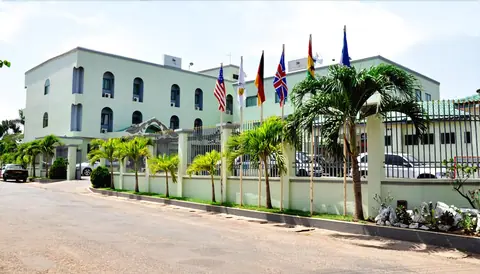
 ★★★★ 4-star
Hotels · Greater Accra
Hotels in Okaikwei North, Greater Accra
Okaikwei North is a residential district of Greater Accra, inland from the city centre, with most of its places to stay gathered around Tesano Estates. Here is what the district offers and how to plan a stay.
IMPT Ghana editorial team · Reviewed 13 November 2026
At a glance
- Region
- Greater Accra, Ghana
- Hotel cluster
- Tesano Estates
- Airport distance
- 7.1 km to ACC
- City centre
- 8.3 km to Independence Square
What the district is like
Okaikwei North is a municipal district of Greater Accra, sitting inland and north of the city centre. It is largely residential: walled compounds, courtyards, small shops, schools, churches and mosques on quiet streets, all feeding onto main roads that carry most of the traffic. Most of its hotels are gathered around Tesano Estates, a low-rise quarter of shaded streets and gated plots. The district has no coastline. The Atlantic lies south, beyond the centre, so a beach trip means a drive rather than a walk.
Distances are short on paper. Accra International Airport is 7.1 km away in a straight line, and Independence Square is 8.3 km. Road routes run longer, and traffic decides the rest. In practice the district works as a place to sleep rather than a place to sightsee: evenings are quiet, and museums, markets and the coast are a car or trotro ride away. It suits travellers who want calm nights, a secure gate and a short hop to the airport.
Towns and neighbourhoods
The district is one of the municipal areas that make up greater Accra, and it reads as a patchwork of residential quarters rather than a single town. Addresses often work by area name and nearest landmark rather than street number, so note the landmark when you book and pass it to any driver. Tesano is the name most visitors hear. Tesano Estates, inside it, holds most of the accommodation. Ask for a landmark that stays open late, such as a filling station or a junction, rather than a house number.
Beyond the hotel cluster, the district runs on ordinary neighbourhood life: corner shops, tailors, chop bars, repair workshops and schoolchildren in the afternoon. Streets change character quickly. A quiet lane can open onto a wide road lined with stalls and transport. Traffic on the main roads is heavy for much of the day, which leaves the backstreets calmer for walking. Walk in daylight, keep to roads you know after dark, and ask at your accommodation which routes are straightforward on foot.
- Tesano Estates holds most of the district's hotels, in low-rise streets of walled plots and gardens.
- Tesano is the wider residential area around it, with shops, schools and eating places along the main road.
- The main roads carry trotros, taxis and delivery traffic for most of the day, so crossing takes care.
- The district is inland throughout, so no address here is within walking distance of a beach.
Who should stay here
The district suits business visitors and anyone with an early flight, since the airport is close and the streets are quiet at night. It also works for families and longer stays, where a gated compound and a room with space matter more than a city-centre address. Travellers who plan to use a car or a ride app for every trip get the most from it. Properties vary in size and facilities, so read the details rather than assuming a standard.
It is a weaker choice if you want to step out of the door into restaurants, bars and a beach. The district is residential, and evenings are spent indoors or in a car. Guests without a vehicle depend on trotros, taxis and ride apps, which are easy to find on the main roads but thin on the backstreets. Ask about the gate, the lighting, the water supply and backup power before you commit, and look at the room before you settle.
Tip: Accommodation here is spread across a few streets rather than lined up on one road. Choose a place within easy reach of a main road so trotros and ride apps can find you.
Getting around and to the airport
Trotros, the shared minibuses, cover most main roads and are the usual way to move without a car. The UK Foreign, Commonwealth and Development Office notes that trotro drivers are not centrally licensed, so travel in daylight where you can. Taxis and ride apps are widely used; agree the fare before setting off in an unmarked taxi. Traffic is heaviest in the morning and late afternoon, and rain slows everything. Ask at your accommodation which junction serves the routes you need.
Accra International Airport, called Kotoka International Airport until the government restored the original name in February 2026, is 7.1 km away in a straight line. Terminal 3 opened in 2018 and Ghana Airports Company Limited runs the country's airports. The road route is longer than the straight line and traffic can double the time, so leave a generous margin and check with your airline before an early departure. For late arrivals, arrange a pickup in advance rather than finding a taxi at the kerb.
- Trotros cover most main roads; ask which route and stop serve your address.
- Ride apps work across the district, but pin the pickup to a gate or junction that drivers know.
- Allow extra time for the airport in the morning rush and after heavy rain.
- The UK FCDO advises against road travel outside towns after dark, so plan evening journeys by car.
Eating and what is nearby
Southern Ghanaian cooking rests on cassava and plantain, with yam, maize and beans eaten nationwide; millet and sorghum are staples in the north. You will meet fufu, banku and kenkey, jollof rice, and soups and stews built on tomato and pepper. Food comes from chop bars, roadside grills, small kitchens with a few tables, takeaways and hotel restaurants. Portions are generous and lunch is often the main meal, so ask what a soup or stew is cooked with if you avoid meat or fish.
Three of Accra's well-known sights are close. Makola Market lies 7.6 km away, Kwame Nkrumah Memorial Park 8.1 km, and the Jamestown area, with its walking tours, about 9 km; all figures are straight-line. Opening days and tour times change, so check with the Ghana Tourism Authority or the site before setting out. Each is a short drive in light traffic and a slow one at peak times. Makola and the memorial park pair well in one morning.
The cedi is the currency, and cards are accepted in some places but not all, so carry cash for markets and small kitchens. Ghana keeps GMT all year, with no daylight saving. Sockets are British three-pin at 230 volts, so bring an adaptor for anything else. The harmattan blows roughly December to March and the rains run from about March to mid-November in the south. A yellow fever certificate is required on entry; check entry rules and holiday dates before booking.
Tip: Holidays move: since 2025 several public holidays shift to the Friday or Monday, with the Eids and Christmas excepted. Check the gazetted dates published for the year before you plan a stay.
Where to stay
Hotels in Okaikwei North
14 stays with a guest score or a four- or five-star rating in the IMPT database, five-star first, then four-star, then the rest by the booking supplier's guest score. Prices and availability are live in the IMPT app.
★★★★ 4-star ★★★ 3-star
 ★★★ 3-star
 ★★★ 3-star
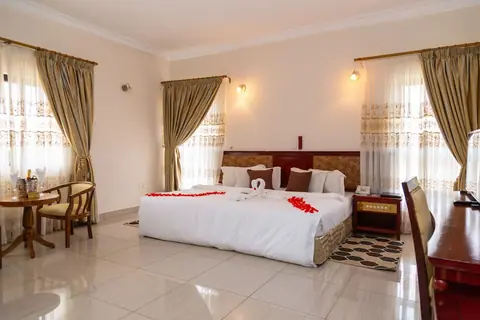 ★★★ 3-star
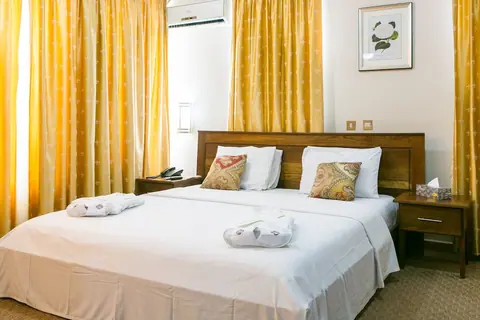 ★★★ 3-star
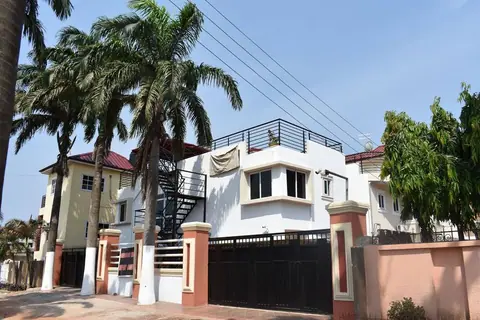 ★★★ 3-star
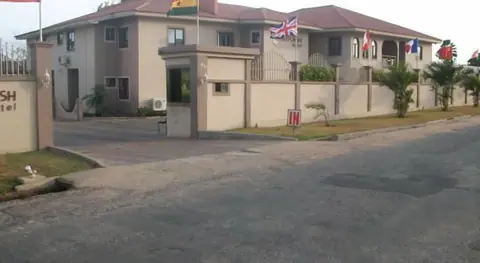 ★★★ 3-star
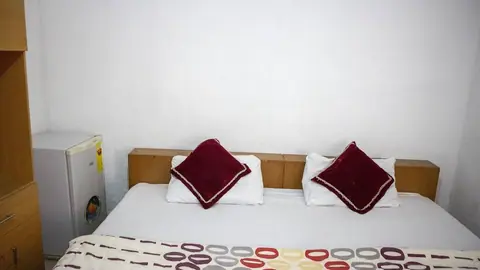 ★★ 2-star
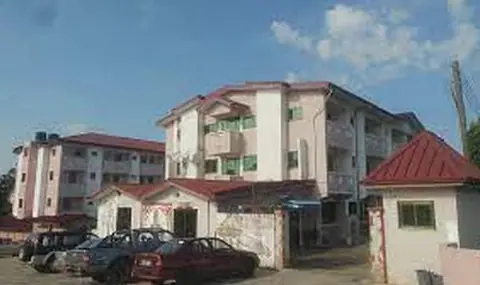 ★★★ 3-star
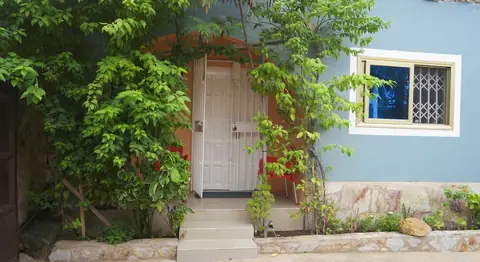 ★★ 2-star
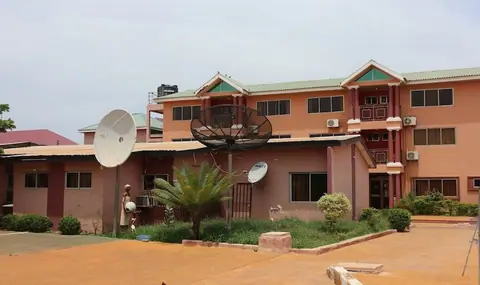 ★★★ 3-star
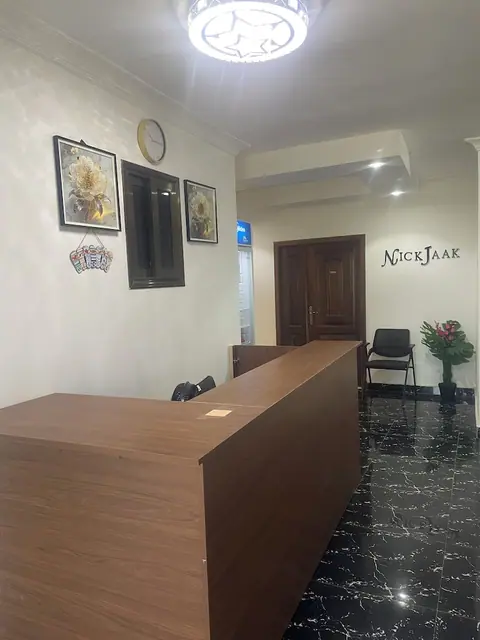 ★★ 2-star
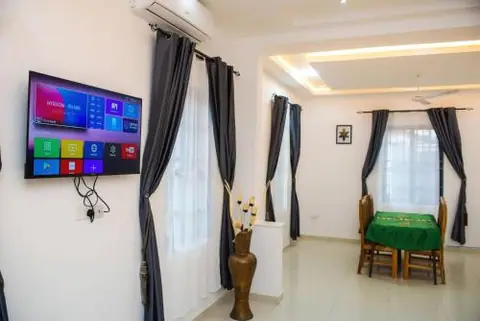
More places to stay
Further listings in the IMPT database with fewer details from the booking supplier (no guest score yet). Check them on the property's page before you book.
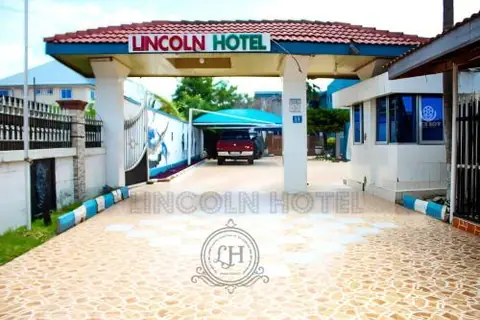
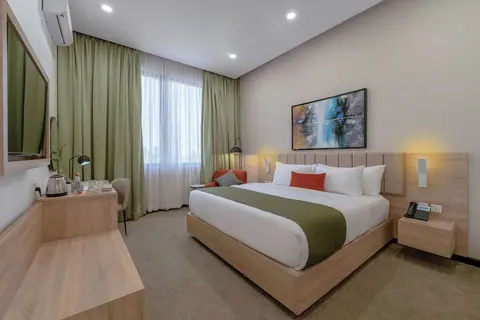
Okaikwei North, Greater Accra: questions
Where are the hotels in Okaikwei North?
Most of the district's accommodation sits around Tesano Estates, a low-rise residential quarter within the Tesano area. Places there range from small guesthouses to larger properties with gardens. The rest is scattered along the main roads, which puts you closer to transport but further from quiet. Ask for a landmark when you book, because street numbering is patchy.
How far is Okaikwei North from Accra International Airport?
The airport is 7.1 km from the district in a straight line, so a transfer is short when the roads are clear. The drive is longer than the straight line suggests, and morning traffic or rain can stretch it considerably. Allow a generous margin before an international departure, and check the terminal and current entry requirements with your airline and Ghana Immigration Service.
Is Okaikwei North a practical base for sightseeing in Accra?
Yes, for travellers who do not mind taking a car or trotro. Makola Market is 7.6 km away, Kwame Nkrumah Memorial Park 8.1 km and Jamestown about 9 km, all straight-line figures. Each is a short drive outside peak hours. The district itself is residential, so you travel out for sights and return for a quiet night.
Can you walk to the beach from Okaikwei North?
No. The district lies inland and has no coastline, so a beach trip means a drive south past the city centre to the coast. Beaches in the Central and Western Regions are further still, and best treated as day trips or overnight stays. Ask your accommodation about the simplest route and travel in daylight.
What food is available in Okaikwei North?
Expect everyday Ghanaian cooking: fufu, banku, kenkey, jollof rice, and tomato-and-pepper soups and stews, with cassava and plantain in the south and millet and sorghum in the north. Chop bars, roadside grills, small kitchens, takeaways and hotel restaurants all serve meals. Lunch is often the main meal, and portions are generous. Ask what a stew is cooked with if you avoid meat or fish.
Do you need a car to stay in Okaikwei North?
Not strictly. Trotros cover the main roads and ride apps reach most addresses, though they are thinner on the backstreets. A car makes the airport run and evening trips simpler. The UK FCDO advises against road travel outside towns after dark, so plan late journeys by car rather than shared transport, and agree any fare first.
When should you plan a stay in Okaikwei North?
The harmattan blows roughly December to March, bringing dusty, hazy days that are strongest in the north. Rains in the south run from about March to mid-November, with two wetter spells. Many visitors prefer the drier months. Public holidays move under rules introduced in 2025, so check the gazetted dates for the year before booking.
Is Okaikwei North quiet at night?
It is a residential district, so nights are generally calm compared with the city centre, though main roads keep moving and some premises run generators. Ask about nearby bars, churches and generators when you book, and choose a room away from the road. Arrange evening transport in advance and keep to lit streets after dark.
Read next
Hotels in Ablekuma NorthAblekuma North is a district of Greater Accra where most visitor beds sit in and around South Odorkor, handy for the city centre and the airport but away from the coast.Hotels in Ayawaso East, Greater AccraA short, practical guide to staying in Ayawaso East, a district of Greater Accra close to the airport and a short drive from the centre, with notes on Sawaba, transport, food and nearby sights.Hotels in Ablekuma Central, AccraAblekuma Central is a district of Greater Accra where most places to stay cluster around Kaneshie, a busy market and transport hub a short ride from central Accra.
IMPT Ghana editorial team · Reviewed 13 November 2026. Hotels are placed by their own map pin inside Ghana's official district boundaries (Ghana Statistical Service). Facts checked against the Ghana Tourism Authority (visitghana.com), the Ghana Immigration Service and other official sources listed in our editorial policy. Prices are never shown: live rates open in the IMPT app.