The Ghana blog
Short, practical stories for a trip to Ghana: when to come, where to stay, what to eat and how to get around.

Blog: questions
When is the best time to visit Ghana?
The dry months are broadly November to March, though the harmattan brings dusty air, strongest in the north between about December and March. Rains arrive around March to mid-November in the south, with two wet seasons, and April to mid-October in the north. Check conditions before booking, as patterns shift.
Do you need a visa to enter Ghana?
It depends on your nationality. Ghana's official portal at evisa.immigration.gov.gh sorts travellers into three routes: visa-free entry for ECOWAS and Alliance of Sahel states, a free Electronic Travel Authorisation for other African Union states, several Caribbean states, Guyana and Singapore, and an eVisa for everyone else. A yellow fever certificate is required on entry, so check the eligibility checker before booking.
How do you get around Ghana?
Coaches link the main cities, and shared minibuses called trotros cover shorter routes. Domestic flights serve Kumasi, Tamale and Takoradi, with Sunyani and Wa also recording passengers in 2025; schedules change, so confirm before booking. The UK's Foreign Office advises against road travel outside towns after dark, and against all but essential travel to the Bawku Municipal area.
What health preparations does Ghana require?
A yellow fever vaccination certificate is required on entry, from nine months of age according to the UK's TravelHealthPro. Check current requirements on Ghana's official evisa portal before you travel. For other vaccinations and malaria advice, speak to a travel health clinic well ahead of departure, as recommendations depend on your itinerary and health history.
Which parts of Ghana are worth visiting?
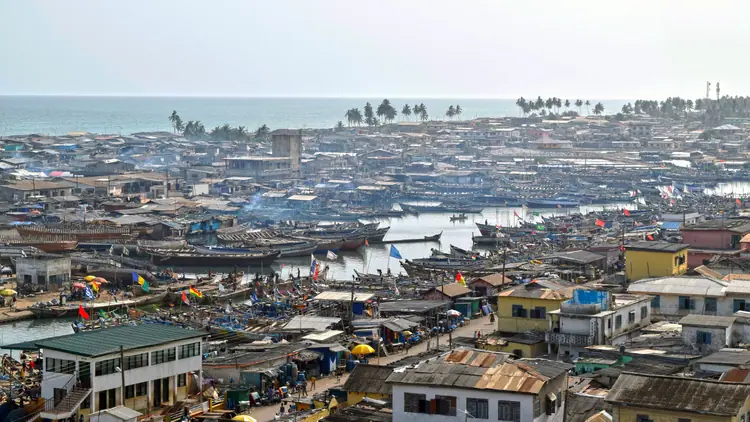
The Central Region pairs Cape Coast Castle and Elmina Castle with Kakum National Park's canopy walkway. The north offers Mole National Park and Larabanga Mosque, while the Volta Region has Wli Falls and the Tafi Atome Monkey Sanctuary. Accra and Kumasi hold most of the museums and markets, and the 16 regions each have their own character.
What food should you try in Ghana?
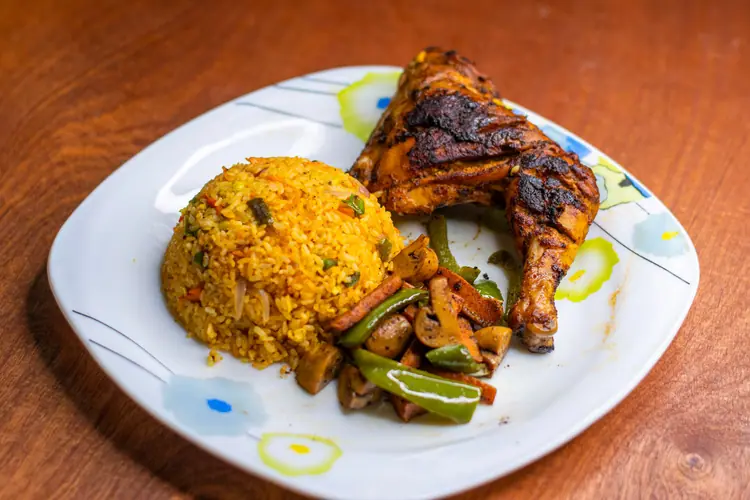
Start with fufu, banku, kenkey and jollof rice, plus the tomato and pepper soups and stews served across the country. Cassava and plantain are the southern staples, while millet and sorghum dominate in the north; yam, maize and beans appear everywhere. Markets are good places to eat, and asking about ingredients helps if you have dietary needs.
Find a stay in Ghana
Photo credits: jbdodane, CC BY 2.0, via Wikimedia Commons; Mohammad Fahim on Pexels; Michael Quaynor on Pexels; Perry Tintin on Pexels; Niyi David on Pexels.