
 ★★★★ 4-star
Region · capital Cape Coast
Hotels in the Central Region
The Central Region holds two of Ghana's great castles, a stretch of Atlantic coast and a compact set of towns within easy reach of each other. This guide covers where to base yourself.
IMPT Ghana editorial team · Reviewed 13 November 2026
At a glance
- Regional capital
- Cape Coast
- Districts covered
- Mfantseman, Gomoa East, Cape Coast, KEEA
- Nearest airport
- Takoradi Airport, 63 km
- Main sights
- Cape Coast and Elmina castles
The character of the region
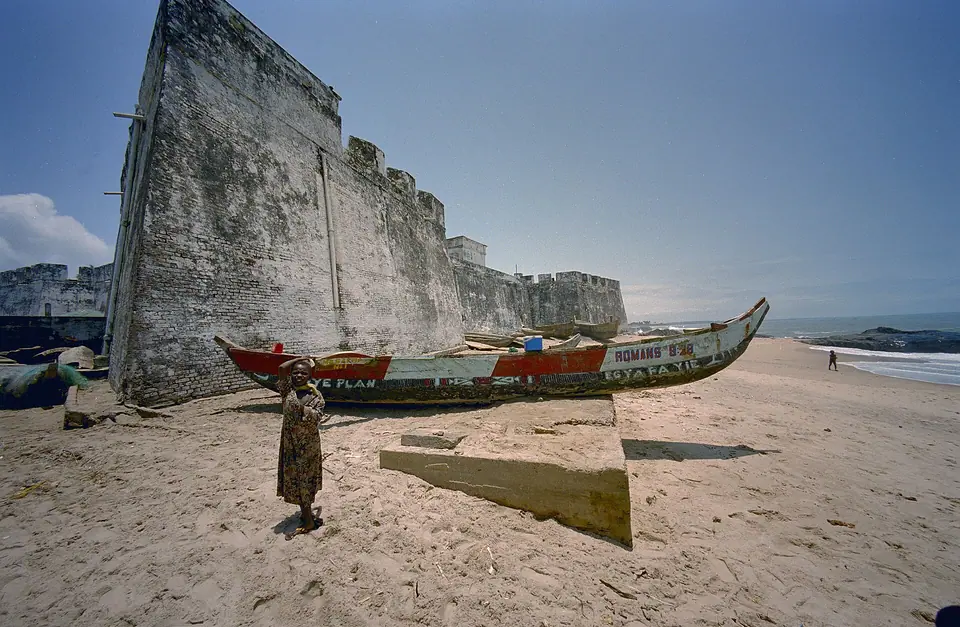
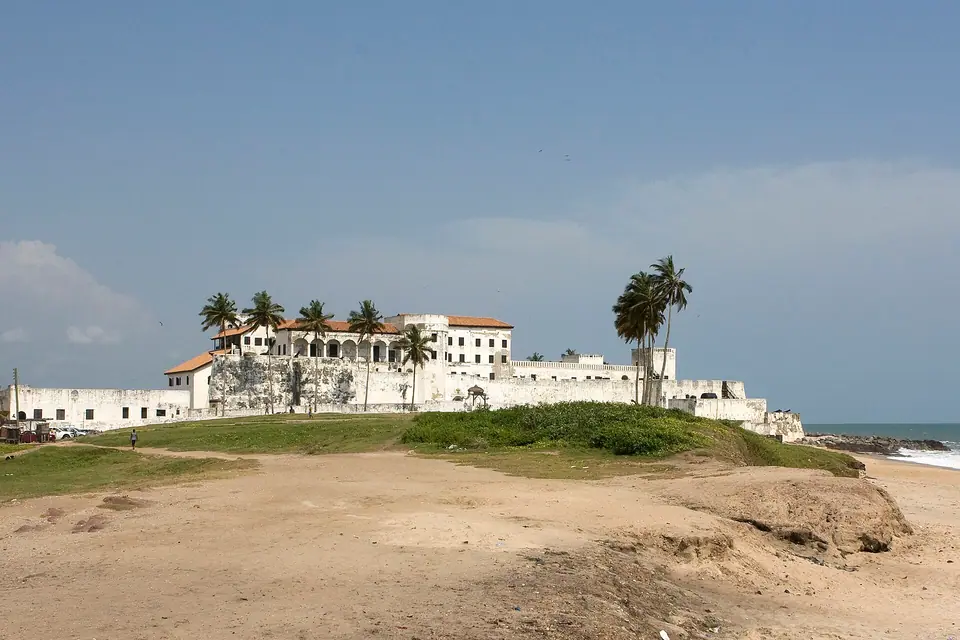
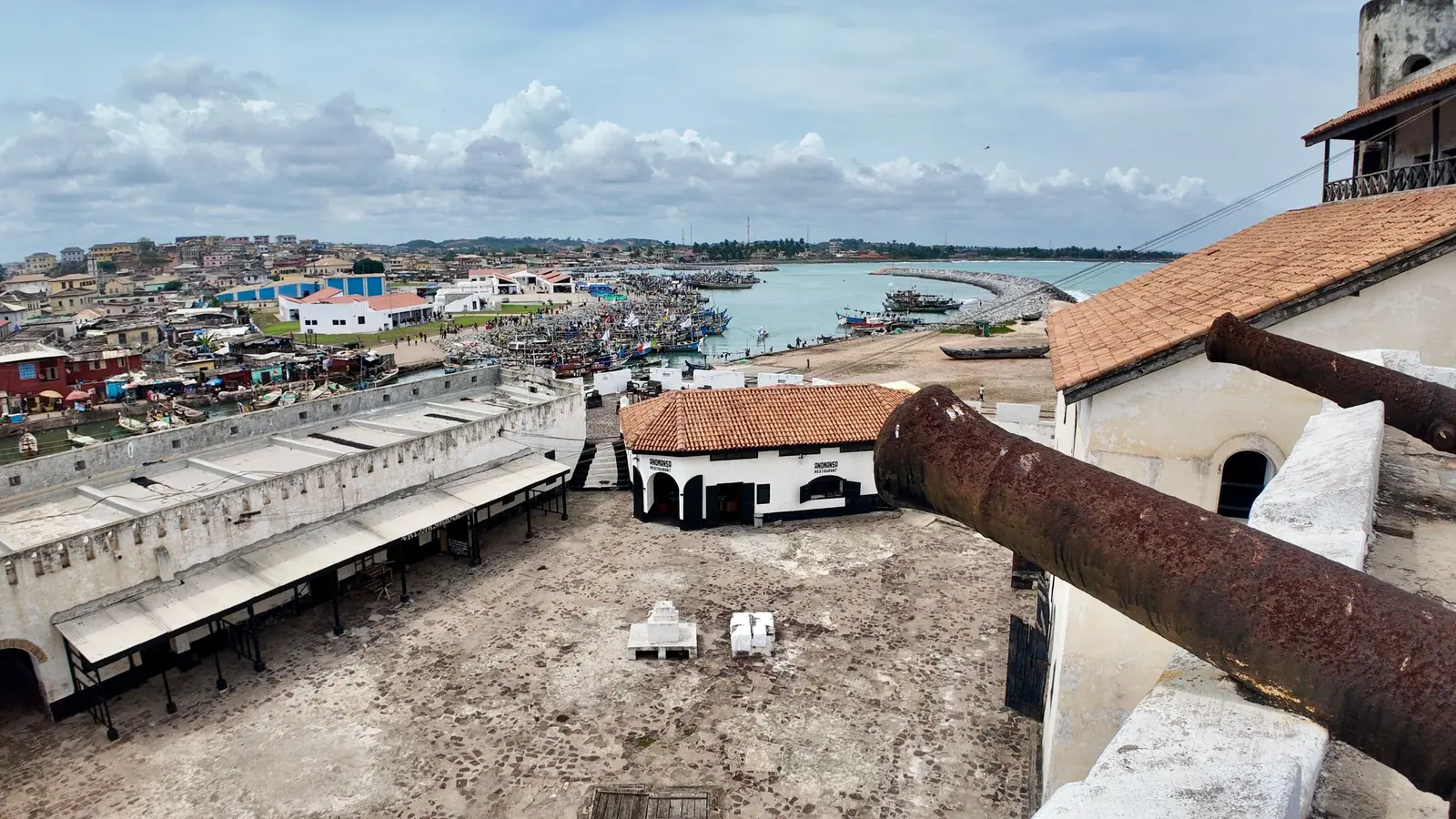
The Central Region follows the Atlantic coast west of Accra, and the sea sets the pace of the day. Cape Coast is the capital: a working town of low buildings, fishing canoes pulled up on the shore and schoolchildren in uniform, with the castle standing directly above the water. West of it, Elmina wraps around a small harbour below a Portuguese-built castle. Inland, forest gives way to smallholdings of cassava, plantain and citrus. Distances between the main towns are short, so one base can serve several days of looking around.
The districts with hotel pages on this site are Mfantseman, Gomoa East, Cape Coast, and Elmina and KEEA, which takes in both Elmina and Komenda. Each feels different. Cape Coast is the most urban, with a compact centre you can walk. Elmina is quieter and turned towards its castle, harbour and lagoon. Mfantseman, with Saltpond as its capital, is a line of coastal towns and roadside settlements. Gomoa East sits on the Accra side of the region, which makes it a sensible first or last stop on the coast road.
What visitors come for
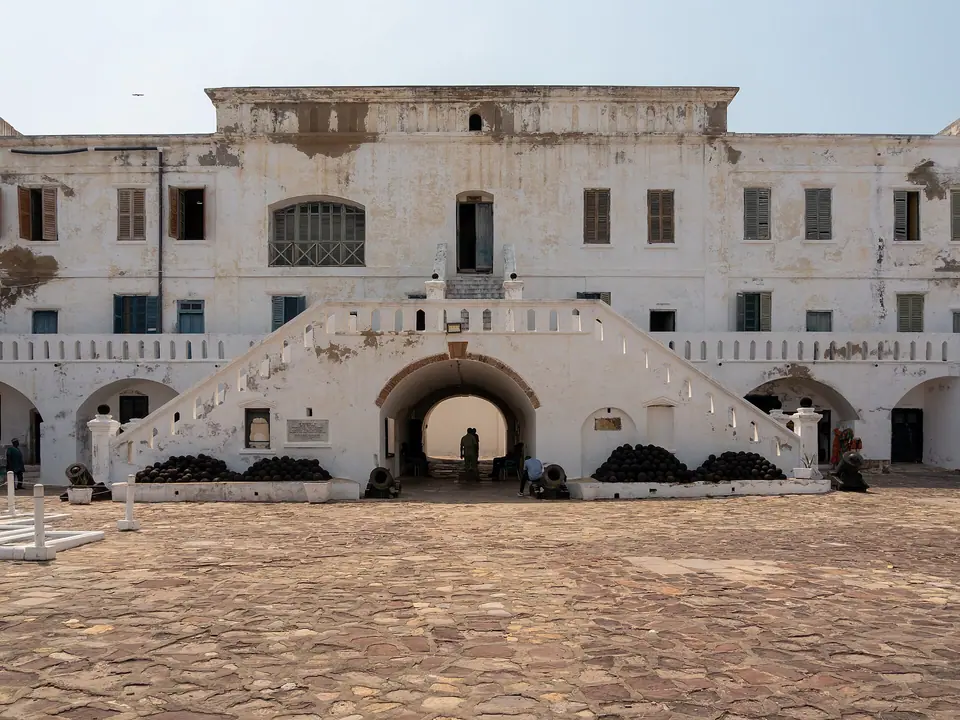
Two castles draw most visitors. Cape Coast Castle and Elmina Castle form part of the UNESCO World Heritage listing of forts and castles in Volta, Greater Accra, Central and Western Regions, inscribed in 1979. Cape Coast Castle was captured by the British in 1664 and served as the seat of government until 1877. The Ghana Tourism Authority describes it as the largest of the buildings tied to the trans-Atlantic slave trade, and it holds the West African Historical Museum. Elmina Castle, begun by the Portuguese in 1482, is the oldest European building in sub-Saharan Africa.
Beyond the castles, the appeal is quieter. Kakum National Park, inland from Cape Coast, has a canopy walkway of seven suspension bridges, 333 m long and up to 27 m above the forest floor, and records over 300 bird species. Birdwatchers do well early, when the forest is loud. The shoreline between the towns holds sandy beaches, some reached by short tracks off the coast road. Fante cooking, built on cassava, plantain and maize, is a reason to linger: banku, kenkey and fufu with tomato and pepper soups.
- Cape Coast Castle stands above the shoreline, close to the centre of Cape Coast.
- Elmina Castle was built by the Portuguese in 1482 and taken by the Dutch in 1637.
- Kakum National Park's canopy walkway crosses the forest on seven suspension bridges.
- The West African Historical Museum is housed inside Cape Coast Castle.
Tip: Castle tours involve steep stairs, worn stone and little shade. Go early, carry water, and allow time afterwards to sit quietly.
Getting there and around
The region is reached by road, and the coast road west from Accra is the main approach. Takoradi Airport lies 63 km away in a straight line, and domestic flights connect it with Accra; from there, the coast road runs east. Long-distance coaches link Cape Coast and Elmina with Accra, Kumasi and other cities, though timetables change, so confirm departures before you build a day around one. Shared taxis and trotros cover the shorter hops between towns. Allow more time than the map suggests.
Within Cape Coast, much of the centre is walkable, and taxis handle the rest. For Elmina and the smaller towns, trotros leave when they are full, so allow slack in the day. Driving yourself is straightforward on the main roads and slower on the laterals. The UK Foreign, Commonwealth and Development Office advises against road travel outside towns after dark, and that advice carries weight on this stretch of coast. Agree the arrangement with the driver before you set off.
Tip: Roads and timetables change. Check current schedules with your coach operator and ask locally about conditions before any long drive inland.
When to visit
The south of Ghana has two rainy seasons, roughly April to June and September to November, with rain possible from about March to mid-November. The harmattan, a dry and dusty desert wind, blows from about December to March and is strongest in the north, so the coast usually feels it less. Between the rains, days are hot and humid, with downpours often arriving in the afternoon. Mornings are cooler and easier for castle tours, forest walks and the climb up to the fort walls.
Festival dates move with traditional calendars, so check each year. Fetu Afahye fills Cape Coast in September, with the Ghana Tourism Authority giving 1 September as a start. Aboakyer at Winneba falls in May, on the first Saturday. The PANAFEST and Emancipation programme runs from late July into August, though it is not held every year. Rooms in Cape Coast tighten around these weekends, so reserve well ahead if a festival is the reason for the trip.
- Fetu Afahye in Cape Coast is held in September, with exact dates confirmed each year.
- Aboakyer at Winneba takes place in May, on the first Saturday.
- PANAFEST and Emancipation run from late July into August and are not held every year.
- Public holidays can shift under the 2025 rules, so check the gazetted dates for the year.
Choosing where to stay
Where you stay depends on what you want from the day. Cape Coast suits anyone who wants the castle, the West African Historical Museum, the town markets and a choice of places to eat within walking distance; the range runs from simple guesthouse rooms to larger hotels. Elmina is quieter, with the castle and the lagoon close by, and works well for a slow couple of days. Mfantseman and Gomoa East suit travellers with a car and an interest in small coastal towns.
Ask practical questions before booking: whether the room has air conditioning or a fan, whether water and power are steady, and whether a tank or generator backs them up. Check how far the building is from the coast road, since a short walk to a trotro stop matters more than it sounds. Around festival weekends and public holidays, reserve early. If both castles are on the list, a base between Cape Coast and Elmina shortens the driving.
the Central Region by district
Top-rated stays
★★★★ 4-star ★★★★ 4-star
 ★★★★ 4-star
 ★★★ 3-star
 ★★★ 3-star
 ★★★ 3-star
 ★★★ 3-star
 ★★★ 3-star
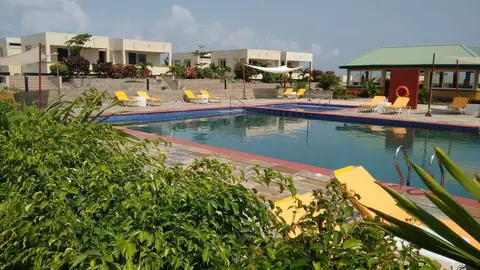
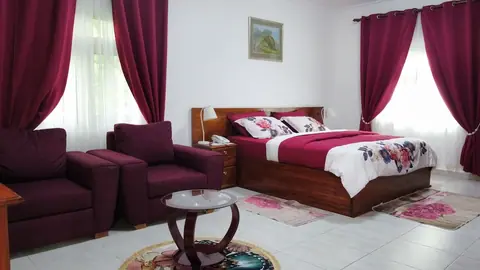
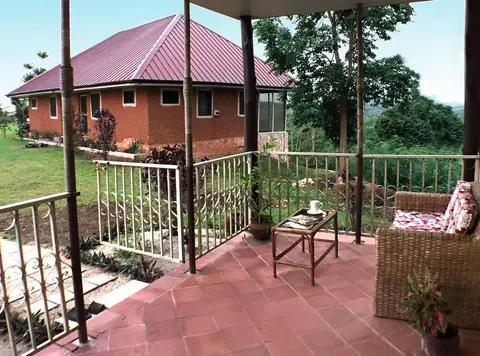
Manna Heights Hotel & Conference Centre
Central Region4.2Guest score from the booking supplier · 440 reviewsWhere to stay
Other stays in Central Region
8 stays with a guest score or a four- or five-star rating in the IMPT database, five-star first, then four-star, then the rest by the booking supplier's guest score. Prices and availability are live in the IMPT app.
★★★★ 4-star★★★ 3-starManna Heights Hotel & Conference Centre
Central Region4.2Guest score from the booking supplier · 440 reviews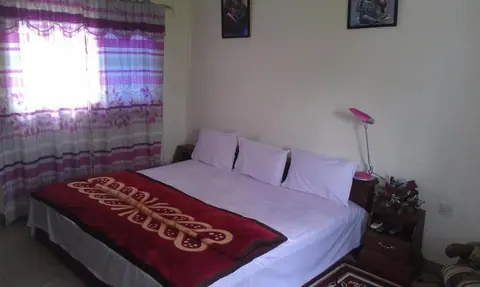 ★★★ 3-star
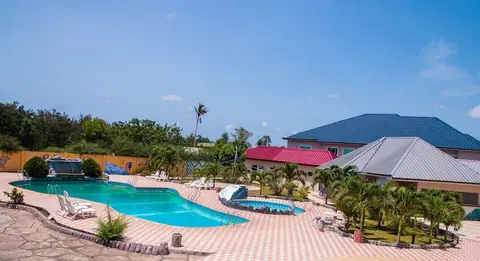 ★★★ 3-star
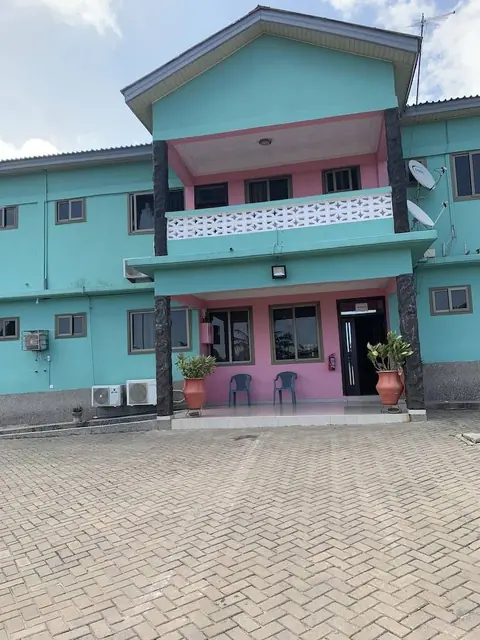 ★★★ 3-star
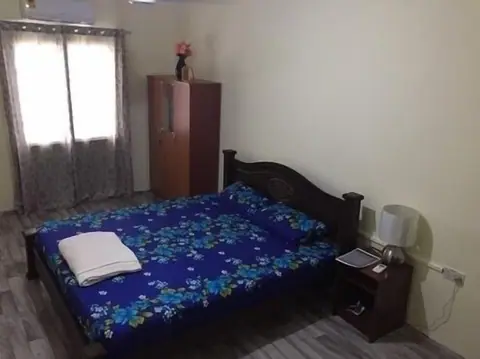 ★★ 2-star
More places to stay
Further listings in the IMPT database with fewer details from the booking supplier (no guest score yet). Check them on the property's page before you book.
the Central Region: questions
Which areas of the Central Region have hotel pages on this site?
Listings are grouped by district: Mfantseman, Gomoa East, Cape Coast, and Elmina and KEEA, which covers Elmina and Komenda. Cape Coast, the regional capital, has the widest spread of places to stay, from simple rooms to larger hotels. Elmina is smaller and quieter, and the coastal towns to the east and west suit travellers with their own transport.
How close can you stay to the castles in the Central Region?
Cape Coast Castle stands in the middle of Cape Coast, so several hotels in the Central Region are a short walk from its walls. Elmina Castle is about 12 km west along the coast road, close to the centre of Elmina. Staying near either castle makes an early start simple, which matters in the heat.
Is Cape Coast a practical base for exploring the Central Region?
Yes. Cape Coast is the regional capital and sits on the coast road, with the castle, the West African Historical Museum and the main markets in the centre. Elmina is about 12 km west, and Kakum National Park lies inland. One base in Cape Coast covers both castles comfortably in two or three days.
How do you reach hotels in the Central Region without flying?
Long-distance coaches run along the coast road from Accra and from Kumasi, stopping at Cape Coast and Elmina. Shared taxis and trotros connect the smaller towns. Schedules change, so confirm departure times before you set out, and plan to arrive before dark, in line with UK travel advice on night driving.
Which airport serves hotels in the Central Region?
Takoradi Airport lies about 63 km west of Cape Coast in a straight line, and domestic flights connect it with Accra. Most visitors arrive through Accra International Airport and continue by road. Check current domestic schedules before relying on a flight, since routes and frequencies change.
When do hotels in the Central Region fill up?
Weekends around Fetu Afahye in Cape Coast each September and Aboakyer at Winneba in May are busy, and PANAFEST and Emancipation bring visitors from late July into August in the years they are held. Public holidays also raise demand. Book ahead for those dates and check the year's gazetted holidays.
When is the driest time to stay in the Central Region?
The coast has two rainy seasons, roughly April to June and September to November, with rain possible from March to mid-November. The harmattan haze arrives from about December to March and is milder on the coast than in the north. The drier months bring hot, humid days, so plan castle visits and walks for the morning.
What should you check before booking hotels in the Central Region?
Ask about air conditioning or fans, the reliability of water and power, and whether the building has a tank or generator. Confirm how far the room is from the coast road and whether trotros pass nearby. Around festival weekends, reserve early and ask about cancellation terms.
Read next
Hotels in the Western RegionSekondi-Takoradi is the region's capital and its transport hub, with beaches, surf and stilt villages within reach. Here is how the districts differ and where to base yourself.Hotels in Greater AccraGreater Accra holds the capital, the airport and the coast from Labadi to Ada Foah. This guide covers the region's districts, its seasons and the questions worth asking before you choose where to stay.Hotels in the Eastern RegionThe Eastern Region rises from the Accra plains to the Akuapem ridge and the Volta gorge. Its capital, Koforidua, and the ridge towns around it make a calm base for gardens, waterfalls and the lake.
IMPT Ghana editorial team · Reviewed 13 November 2026. Hotels are placed by their own map pin inside Ghana's official district boundaries (Ghana Statistical Service). Facts checked against the Ghana Tourism Authority (visitghana.com), the Ghana Immigration Service and other official sources listed in our editorial policy. Prices are never shown: live rates open in the IMPT app.
Find a stay in Central Region
Photo credits: Owoahene Photography / Pexels; Loek Tangel, CC BY-SA 4.0, via Wikimedia Commons; Matti Blume, CC BY-SA 4.0, via Wikimedia Commons; Damien Halleux Radermecker, CC BY-SA 2.0, via Wikimedia Commons.