Osu, Accra: what it is like and who it suits
Osu is Accra's old Danish quarter, now a dense grid of shops, offices, churches and kitchens a short walk from the Atlantic. This guide covers its character, its sights and the kind of stay it gives you.
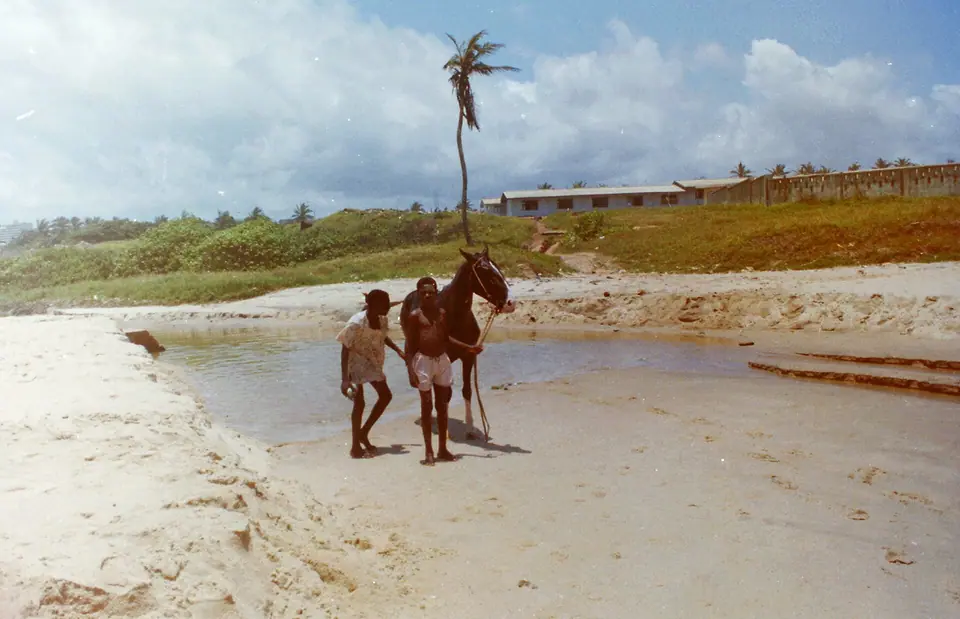
- Region
- Greater Accra
- City
- Accra, central
- Airport distance
- About 5 km by road
- Character
- Historic, commercial, busy evenings
The character of Osu
Osu sits east of the old centre of Accra, between the city's commercial core and the Atlantic. The streets run in a fairly tight grid, and the feel changes from block to block: banks and offices on one road, workshops and food sellers on the next, churches of several denominations close by, and quieter residential lanes behind them. It is a working neighbourhood first and a place to go out second, which is part of why it holds up over several days rather than a single evening.
The name Osu belongs to the Ga people who lived here long before European traders arrived, and the district is still a Ga area at heart. The Danish presence from the seventeenth century left a fort, a place in the history books and a castle that later became the seat of government. That mix of Ga settlement, colonial trading post and modern commercial district gives the area its texture, and the layers sit close enough together to read on foot.
Tip: Weekday mornings are the calmest time to walk Osu. Traffic builds through the afternoon and the pavements grow crowded after dark.
History you can still see
Christiansborg Castle stands on the coast at the southern edge of Osu. It began as a Danish trading fort in the seventeenth century, was rebuilt and renamed by the British, and is now the seat of Ghana's presidency, so it is seen from outside rather than toured. The lanes around it still carry the shape of the old trading settlement, with the sea on one side and the town running back from the shore.
The Danish period is the strand of Osu's history most visitors hear about, but the area was a Ga settlement before that and has passed through British colonial rule, independence in 1957 and the growth of modern Accra since. Walking the streets, you pass nineteenth-century church buildings, mid-century offices and newer blocks within a few minutes. The layers are close together and easy to read, which is unusual in a city growing as quickly as this one.
What to see and do
Most of what you do in Osu is on foot: the streets, the shops, the food, the coastline. Beyond that, the draw is proximity. Independence Square is about 2 km west, the Kwame Nkrumah Memorial Park about 3 km, Makola Market about 3 km and Jamestown, with its lighthouse and historic lanes, roughly 4.5 km. A morning at one of them and an afternoon back in Osu makes a comfortable day.
Within Osu the day is spent moving between one kind of place and another. There are tailors, bookshops, phone repairers and grocers, and small kitchens turning out food through the hours. The seafront near Christiansborg gives open sky and a breeze, and the lanes behind the main roads are quieter than the district's reputation suggests. Allow time simply to wander and to stop, rather than working through a list.
- Kwame Nkrumah Memorial Park, about 3 km away, holds the mausoleum of Nkrumah and his wife Fathia, plus a museum.
- Makola Market, about 3 km west, is a large central market for food, cloth and household goods.
- Jamestown, roughly 4.5 km away, has a red-and-white lighthouse, a harbour and historic streets.
- Independence Square, about 2 km west, is Accra's ceremonial ground by the sea.
- Kakum National Park and the castles at Cape Coast lie further west and need a full day.
Eating and evenings
Food in Osu runs from quick street plates to sit-down rooms. Expect the staples of southern Ghanaian cooking: banku and kenkey with soup or stew, fufu, jollof rice, grilled fish with pepper, and fried plantain on the side. Small kitchens serve through the day, and the pace picks up in the evening as offices empty. Rice dishes such as waakye tend to appear earlier in the day rather than late.
The evening economy is one reason people choose Osu. Bars, lounges and places with music cluster along and just off the main roads, ranging from quiet rooms to louder venues, and the atmosphere is generally informal. If you want early nights, ask for a room set back from the main strips, because sound carries between buildings. For a calmer evening, the seafront and the smaller side streets work better than the busy roads.
Tip: Ask where you are staying which streets are loudest at weekends. Sound carries between buildings in the grid, even a road or two away.
A walk, and getting around
A good walk starts near the coast by Christiansborg Castle, where you can look at the outside of the building and take in the sea, then heads north into the grid. Use the lanes rather than the main roads: you pass churches, schools, workshops and food sellers, and the streets are narrower and shadier. Cross towards the busier commercial stretch, then loop back down to the coast.
Time it for the morning if you want shade and space, or late afternoon for the streets at their liveliest. Carry water, wear shoes you can walk in, and watch the traffic on the larger roads, which have few comfortable crossings. The circuit is short, under an hour at an easy pace, but stopping and looking takes longer. Add a meal and it fills an afternoon.
Accra International Airport, still widely called Kotoka, is about 5 km away by road, which makes Osu one of the closer districts to the terminal. Independence Square is about 2 km west. Journeys are short in distance but can take far longer in traffic, particularly in the morning and late afternoon. Within Osu you can walk to most things; for longer hops, shared minibuses known as trotros run along the main roads, and taxis and ride-hailing apps are easy to find. Agree the fare first in an unmarked taxi.
Who it suits, and choosing a base
Osu suits travellers who want to be in the middle of a working city rather than a quiet resort, and who are happy to walk, take short rides and eat where the neighbourhood eats. It works well for a first visit to Accra, for anyone without a car, and for people who value evenings out within walking distance. Business travellers find the offices, banks and central position convenient.
It suits less well if you want silence, sea views from your window or a resort-style stay. Traffic and noise are part of the deal, pavements are uneven, and there is no swimming beach here, only the coast and the harbour. Families with very young children, and anyone who needs step-free access throughout, are better off looking at quieter districts further from the centre. Daytime heat and humidity are steady for much of the year, which matters if you plan long walks.
Choose a room set back from the main commercial roads if sleep matters, and ask specifically about nearby bars and churches. The grid means sound travels, and a building on a busy corner feels very different from one a street behind. Check whether the room has air conditioning or relies on fans, and ask about backup power and water, which are sensible questions anywhere in Accra. Then think about your days: castles, markets and city sights are close; beaches are not.
- Good for first-time visitors who want a central, walkable base in Accra.
- Good for travellers who want food, bars and music close at hand.
- Less good for anyone seeking quiet, sea views or a resort atmosphere.
- Not ideal for step-free access, since pavements and kerbs are uneven.
Frequently asked questions
What is Osu in Accra known for?
Osu is known for its central position in Accra, its Danish colonial history and Christiansborg Castle, and its concentration of bars, kitchens and small shops. It is a working Ga neighbourhood that became a commercial district, and it is one of the handiest places to stay if you want to walk to food and evenings out.
Is Osu a good area to stay in Accra?
It suits travellers who want a central, walkable base with evenings close at hand and the airport about 5 km away. It does not suit people who want quiet, sea views or a resort atmosphere, since traffic and nightlife noise are part of daily life. Check where a room sits within the grid before booking.
How far is Osu from Accra International Airport?
The airport is about 5 km from Osu by road, one of the shorter runs in the city. The distance is small but traffic can stretch the journey considerably, especially in the morning and late afternoon. Ask where you are staying which hour to leave and allow extra time for check-in.
What can you see and do in Osu itself?
Mostly the streets. You can walk the grid, see Christiansborg Castle from outside, look at the historic church buildings and spend time in the small shops and kitchens. Independence Square, the Kwame Nkrumah Memorial Park, Makola Market and Jamestown are all within about 5 km and easy to reach by short rides.
Where can you eat in Osu?
Expect southern Ghanaian staples: banku, kenkey, fufu, jollof rice, grilled fish and fried plantain, served in small kitchens and sit-down rooms. Food appears through the day, with rice dishes such as waakye usually earlier. Evenings bring bars and lounges, ranging from quiet rooms to louder venues with music.
What is the history of Osu?
Osu was a Ga settlement before European traders arrived, and the Danish presence from the seventeenth century left a fort that became Christiansborg Castle. The British later took over and the castle became the seat of government. Modern Osu layers offices, churches and homes over that history, and the old settlement shape survives near the coast.
Is Osu noisy at night?
Parts of it are. Bars and lounges along the main roads draw crowds at weekends, and sound carries between buildings in the tight grid. Rooms set back from the commercial strips are noticeably calmer. Ask which streets are loudest and whether the room faces one of them.
Should you stay in Osu or elsewhere in Accra?
Stay in Osu if you want to walk to food and evening venues and be close to the centre and the airport. Look elsewhere for quiet, parking or step-free access throughout. For beaches, head west towards Busua in the Western Region or east towards Ada Foah rather than staying in the city.
Read next
IMPT Ghana editorial team · Reviewed 13 November 2026. Facts checked against the Ghana Tourism Authority (visitghana.com), the Ghana Immigration Service and other official sources listed in our editorial policy. Prices are never shown: live rates open in the IMPT app.
Find a stay in Korle Klottey
Photo credits: hh oldman, CC BY 3.0, via Wikimedia Commons.