Kokrobite: the town and who it suits
A Ga fishing town on the coast west of Accra, Kokrobite pairs a working beach with a long drumming tradition. Here is what the days are like, what to see, and who will enjoy it.
- Region
- Greater Accra Region
- Known for
- Beach, fishing and drumming
- Airport distance
- 24.8 km straight line
- City centre
- 19.9 km straight line
Where Kokrobite sits
Kokrobite lies on the Gulf of Guinea, west of Accra in the Greater Accra Region. The coast bends away from the city and the road passes through smaller settlements before it reaches the town. Independence Square is about 20 km away in a straight line and Accra International Airport about 25 km, though the drive takes longer than those numbers suggest, since traffic leaving the city is heavy for much of the day. Check road conditions before you set out.
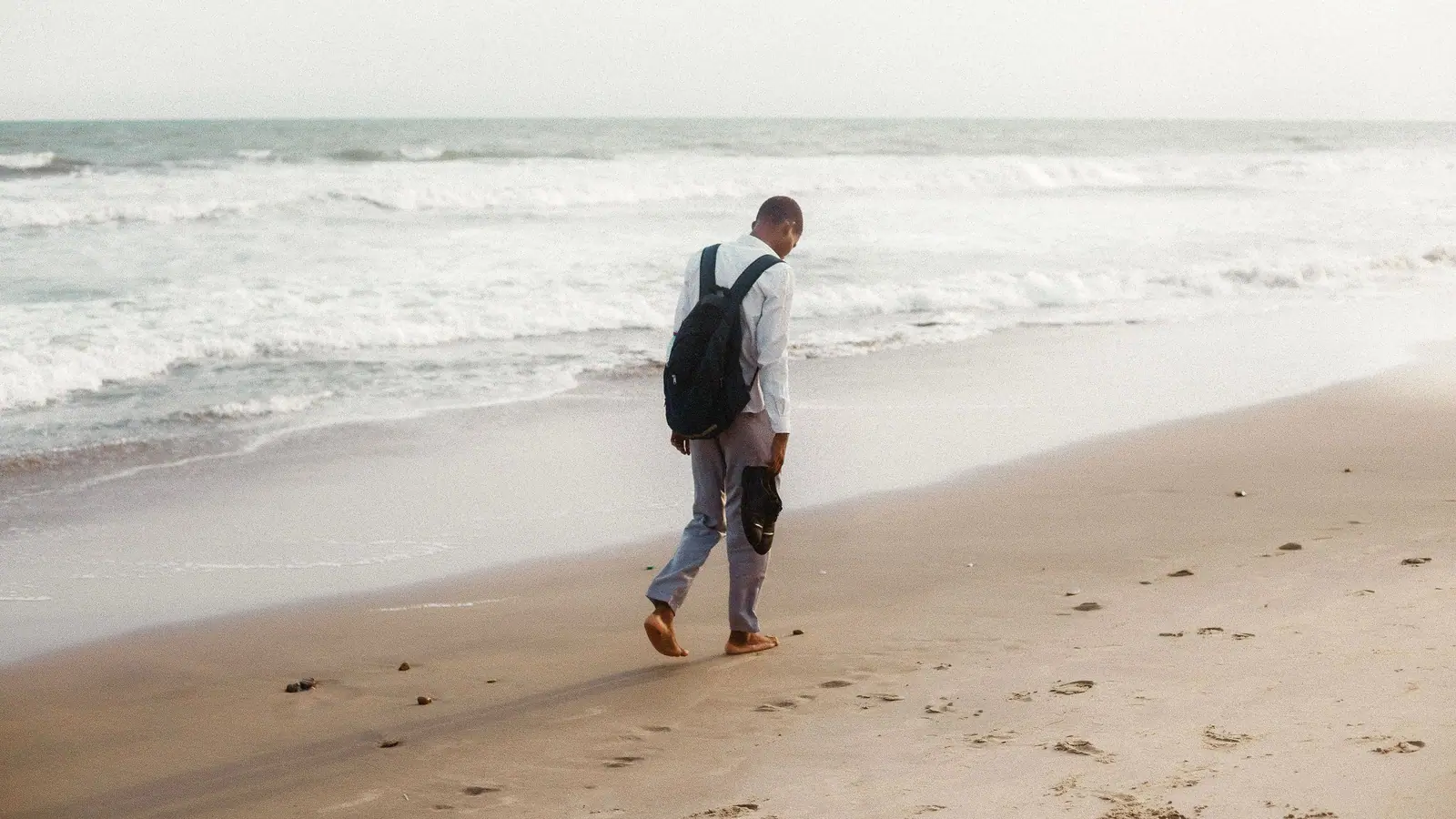
The town itself is small and low-rise, built along a main road with sandy lanes running down to the beach. Houses sit behind walls, canoes are pulled up above the tide line, and the Atlantic is loud at night. There is no promenade or seafront strip in the resort sense: the beach is where boats land, nets are mended and fish is sold, and that working character is much of the town's appeal.
Drums, canoes and a Ga town
Kokrobite is a Ga community, and fishing still sets the rhythm of the day. Canoes go out before light and return through the morning; nets are spread and repaired on the sand, and fish is smoked and sold close to where it lands. Visitors are welcome to watch, but keep a respectful distance from boats and gear, ask before photographing people at work, and remember that the beach is a workplace first and a leisure spot second.
The town has drawn people learning Ga drumming and dance for decades, and teachers and small schools take visiting students. Lessons are usually arranged in advance rather than on the day. Homowo, the Ga harvest festival, is marked across Greater Accra in August and September, after a drumming ban that begins around May. Kokrobite keeps it as a local occasion. Dates move each year, so ask locally or check with the Ghana Tourism Authority.
What to see and do
The beach is the main draw: a long sweep of sand with a strong Atlantic shore break. It is good for walking, watching canoes and sitting out in the evening, but the water deserves respect. Currents can be powerful and the break sits close to shore, so ask people who know the beach before swimming, and keep children within reach. Early morning is the best hour, when boats land and the sand is still cool.
A day here needs little planning. Walk the shoreline in the morning, follow the lanes back through town, and stop where fish is being smoked. In the afternoon, shade and a book suit the pace; the heat is steady and the sand reflects it. Finish with the sunset over the water, which faces south and gives a long, clear light. Bring water, sun protection and shoes you do not mind getting sandy.
Accra's older quarters are close enough for a half-day. Jamestown, about 17 km away, has a red-and-white lighthouse roughly 28 m tall, built in the early 1930s to replace an 1871 light, and a walking tour is the usual way to see it. Makola Market, about 18 km, lines Kojo Thompson Road. The Kwame Nkrumah Memorial Park, about 19 km, holds Nkrumah's mausoleum and reopened after redevelopment in 2023.
- Walk the beach at first light, when canoes come in and the sand is still cool.
- Take a half-day trip to Jamestown for the lighthouse and the old streets.
- Cross to Accra for Makola Market, which lines Kojo Thompson Road in the centre.
- Allow time for the Kwame Nkrumah Memorial Park and its museum.
Eating and evenings
Eating in Kokrobite is informal. Most places are small kitchens and beach bars with plastic chairs and tables set on the sand, cooking the staples of the southern coast: banku and kenkey with soup or stew, fufu, jollof rice, and grilled fish landed nearby. Portions are generous and the cooking is plain rather than polished. Menus thin out on quiet weekdays, so ask what is cooking before you take a table, and carry cash, since card machines are not universal.
Evenings are gentle. Some nights bring drumming and live music, often tied to the schools and to weekends, when visitors come out from Accra; other nights there is little beyond the sound of the surf. The town has no late-night scene, and most kitchens close early. That suits people who want to sleep with the windows open. It does not suit anyone looking for bars that run until morning.
Tip: Ask at your base which kitchens are open that evening and whether live music is planned. Opening days shift with the season and with the fishing.
Who Kokrobite suits
Kokrobite suits travellers who want a low-key coastal base outside Accra: people learning or listening to drumming, walkers, and anyone content with a working beach, simple food and early nights. It also works as a first or last stop near the airport, since the airport is roughly 25 km away in a straight line. Couples and solo travellers who like small towns tend to settle in quickly.
It suits less well if you want museums, restaurants and late transport on the doorstep, or if you are in Accra for business and need to be in the city each morning. The surf makes it a poor choice for anyone wanting calm swimming, and people uneasy in a small town with limited evening options should look closer to Accra. When choosing a base, ask whether the room is on the beach side of the road.
Getting there and around
The usual approach is by road from Accra, heading west along the coast. Shared minibuses, known as trotros, run the route from the city's western transport terminals, and a taxi or hired car is the other option. The distance is modest but the traffic leaving Accra is not, so allow more time than the map suggests, and aim to arrive before dark. Road conditions change, so check the current position locally.
Once in Kokrobite, everything is close enough to walk, which is part of the appeal. Trotros and taxis pass along the main road for longer hops and will stop if flagged. The UK Foreign, Commonwealth and Development Office advises against road travel outside towns after dark, so plan the return leg of any day trip into Accra with that in mind, and settle transport back before evening.
- Take a trotro from Accra and ask the mate to say when to get down for Kokrobite.
- A taxi or hired car gives more control over timing, especially on the return leg.
- Walk within the town; the main road and the lanes cover most of it.
- Fix your return transport before dark rather than leaving it to chance.
Tip: Trotro routes and terminals in Accra move; ask where the Kokrobite-bound ones leave from on the day, and check the last departure back before you travel.
Frequently asked questions
How do you get to Kokrobite from Accra?
By road, heading west along the coast. Shared minibuses and taxis run from Accra, and driving yourself is straightforward once you are clear of the city traffic. Distances are short but journeys can be slow, so allow more time than the map suggests and arrange your return before dark. Ask locally where the minibuses pick up.
Is Kokrobite good for swimming?
The beach has a strong Atlantic shore break and currents that vary with the season, so it is not a place to walk straight into the water. Ask people who know the beach, watch how locals use it, and keep children close. Many visitors treat Kokrobite as a place to walk and sit rather than to swim.
What is Kokrobite known for?
Fishing and drumming. It is a Ga coastal town where canoes still go out most days, and where visiting students have learned Ga drumming and dance for decades. The long sandy beach is the other draw, along with a pace of life that stays quiet even at weekends, when visitors arrive from Accra.
When is the best time to visit Kokrobite?
The southern coast is comparatively dry by Ghanaian standards. Rains come roughly April to June and again September to November, and the harmattan, a dry dusty wind, blows from about December to March, though it is milder on the coast than in the north. All these windows shift, so check before you travel.
Is Kokrobite a useful base for visiting Accra?
It can be, for the older quarters. Jamestown is about 17 km away, Makola Market about 18 km and the Kwame Nkrumah Memorial Park about 19 km, all measured in straight lines. Traffic makes those trips longer than they look, so plan one outing a day rather than several, and travel back before dark.
Where can you eat in Kokrobite?
Small kitchens and beach bars along the sand, cooking banku, kenkey, fufu, jollof rice and grilled fish. Places are informal and menus thin out on quiet days, so ask what is cooking before you take a table. Carry cash, since card machines are not universal, and expect most kitchens to close early.
Can you learn drumming in Kokrobite?
Yes. The town has a long association with Ga drumming and dance, and teachers and small schools take visiting students. Lessons are best arranged before you arrive rather than on the day, and it helps to say what level you are at. Ask about the length of a session and what you should bring.
Is Kokrobite a good place for families?
For beach walks, canoe watching and slow days, yes. For swimming, less so, because the Atlantic break is strong and there is no calm bay. Children need supervision near the water and around the boats and nets, which are working equipment. Families who want gentle water usually base themselves elsewhere on the coast and visit Kokrobite for a day.
Read next
IMPT Ghana editorial team · Reviewed 13 November 2026. Facts checked against the Ghana Tourism Authority (visitghana.com), the Ghana Immigration Service and other official sources listed in our editorial policy. Prices are never shown: live rates open in the IMPT app.
Find a stay in Weija Gbawe
Photo credits: Alfredo Dacosta / Pexels.