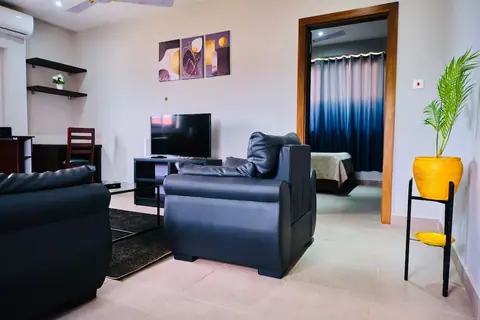
 ★★ 2-star
Hotels · Greater Accra
Where to stay in La-Nkwantanang-Madina
La-Nkwantanang-Madina is a district of Greater Accra on the northern side of the capital, with most of its hotels around Amanfrokoo. It suits travellers who want quieter evenings, more space and easy road access to Accra's sights.
IMPT Ghana editorial team · Reviewed 13 November 2026
At a glance
- Region
- Greater Accra
- Main town
- Madina town centre
- Hotel cluster
- Around Amanfrokoo
- Airport
- About 13 km to Accra International
What the district is like
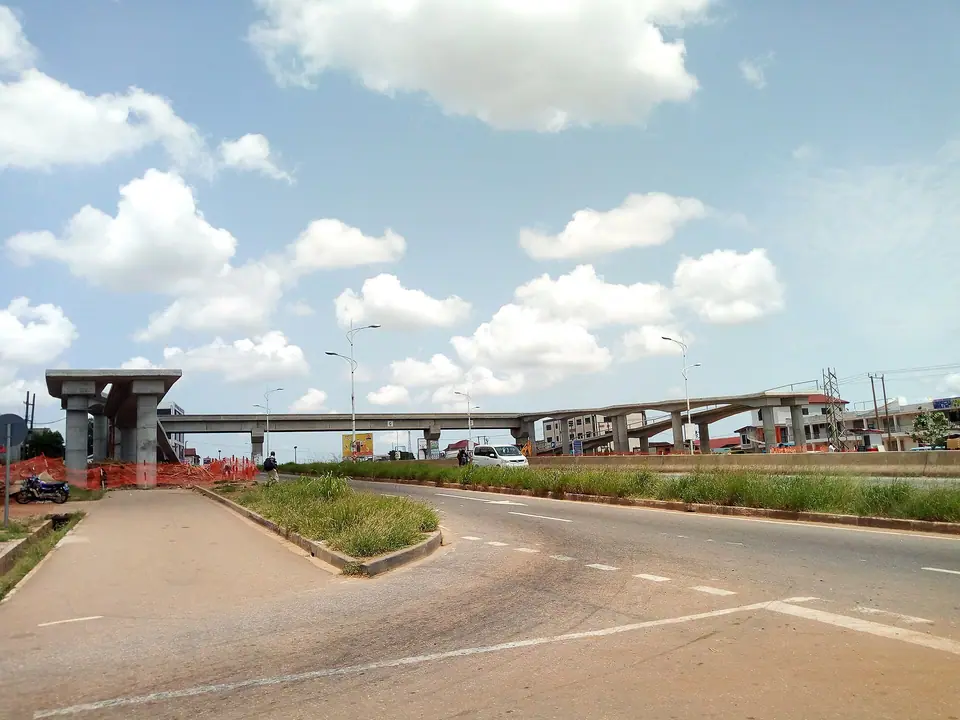
La-Nkwantanang-Madina is a district of Greater Accra on the northern side of the capital, beyond the central business district. It is mostly residential: walled family compounds, small workshops, shops and newer apartment blocks, threaded with roads that carry heavy traffic for much of the day. The side streets behind the main roads are quieter and easier to walk. Most of the district's hotels are grouped around Amanfrokoo, which makes for a compact base rather than a scattered one.
Straight-line distances give a rough idea of the lie of the land: about 13 km to Accra International Airport and about 19 km to Independence Square in the city centre. Road journeys take longer, and much longer at peak hours. The district suits travellers who prefer space and quiet evenings to the noise of the centre: families, people visiting relatives, staff on longer assignments and anyone with business in northern Accra. Anyone planning to walk to the main museums and markets is better placed nearer the centre.
Towns and neighbourhoods
Madina is the main town and the commercial heart of the district. Its centre is dense with shops, workshops, food stalls and a large market area, and the roads through it carry trotros, taxis and private cars from early morning until well after dark. This is where people come to shop for everyday goods, change money, print documents or find a mechanic. For a visitor it is useful and noisy in equal measure: a place to buy what you need, then retreat to a quieter street.
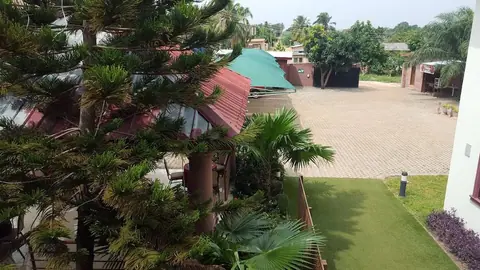
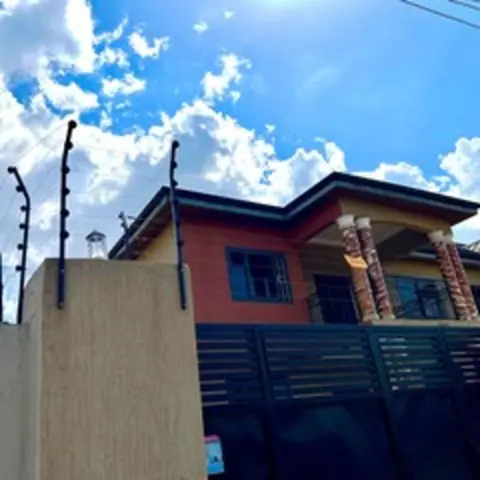
Amanfrokoo lies on the edge of Madina and holds most of the district's hotels, from small guesthouses to larger business-style properties with car parks and generators. The setting is suburban rather than scenic: compounds, plots, roadside trade and new building work. What it offers is practical. Rooms tend to come with more space than central Accra, roads connect quickly to the main routes, and evenings are calmer. Shops, pharmacies and places to eat are close by along the main road, and the airport and city centre are a straightforward drive in light traffic.
- Madina town centre holds the main market and the busiest stretch of road in the district.
- Amanfrokoo, on the edge of Madina, is where most of the district's hotels are found.
- Residential streets behind the main roads are quieter, with walled compounds and small apartment blocks.
- Shops, pharmacies and places to eat cluster along the main road rather than in one centre.
Getting around and to the airport
The district is built for road travel. Trotros, the shared minibuses, run along the main roads and stop at informal points, and taxis are easy to flag. Ride-hailing apps work across the district, which takes some of the haggling out of a journey. Fares change, so check the current rate before you set off, and agree the price before leaving. Traffic is heaviest in the morning and late afternoon, when the roads into the centre slow to a crawl.
For the airport, allow more time than the distance suggests. Accra International Airport, formerly Kotoka, sits about 13 km away in a straight line, but the road route crosses busy junctions north of the city. Terminal 3 opened in 2018. At peak hours, or in heavy rain, the same journey can take several times longer. Late-night arrivals are better met by a pre-arranged car than by hunting for a taxi. Check terminal and airline details before you travel, because schedules change.
- Trotros, the shared minibuses, run along the main roads and stop at informal points.
- Taxis and ride-hailing apps cover the district, and the price should be agreed before you set off.
- Allow extra time for airport runs at peak hours, when roads north of the centre slow down.
- Walking works on side streets but not along the main roads, which carry fast traffic.
Tip: British travel advice warns against road travel outside towns after dark. Plan airport runs and longer trips for daylight, and keep late journeys to short hops on lit roads.
What is nearby
The nearest big sights are in central Accra. Makola Market, which lines Kojo Thompson Road, is about 20 km away in a straight line and is a well-known place to shop for cloth, food and household goods. The Kwame Nkrumah Memorial Park, with the mausoleum of Nkrumah and his wife Fathia and a museum, is a similar distance, and it was redeveloped and reopened in 2023. Jamestown, with its red-and-white lighthouse and walking routes, is a little further. Cape Coast Castle and Elmina Castle lie further west along the coast and need a separate trip or an overnight stay.
All these distances are straight-line figures, and the road routes are longer, often much longer in the morning and evening peaks. Rather than crossing the city twice in a day, group central sights into one outing: the market, the memorial park and Jamestown sit within a few kilometres of each other. Independence Square, on the coast, is about 19 km away and can be added to the same trip. Plan on a full day rather than an afternoon.
Tip: One central outing is easier than several. Traffic on the radial roads into Accra builds early, so leave after the morning peak or plan to arrive before it.
Eating and practical tips
Eating well is not difficult. The southern staples are cassava and plantain, with yam, maize and beans eaten everywhere, and the dishes that turn up most often are fufu, banku, kenkey, jollof rice and soups or stews built on tomato and pepper. Kenkey comes in Ga and Fante versions. Around Madina the choice runs from roadside grills and chop bars serving generous plates of rice and stew to small sit-down restaurants, bakeries and hotel kitchens. Portions tend to be generous, and vegetarian choices are limited outside the bigger places, so ask before you sit down.
Power comes from type G sockets, the British three-pin, at 230 volts, and many sockets take several plug shapes. Ghana keeps GMT all year, with no daylight saving, so the clocks do not move. The cedi is the currency, divided into pesewas. Cards work in many larger hotels and supermarkets; markets and small eateries usually run on cash. A yellow fever certificate is required on entry. Check the official visa portal before booking, because the rules differ by nationality.
Timing shapes a stay. The harmattan, a dry and dusty wind, blows roughly from December to March and is strongest in the north, though Accra feels its dust. The southern rains come in two spells, roughly April to June and September to November, and downpours can flood roads quickly. August and September bring Homowo, the Ga harvest festival, and August also brings the Chale Wote street art festival. Both draw crowds. Public holidays move under rules introduced in 2025, so check the year's gazetted dates before you plan around them.
Where to stay
Hotels in La-Nkwantanang-Madina
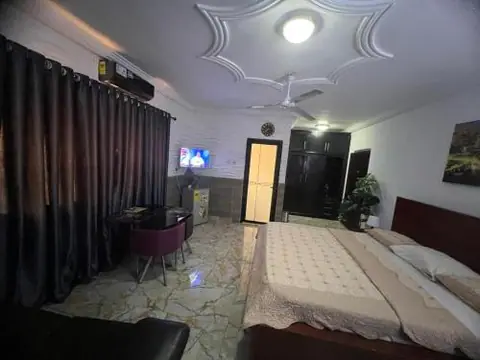
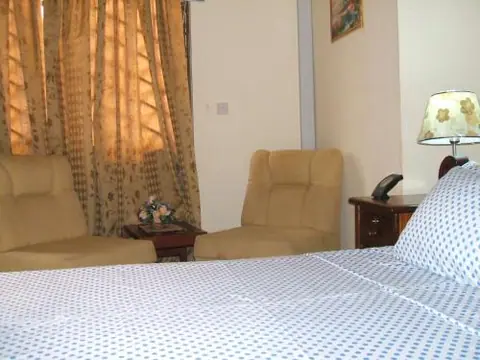
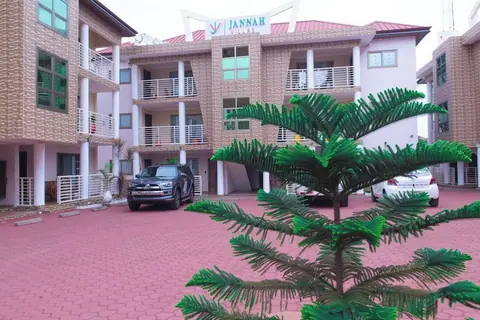
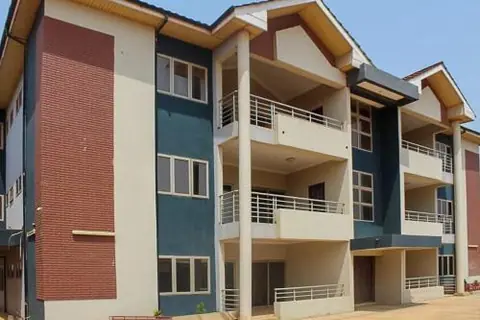
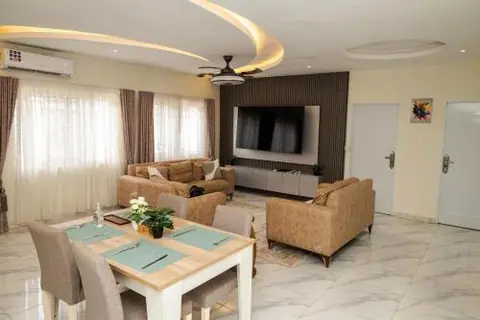
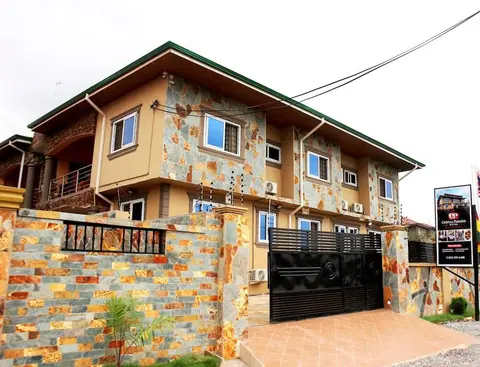
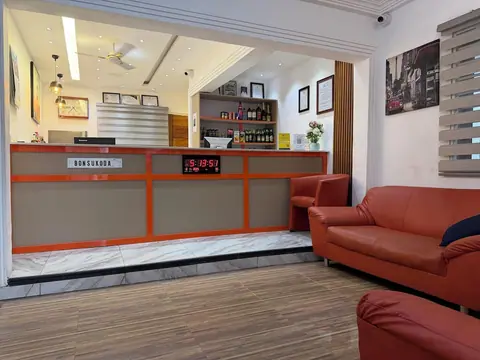
15 stays with a guest score or a four- or five-star rating in the IMPT database, five-star first, then four-star, then the rest by the booking supplier's guest score. Prices and availability are live in the IMPT app.
★★ 2-star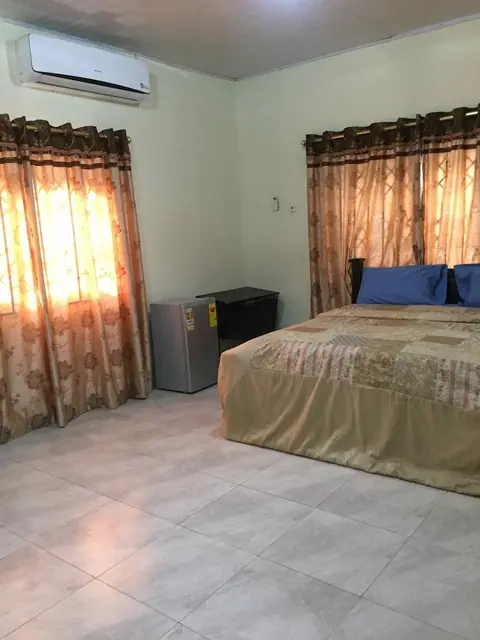 ★★★ 3-star
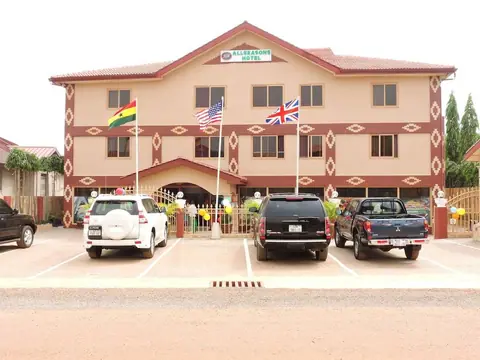 ★★★ 3-star
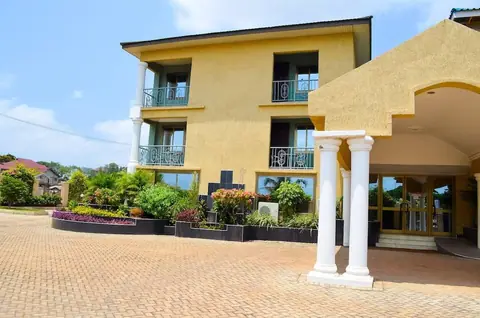 ★★★ 3-star
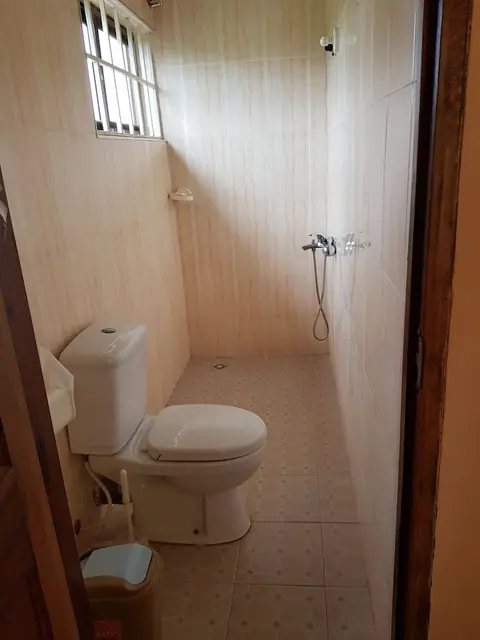 ★★★ 3-star
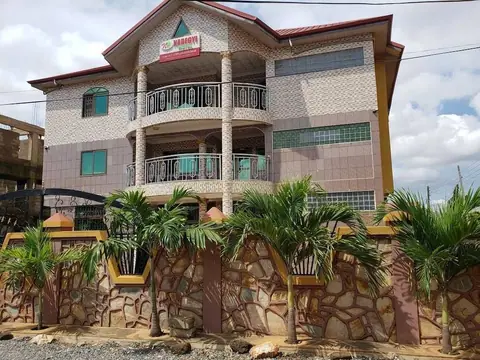 ★★ 2-star
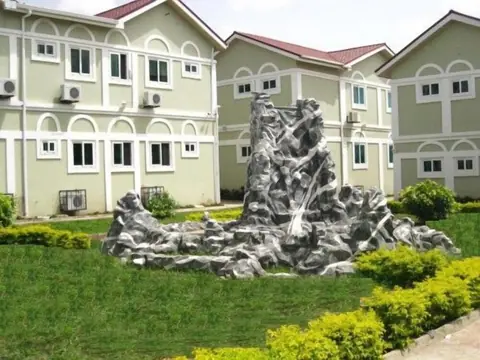 ★★★ 3-star
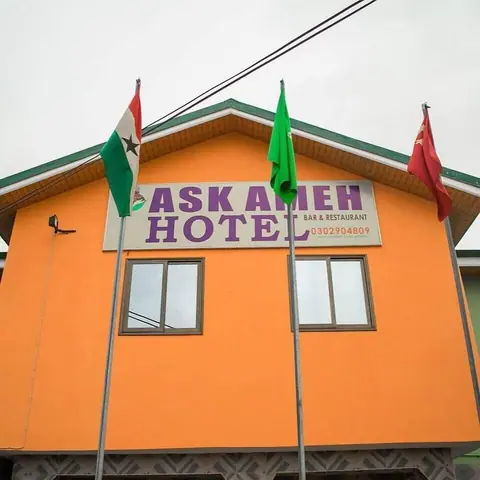 ★★★ 3-star
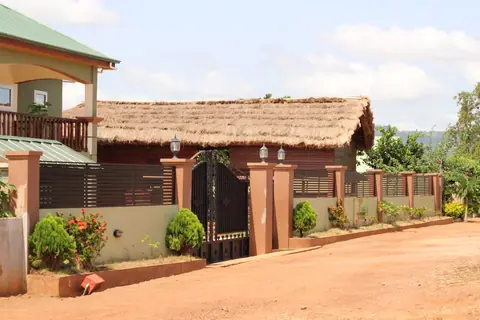 ★★★ 3-star
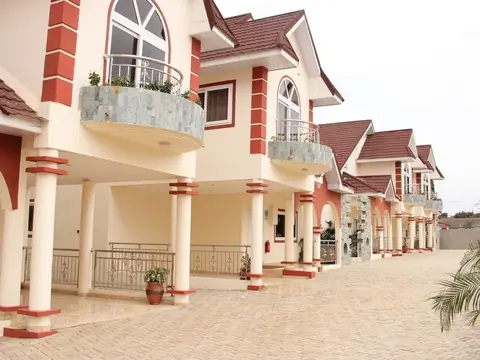 ★★ 2-star
More places to stay
Further listings in the IMPT database with fewer details from the booking supplier (no guest score yet). Check them on the property's page before you book.
Where to stay in La-Nkwantanang-Madina: questions
Where is La-Nkwantanang-Madina in Greater Accra?
La-Nkwantanang-Madina is one of the districts of Greater Accra, sitting on the northern side of the capital, beyond the central business district. Madina is its main town and commercial centre. Roads from the district lead south towards Accra's centre and north towards the hills beyond the city. Most of its hotels are grouped around Amanfrokoo.
Where are the hotels in La-Nkwantanang-Madina?
Most of the district's hotels are grouped around Amanfrokoo, on the edge of Madina. The choice runs from small guesthouses to larger properties with car parks and generators. Rooms generally come with more space than you find in central Accra, and the setting is suburban rather than scenic. Shops, pharmacies and places to eat are close by along the main road.
How far is La-Nkwantanang-Madina from Accra International Airport?
Accra International Airport is about 13 km from La-Nkwantanang-Madina in a straight line. The road journey is longer and can stretch considerably at peak hours or in heavy rain. Terminal 3 at the airport opened in 2018. Allow more time than the distance suggests, and plan late arrivals with a pre-arranged car.
How do you get around La-Nkwantanang-Madina without a car?
Trotros, the shared minibuses, run along the main roads and stop at informal points, and taxis are easy to flag. Ride-hailing apps cover the district. Fares change, so check the current rate before setting off and agree the price before leaving. Traffic is heaviest in the morning and late afternoon. Side streets are walkable. Main roads are not pleasant on foot.
Is La-Nkwantanang-Madina a good base for Accra's sights?
It works if you have a car, use taxis or accept longer journeys. Makola Market is about 20 km away in a straight line, Kwame Nkrumah Memorial Park a similar distance and Jamestown a little further. Group them into one central outing rather than crossing the city repeatedly. Travellers who want to walk to the main sights are better placed nearer the centre.
What can you eat in and around La-Nkwantanang-Madina?
Expect the dishes eaten across southern Ghana: fufu, banku, kenkey, jollof rice, and soups and stews built on tomato and pepper, with cassava and plantain as staples. Around Madina the choice runs from roadside grills and chop bars to small sit-down restaurants, bakeries and hotel kitchens. Portions tend to be generous, and vegetarian options are fewer outside the larger places, so ask.
When should you visit La-Nkwantanang-Madina?
The harmattan brings dry, dusty air roughly from December to March. The southern rains fall in two spells, roughly April to June and September to November, and downpours can flood roads quickly. August and September bring Homowo, while August brings the Chale Wote street art festival. Both draw crowds, so book ahead if your stay coincides.
What should you check before travelling to La-Nkwantanang-Madina?
Check the official visa portal, because Ghana sorts nationalities into visa-free entry, a free authorisation requested online, or an eVisa. A yellow fever certificate is required on entry. Pack for type G sockets at 230 volts. Public holiday dates move under rules introduced in 2025, so confirm the year's gazetted days before planning around them.
Read next
Hotels in Ga East, Greater AccraGa East is a residential district of Greater Accra, north of the capital, where most hotels cluster around Haatso. This guide covers the neighbourhoods, the run to the airport, nearby sights and everyday food.Hotels in Adenta, Greater AccraAdenta Municipal is a residential district of Greater Accra, close to the airport and a short run from the city centre. This guide covers the hotel cluster at Otanor, transport, nearby sights and everyday food.Hotels in Ayawaso WestAyawaso West sits between central Accra and the airport, with East Legon, Airport Residential Area and Dzorwulu inside it. Most of its places to stay cluster around Shiashie.
IMPT Ghana editorial team · Reviewed 13 November 2026. Hotels are placed by their own map pin inside Ghana's official district boundaries (Ghana Statistical Service). Facts checked against the Ghana Tourism Authority (visitghana.com), the Ghana Immigration Service and other official sources listed in our editorial policy. Prices are never shown: live rates open in the IMPT app.
Find a stay in La-Nkwantanang-Madina
Photo credits: Enock4seth, CC BY-SA 4.0, via Wikimedia Commons.