Festivals in Ghana, month by month
Ghana's festival calendar runs from the Ga harvest of Homowo to the street art of Chale Wote and the homecoming of December. Here is what happens, month by month, and how to plan around it.
- Homowo
- August to September, Accra
- Chale Wote
- August, venue varies
- Fetu Afahye
- September, Cape Coast
- Busiest month
- December, above all Accra
The shape of the festival year
Ghana's festival calendar follows harvests, fishing seasons and the Asante and Ga ceremonial cycles rather than a fixed national timetable. Some events are tied to a Saturday, some to the reading of the moon, and a few move between neighbourhoods or are skipped altogether. Public holidays shift too: since 2025, holidays falling from Tuesday to Thursday move to the Friday, and weekend holidays move to the Monday, with the Eids, Shaqq Day, Christmas and Boxing Day excepted. Check the year's gazetted dates with the Ghana Tourism Authority before booking.
Month by month, the year opens quietly. January brings New Year's Day and Constitution Day on 7 January. Independence Day falls on 6 March, and Easter moves with the church calendar. May brings May Day and Aboakyer at Winneba on the first Saturday. Akwasidae recurs on a Sunday every six weeks at Manhyia Palace in Kumasi, so any visit to the Asante capital can be planned around it. Ramadan and the two Eids slide earlier each year. June and July are quieter, then the calendar fills from August.
- Hogbetsotso brings the Anlo Ewe to Anloga in November, with the durbar on the first Saturday.
- Akwasidae has no fixed month and falls on a Sunday every six weeks.
- Aboakyer is held at Winneba in May, on the first Saturday.
- Homowo follows a ban on drumming in Ga communities that begins around May.
Homowo in Accra
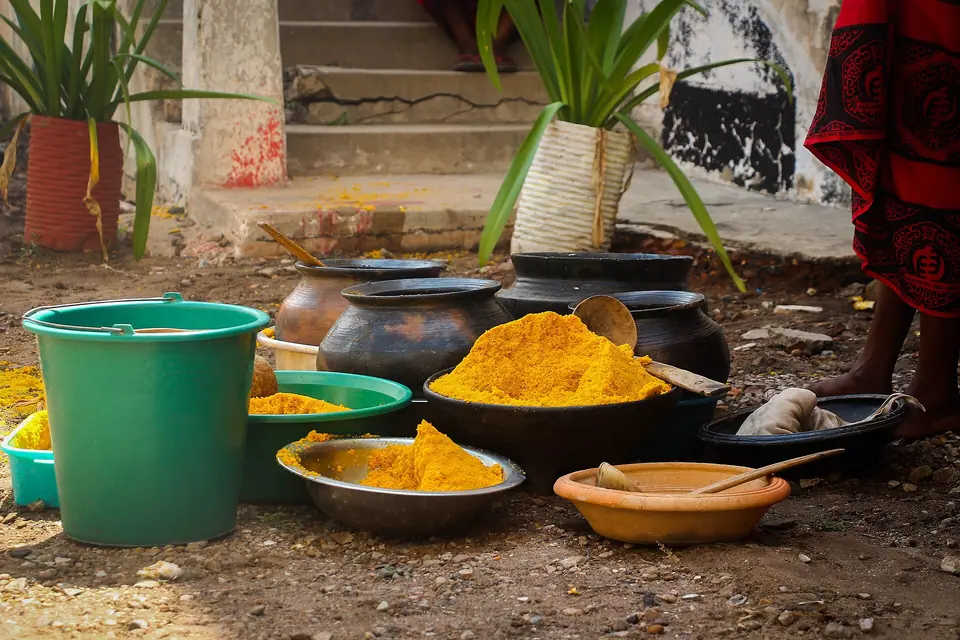
Homowo is the Ga harvest festival of the Greater Accra Region, held in August and September after a ban on drumming that begins around May. The name refers to hooting at hunger: the harvest is greeted with noise rather than complaint. The season runs through the Ga communities of Accra and beyond, and each town keeps its own day for the family gatherings and the sprinkling of kpokpoi, the steamed maize dish. Dates move with the traditional calendar.
For a visitor, Homowo is mostly a street and neighbourhood event. Expect processions, drumming and dancing, and a lot of cooking. It is a family time, so ask before photographing people or entering a compound, and follow local guidance on where to stand. The food is part of the point: kpokpoi with palm-nut soup, served to neighbours and visitors alike. Check the year's dates with the Ghana Tourism Authority, since the ban on drumming and the festival days move.
Chale Wote in August
Chale Wote is a street art festival held in Accra each August, with painting, sculpture, performance, film and music spread across public space. It began in Jamestown and has since moved between Jamestown and Osu, and one edition was hosted at Black Star Square. Murals, installations and food stalls take over the host neighbourhood for the duration. Expect heat, crowds and a long day on your feet, and carry water.
The festival is a good reason to spend time in Jamestown, where the lighthouse stands about 28 metres tall and dates from the early 1930s. Because the venue has changed from year to year, confirm the current location before you set out, and use the opportunity to walk the old quarters on foot. August falls in the rainy season, so carry a light rain jacket and keep bags covered when the showers come.
Tip: Pair the festival with a morning at Makola Market, which lines Kojo Thompson Road in central Accra, before the afternoon heat builds.
Fetu Afahye in Cape Coast
Fetu Afahye is the festival of the people of Cape Coast, held in September; the Ghana Tourism Authority gives 1 September as its start. It brings traditional rites, a durbar of chiefs, drumming and a procession through town, with the Omanhene at the centre. It is a time of cleansing and thanksgiving for the harvest and the sea. Visitors are welcome at the public events, though some rites have rules and are not open to all.
The timing suits a wider trip. Cape Coast Castle, the largest of the buildings tied to the trans-Atlantic slave trade according to the Ghana Tourism Authority, houses the West African Historical Museum and was the British seat of government until 1877. Elmina Castle, built by the Portuguese in 1482, is a short drive west. Both are part of the UNESCO World Heritage site inscribed in 1979. Allow a full day for the castles and another for the festival.
PANAFEST and Emancipation Month
PANAFEST is a pan-African festival of arts and ideas, held in the run-up to Emancipation Day and taking in Cape Coast and Elmina. Emancipation Month runs from late July into August, and the programme includes performances, panels and visits to the castles. It is not held every year, and the shape of each edition varies; the 2019 Emancipation programme fell on 20 July. Check with the Ghana Tourism Authority before planning a trip around it.
The subject matter is heavy, and the setting is not incidental. Cape Coast Castle and Elmina Castle hold the dungeons and, at Elmina, the Door of No Return. Guided visits are common, so confirm arrangements when you arrive. Give yourself time afterwards rather than scheduling something immediately. For visitors with Ghanaian or Caribbean heritage, the season has a particular weight, and the events draw people from across the diaspora. Dress respectfully inside the castles.
Tip: Treat any PANAFEST listing as provisional, and confirm the year's dates with the Ghana Tourism Authority before booking flights or rooms.
December and the year's end
December is the busiest month in the visitor calendar, above all in Accra, where the diaspora comes home and the beaches, restaurants and venues fill. Christmas Day and Boxing Day are fixed on 25 and 26 December and are not moved by the new holiday rule. Farmers' Day falls on the first Friday of December. Book accommodation well ahead, expect heavier traffic on the coast road, and note that the harmattan is usually beginning to dry the air, strongest in the north.
The December season is not a single festival. It is a month of concerts, parties, beach days and family events, most of them announced late. Ask around, read local listings and follow the news rather than relying on a printed calendar. If you want a quieter end to the year, head north or west, where the crowds are thinner and the harmattan haze sits over the savannah. Hogbetsotso in Anloga, with its durbar on the first Saturday of November, is the other late-year event.
- Christmas Day and Boxing Day stay on 25 and 26 December whatever the weekday.
- Farmers' Day is the first Friday of December and a public holiday.
- The harmattan usually arrives from about December and is strongest in the north.
- Book rooms and domestic flights early, and confirm schedules before you travel.
Frequently asked questions
When is the Homowo festival celebrated in Accra?
Homowo falls in August and September, after a ban on drumming that begins around May. Each Ga community sets its own day within the season, so the Accra events spread across several weeks. Dates follow the traditional calendar rather than a fixed national timetable, so check the current year's dates with the Ghana Tourism Authority before you plan around them.
What happens at the Chale Wote festival in Accra?
Chale Wote is a street art festival held each August, with murals, installations, performance, film and music in public space. It started in Jamestown and has moved between Jamestown and Osu, with one edition at Black Star Square. The venue changes, so confirm the current location before you go, and expect heat and crowds.
Where and when is the Fetu Afahye festival held?
Fetu Afahye takes place in Cape Coast in September, with the Ghana Tourism Authority giving 1 September as the start. It brings traditional rites, a durbar of chiefs, drumming and a procession through town. The castles are nearby, so the festival combines well with a visit to Cape Coast Castle and Elmina Castle.
Is the PANAFEST festival held every year?
No. PANAFEST and the Emancipation Month programme are not staged annually in the same form, and the shape of each edition varies. The 2019 Emancipation programme fell on 20 July. Treat any listing as provisional and confirm dates with the Ghana Tourism Authority before booking travel around it.
Which month is busiest for festivals in Ghana?
December is the busiest month for visitors, especially in Accra, when the diaspora returns and events are announced at short notice. August is the busiest for named festivals, with Homowo in Accra and Chale Wote, while September brings Fetu Afahye to Cape Coast. Book accommodation early for both months.
Do Ghana's festivals require tickets or registration?
It varies. Public durbars, processions and street events are generally open, while some rites and ceremonies are closed to visitors. Ask the Ghana Tourism Authority or the local traditional council about access, and check whether registration is needed for a particular event before you travel, rather than assuming you can turn up on the day.
What should you wear to a festival in Ghana?
Dress modestly and comfortably. Light cotton clothing suits the heat, and covered shoulders and knees are the safer choice for durbars, churches and mosques. Wear shoes you can walk in on dusty ground, carry water and a hat, and follow local guidance if a ceremony calls for particular dress or a head covering.
How do public holiday changes affect festival travel in Ghana?
Since 2025, public holidays falling from Tuesday to Thursday move to the Friday, and weekend holidays move to the Monday, with the Eids, Shaqq Day, Christmas and Boxing Day excepted. That shifts long weekends around festivals, so check the year's gazetted dates with the Ghana Tourism Authority before booking transport and rooms.
Read next
IMPT Ghana editorial team · Reviewed 13 November 2026. Facts checked against the Ghana Tourism Authority (visitghana.com), the Ghana Immigration Service and other official sources listed in our editorial policy. Prices are never shown: live rates open in the IMPT app.
Find a stay in Ghana
Photo credits: Fquasie, CC BY-SA 4.0, via Wikimedia Commons.