A Guide to Ghanaian Food
Ghanaian cooking is built on staples, soups and pepper, with a street food culture that runs from breakfast waakye to late evening kelewele. This guide covers the dishes to know and where to find them.
- Southern staples
- Cassava and plantain
- Northern staples
- Millet and sorghum
- Everyday dishes
- Waakye, fufu and banku
- Evening snack
- Kelewele, fried ripe plantain
How a Ghanaian meal works
Ghanaian cooking starts with the staple rather than the sauce. In the south that means cassava and plantain, pounded or fermented into fufu, banku and kenkey. In the north it means millet and sorghum, cooked into tuo zaafi. Yam, maize and beans appear across the country. A meal is usually a starchy base with a soup or stew, eaten together rather than in courses. Portions are generous and the bowl is often shared. Kenkey, fermented maize dough, is steamed in corn husk and eaten with fish or soup.
Eating with the right hand from a shared bowl is common, especially with fufu and banku, though spoons are normal in restaurants and in many homes. Pepper is a seasoning rather than a test: a mild soup and a fierce one can look identical, so say how much you want. Vegetarian food is easy to find, since groundnut soup, okro stew and bean dishes stand on their own. If you are unsure what to order, look at the next table and ask.
Jollof rice
Jollof is the dish most visitors arrive knowing about and the one most argued over. Rice is cooked in a base of tomato, pepper and onion, with bay and a little chilli, so the grains take on a deep red colour and a smoky edge. In Ghana the rice is usually long grain, and the pot is cooked down until the bottom catches slightly. That layer, scraped up carefully, is what cooks are judged on.
Jollof appears at parties, funerals, naming ceremonies and Sunday lunches, and it is rarely made for one person. It comes with fried plantain, chicken, egg or a spoon of shito, the dark pepper and dried fish condiment. Street plates and party pots taste different, because the party version is usually cooked in a very large pot over firewood. Portions are generous. It is a safe first order if Ghanaian food is new to you. Ask for a small plate if you are unsure.
Tip: Party jollof is cooked over firewood in a very large pot, and the smoky taste is the point. If you are invited to a celebration, expect to be fed.
Waakye, the morning plate
Waakye is rice and beans cooked together with sorghum leaves, which give the dish its reddish-brown colour and a faint earthy taste. In most of Ghana it is a breakfast food, sold from large pots from early morning until the batch runs out. The rice and beans are only the base; the plate is built around them, item by item, in front of you. Say how much of each you want as it goes on.
The toppings are the point, and every stall assembles them in its own order. A plate can be mild or fierce depending on how much pepper you accept, and the stew spooned over the rice is often hotter than it looks. Waakye does not travel well, so eat it at the stall or soon after it is wrapped in paper. It is one of the most filling meals in the country, and one of the most common breakfasts.
- Rice and beans cooked with sorghum leaves for colour
- Spaghetti, boiled egg and fried fish, added at the stall
- Gari, a dried cassava grit, scattered over the top
- Shito, sliced tomato and onion, added to taste
- A spoon of dark stew from the pot beside the rice
Fufu, banku and grilled tilapia
Fufu is pounded cassava and green plantain, worked in a wooden mortar until it is smooth and slightly elastic. It arrives in a bowl of soup, usually light soup, groundnut soup or palm nut soup, and is eaten in small pinches with the right hand. The pounding is hard work and often shared between two people. Banku is different: fermented maize and cassava dough, cooked and stirred into a stiff, slightly sour mass, served with soup, stew or grilled tilapia.
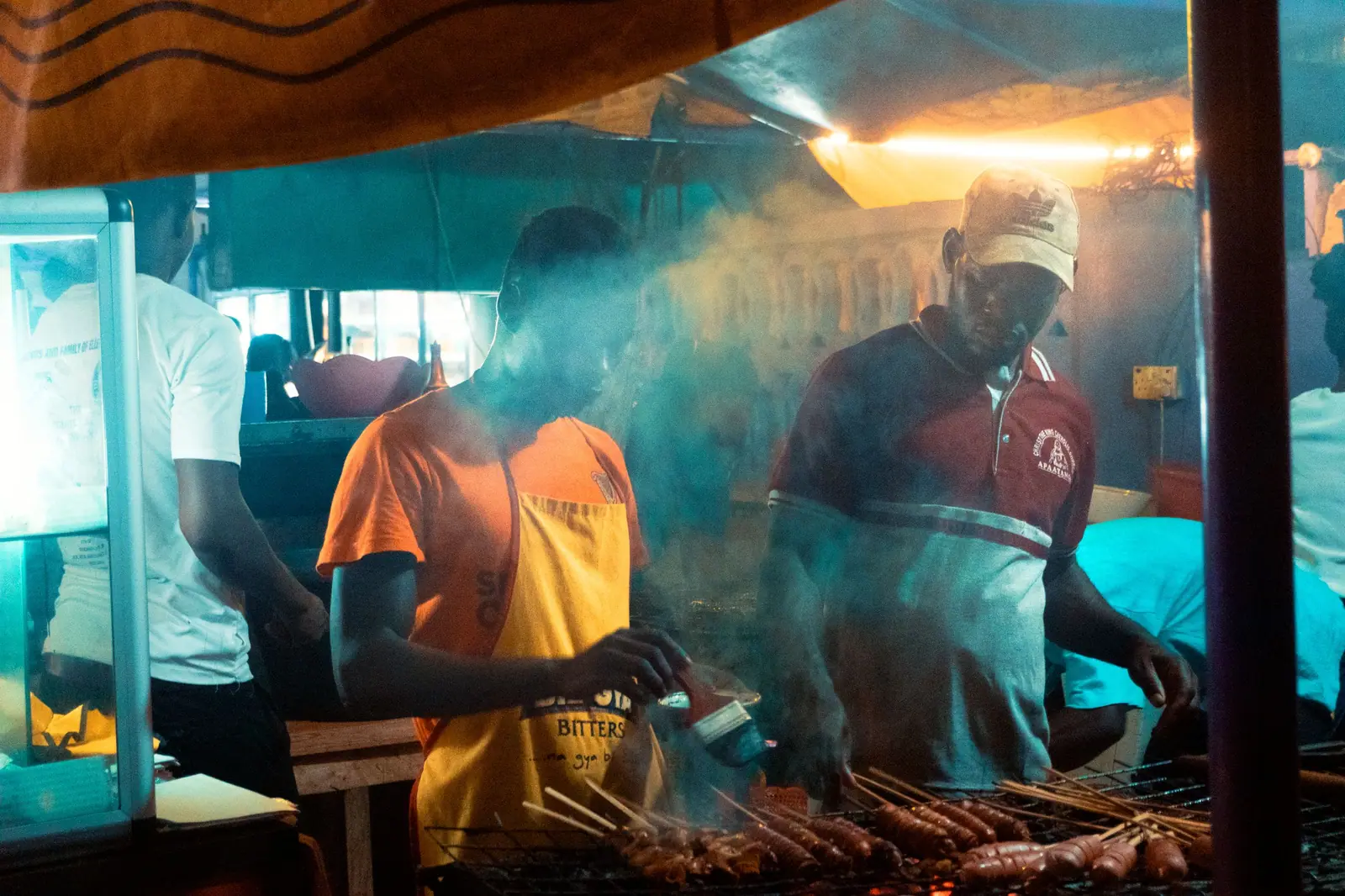
Grilled tilapia is a whole fish, scored and cooked over coals, served with a relish of onion, tomato and hot pepper and usually with banku or kenkey. It is eaten with the hands, and lifting the flesh off the bone is part of the meal. Order it where the tables are full, since fish is best when it has not waited under a lamp. The head is not waste; it is picked clean. Ask for a smaller fish if the plate looks large.
Tip: Banku and tilapia is usually a lunch or early evening meal, eaten at a table rather than on the move. Ask what size fish is going on the fire before you sit down.
Kelewele and red-red
Kelewele is ripe plantain cut into cubes, tossed with ginger, chilli, pepper and sometimes cloves, then fried until the edges darken. It is sold in the evening from pans and paper wraps, near lorry stations, markets and bars. Good kelewele is soft inside and crisp at the edge, with the spice arriving slowly rather than all at once. It works as a snack, a side for rice, or a late dinner on its own.
Red-red takes its name from the colour palm oil gives the beans. Black-eyed beans are cooked with onion, tomato and palm oil and served with fried ripe plantain, sometimes with gari. It is one of the few classic Ghanaian dishes that is usually meat-free, though it may come with fish or egg, so ask. The taste is smoky and a little sweet, and it is milder than most plates. Look for it at lunchtime, from pots and trays.
Where to eat Ghanaian food
Street food is the backbone of eating out. Stalls and chop bars around markets, lorry stations and junctions serve waakye in the morning, red-red at midday and kelewele in the evening. In Accra, Makola Market and the streets of Jamestown and Osu give plenty of choice, and the coast roads west of the city fill up at weekends. In Kumasi, Kejetia Market and the lanes around it are busy from first light. Eat where the queue is steady.
Sit-down places in Accra and Kumasi serve jollof, grilled tilapia and banku in more comfortable surroundings, and most hotels keep a Ghanaian section on the menu. Outside the big cities, ask where the lunch crowd goes, or follow the pots. Portions are large, so one plate and a side often suits two people. If you do not eat fish, say so clearly: dried fish and fish stock turn up in soups and stews that look vegetarian.
- Makola Market in central Accra for produce and cooked food
- Kejetia Market in Kumasi, busy from first light
- Jamestown and Osu in Accra for evening kelewele
- The coast roads west of Accra at weekends
- Chop bars near lorry stations, where the queue is steady
Frequently asked questions
What is the difference between Ghanaian jollof and waakye?
Jollof is rice cooked in a tomato and pepper base, usually served at parties and Sunday lunches with chicken, egg or plantain. Waakye is rice and beans cooked with sorghum leaves, sold as a breakfast plate with spaghetti, egg, fish and shito. Jollof is one dish with a sauce; waakye is a base you build a plate on.
How hot is Ghanaian food in practice?
Heat varies by cook and by dish. Red-red and banku with stew are usually mild, while shito and the pepper relish served with grilled tilapia can be fierce. Pepper is often added at the end rather than cooked through everything, so you can ask for a little or none. Say so clearly the first time and taste before adding more.
Can you find vegetarian Ghanaian food?
Yes, with care. Red-red, bean stew, okro stew and groundnut soup are meat-free at base, but dried fish, fish stock and shrimp powder are common seasonings. Say that you eat no fish as well as no meat, and ask which pots are safe. Vegetarian places exist in Accra and Kumasi, and market cooks will usually tell you what is in a dish.
Do you eat Ghanaian fufu and banku with your hands?
Yes. Fufu and banku are normally eaten with the right hand, taking a small pinch of the starch, dipping it in soup and swallowing without much chewing. Spoons are fine in restaurants and many homes, and nobody will mind. Wash your hands before and after the meal, and use the bowl of water offered at the table.
What is Ghanaian shito and what does it taste like?
Shito is a dark condiment of ground pepper, dried fish, shrimp powder and oil, cooked down until it keeps. It tastes savoury, hot and slightly smoky, and a spoon is enough for most plates. It comes with waakye, jollof and many rice dishes, on the side rather than mixed in. Try a little first, and keep it away from anything you want to taste plainly.
When and where do you find Ghanaian kelewele?
Kelewele is an evening food, sold from pans and paper wraps near markets, lorry stations, road junctions and bars from late afternoon until well after dark. In Accra, Jamestown and Osu are reliable, and stalls gather wherever people wait for transport. It is made to order, so it is usually hot. Buy from a pan with a queue and eat it within minutes.
What is Ghanaian red-red and is it always meat-free?
Red-red is black-eyed beans cooked with palm oil, onion and tomato, served with fried ripe plantain and sometimes gari. The name comes from the colour the palm oil gives the beans. It is usually meat-free, but fish, fish stock or a boiled egg may be added, so ask before you order. It is mild by Ghanaian standards, which makes it a good first plate.
Where can you try Ghanaian food in Accra?
Start with Makola Market in central Accra, where stalls and nearby chop bars serve rice dishes through the day. Jamestown and Osu have evening food, including kelewele, and the coast roads west of the city are busy at weekends. Hotels and sit-down places serve jollof and grilled tilapia. Eat where the queue is steady and ask what is fresh that day.
Read next
IMPT Ghana editorial team · Reviewed 13 November 2026. Facts checked against the Ghana Tourism Authority (visitghana.com), the Ghana Immigration Service and other official sources listed in our editorial policy. Prices are never shown: live rates open in the IMPT app.
Find a stay in Ghana
Photo credits: Seyiram Kweku / Pexels.