Cape Coast: where to stay & why
The old capital of the Gold Coast, a university town and the best base for Ghana’s castles and the Kakum rainforest.
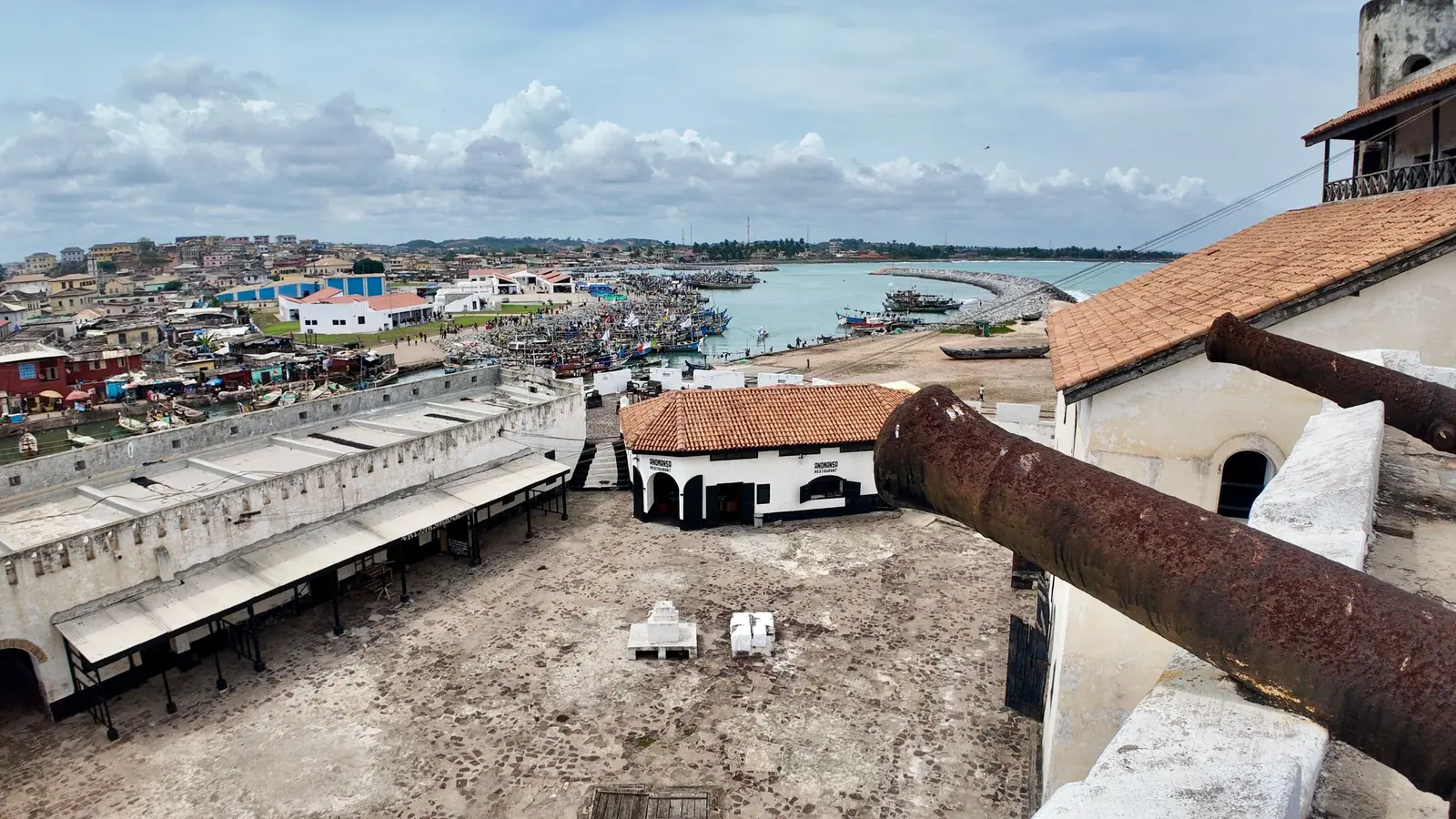
Stay in Cape Coast for two or three nights if you want Cape Coast Castle, Kakum National Park and Elmina in one base. Sleep in the town centre near the castle for walkability, on the beach strip to the west for sea views, or at a lodge on the Kakum road to be first on the canopy walkway. Accra is about three hours by road.
Cape Coast at a glance
Cape Coast — Oguaa in Fante — sits on a rocky stretch of the Central Region coast about 145 km west of Accra. For more than two centuries it was the seat of British rule on the Gold Coast, until the capital moved to Accra in 1877. That history is written into the town: colonial-era buildings around the castle, some of Ghana’s oldest schools, and the whitewashed castle walls that dominate the shoreline.
Today it is a relaxed regional capital with a large university, a busy fishing beach and a steady flow of visitors. Many come for one reason — the castle — and stay longer once they discover how much is within an hour: Elmina, Kakum, Hans Cottage, Brenu beach and the fishing villages strung along the coast road.
| Region | Central Region |
|---|---|
| From Accra | ≈ 145 km · 3 hours by road |
| Nearest airport | Accra International Airport (ACC); Takoradi (TKD) is closer for domestic flights |
| Ideal stay | 2–3 nights |
| Best for | History, Kakum, photography, beaches |
| Main festival | Fetu Afahye, usually early September |
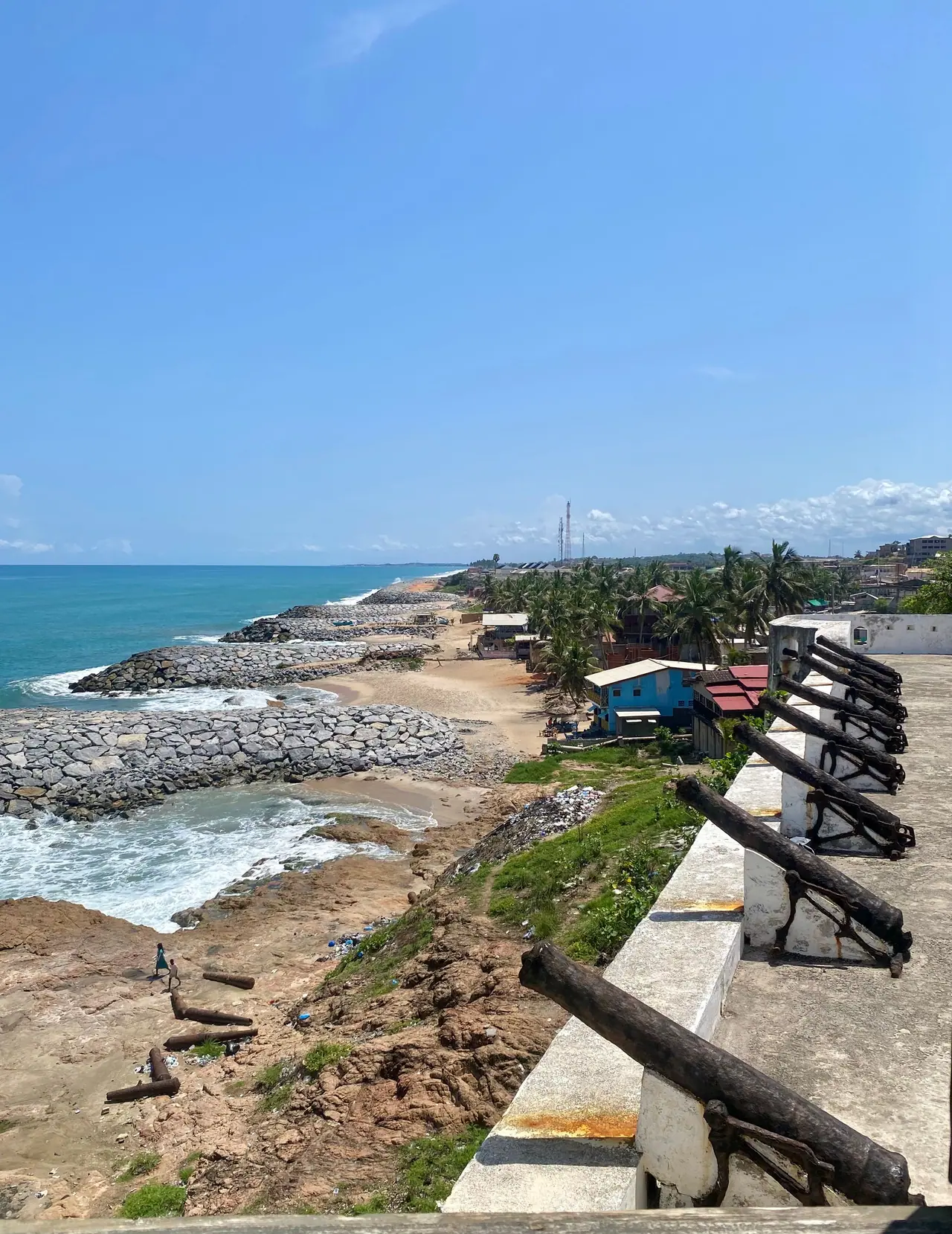
Where to stay in Cape Coast
Town centre and castle area
Guesthouses and small hotels cluster around the castle, Commercial Street and the streets climbing towards Fort William. You can walk to the castle, the harbour and the restaurants on the seafront, and taxis are easy to find. Expect simpler rooms but the most atmosphere; choose air-conditioning, as the coast is humid all year.
The western beach strip
Along the coast road heading west towards Elmina, beach hotels sit right on the sand with pools, bars and sea-facing rooms. This is the comfortable choice for families and couples, and still only a short taxi ride to the castle. Some properties lie closer to Elmina than to Cape Coast — handy if you plan to see both castles.
The Kakum road
North of town, the road to Kakum National Park passes eco-lodges and guesthouses set in greenery. Staying here means you can reach the canopy walkway when it opens and before tour buses arrive. You give up the sea but gain cooler nights and birdsong.
Further out: Brenu and Anomabo
For a beach-only escape, look at Brenu Akyinim west of Elmina, one of the calmer swimming beaches on this coast, or Anomabo to the east, with its fort and quieter resorts. Both need a car or taxi for sightseeing.
| Area | Best for | Trade-off |
|---|---|---|
| Town centre | Walking, budget, atmosphere | Basic rooms, street noise |
| Beach strip west | Pools, sea views, families | Taxi needed for town |
| Kakum road | Early canopy walk, nature | No beach |
| Brenu / Anomabo | Quiet beaches | Longer drives to sights |
What to see in and around Cape Coast
Cape Coast Castle
The castle was built as a trading lodge in the 1650s and enlarged by the British into the headquarters of their slave trade on the Gold Coast. Guided tours lead through the male and female dungeons, the governor’s quarters and the Door of No Return, through which enslaved Africans were taken to ships. The museum explains the trade and its legacy. It is part of the UNESCO World Heritage listing of Ghana’s forts and castles. Allow two hours, and go in the morning when it is cooler.
Kakum National Park
Around 30 km north, Kakum protects tropical rainforest and is famous for its canopy walkway of rope bridges high in the trees. Combine it with the crocodile pond at Hans Cottage on the way back.
Elmina
Fifteen kilometres west, Elmina Castle — founded by the Portuguese in 1482 — is the oldest European building in sub-Saharan Africa. Climb Fort St Jago across the lagoon for the classic view over the harbour of painted canoes.
Around town
- Fort William lighthouse, on the hill above town, for views over the rooftops.
- Kotokuraba Market, the rebuilt central market, for fabric and fresh produce.
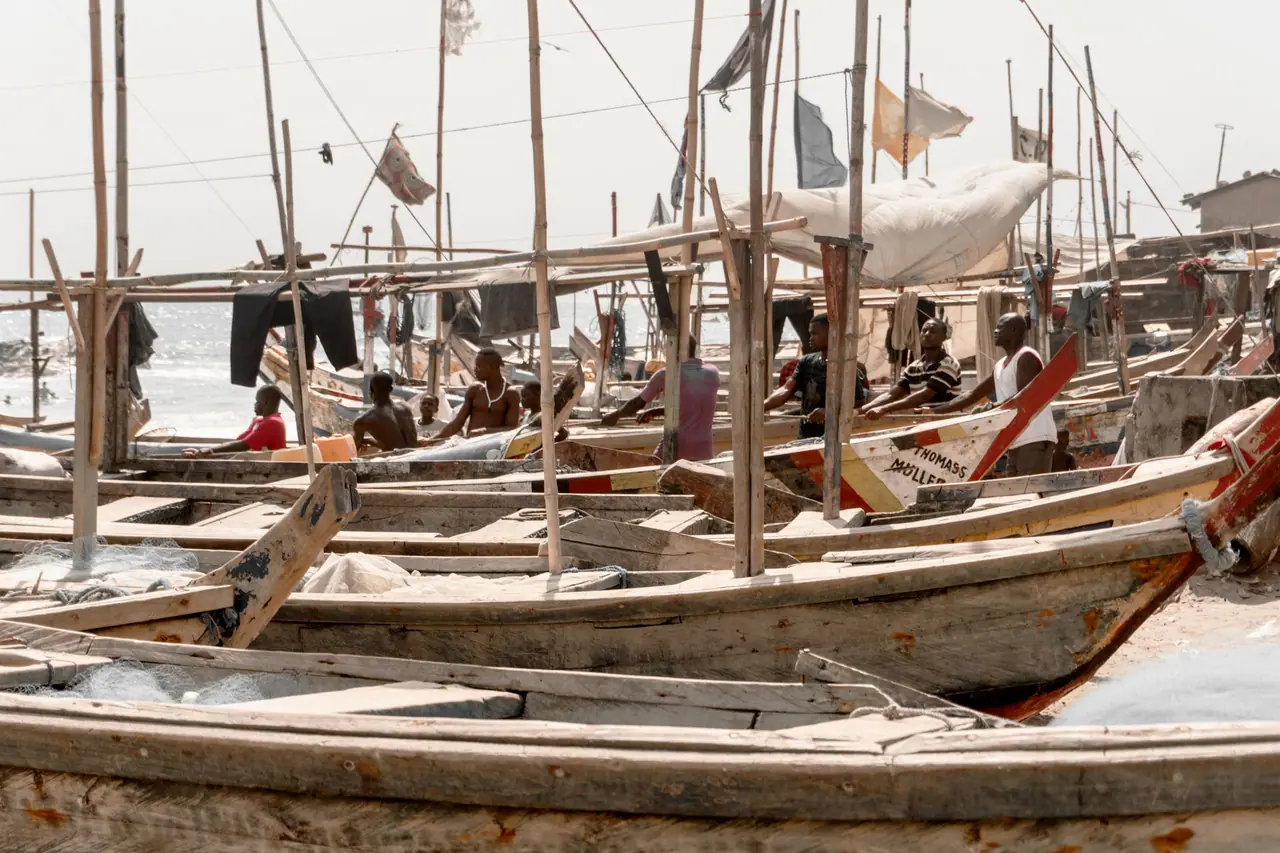
- The fishing beach beside the castle, busiest in the early morning when boats land.
- Asafo shrines, colourful company posts of the traditional warrior groups.
Food in Cape Coast
Seafood is the point: grilled tilapia or red snapper with banku and pepper sauce, fried fish with kenkey, and lobster at beach restaurants when the catch allows. Fante kenkey, wrapped in plantain leaves, is a regional speciality. Chop bars in town serve fufu with light soup and jollof at local prices; hotels offer continental menus too. Drink coconut water from roadside sellers and try sobolo, a chilled hibiscus drink.
When to visit Cape Coast
The coast is hot and humid all year, around 26–31°C. November to March is driest and the best time for beaches and tours. The main rains run roughly from April to June, with shorter rains around September and October — showers are heavy but often brief. Fetu Afahye, the Oguaa people’s harvest festival with a grand durbar of chiefs and a colourful procession, is usually held on the first Saturday of September, and hotels fill up. Every two years, Panafest brings diaspora events and ceremonies to the castles.
Getting to Cape Coast
- Coach: VIP and other intercity coaches run from Accra; the journey is about three hours, longer if you leave Accra at rush hour.
- Private car or driver: the most flexible option if you plan to visit Kakum and Elmina too.
- Trotro: shared minibuses from Kaneshie in Accra are the lowest-cost way, but slower and crowded.
- Flying: there is no airport in Cape Coast; Takoradi, about 1.5 hours west, has domestic flights from Accra.
Within town, shared and private taxis are easy to find; agree the fare before you get in. Ride-hailing coverage is patchier than in Accra.
Suggested two days in Cape Coast
- Day 1: Cape Coast Castle tour in the morning, lunch on the seafront, Fort William and the fishing beach in the late afternoon.
- Day 2: early start at Kakum for the canopy walkway, crocodiles at Hans Cottage, then Elmina Castle and Fort St Jago for sunset.
- Day 3 (optional): a beach day at Brenu, or continue west to Busua.
Practical tips for Cape Coast
- Guides at the castle are included with your ticket; tours leave regularly, so you rarely wait long.
- Unofficial guides and “pen pals” sometimes approach visitors near the castle asking for addresses or donations. A polite but firm no is fine.
- Photography is allowed in most parts of the castle, but be respectful in the dungeons and during ceremonies.
- Cash: ATMs cluster on Commercial Street and near the university; carry cedis for taxis, markets and chop bars.
- Evenings: the town is calm, but use a taxi after dark rather than walking quiet stretches of the beach road.
- Students: the University of Cape Coast keeps the town lively in term time and makes for good street food.
Cape Coast also makes a good base for the coast east and west of town. Anomabo and its fort lie half an hour east; Biriwa has a sheltered beach; and the road west passes Elmina, Brenu and eventually Takoradi and Busua. If you have a car, these make easy half-day trips between sightseeing days.
Whichever part of town you choose, book ahead for early September and December, when festivals and holiday travel fill rooms quickly.
Castle visits with care
Cape Coast Castle and Elmina Castle are not simply photo stops. Cape Coast Castle was captured by the British in 1664 and served as the British seat of government until 1877. Elmina Castle was built by the Portuguese in 1482 and captured by the Dutch in 1637. Both sit within the UNESCO World Heritage listing for forts and castles. Read about the trans-Atlantic slave trade before you go, and keep voices low in the dungeons. An entry fee applies, and opening days can change, so check with the Ghana Tourism Authority before travelling.
The West African Historical Museum is housed in Cape Coast Castle, so give its displays proper attention rather than treating the castle as a single quick stop. At Elmina, the dungeons and the Door of No Return carry particular weight. Follow site staff instructions and ask before taking photographs of people or sensitive areas. School groups and festival crowds can make some periods busier. Check current opening arrangements, and remember that the castles are memorials as well as historic monuments.
Planning around Cape Coast weather
Cape Coast sits in southern Ghana, where the rainy season is usually split into two windows, about April to June and September to November. The wider southern rains run roughly March to mid-November. Rain can affect outdoor plans at the castles, Kakum and the beaches. Build flexibility into the day and carry a light waterproof layer. Check forecasts before setting out, and confirm current opening days for sites that depend on weather or local conditions. A local check helps before you travel.
The harmattan, a dry and dusty desert wind, blows roughly December to March and is strongest in the north. Cape Coast is in the south, so effects are usually milder, but hazy days can still occur. Fetu Afahye falls in September, when rain is possible, and festival dates move each year. If travelling onward, note that the UK FCDO advises against road travel outside towns after dark. Check festival dates and road conditions with the Ghana Tourism Authority and local contacts before you travel.
Frequently asked questions
How many days do you need in Cape Coast?
Two full days covers Cape Coast Castle, Kakum and Elmina; add a third for a beach day.
Is Cape Coast or Elmina better to stay in?
Cape Coast is better for the castle, museum and Kakum; Elmina has more beach resorts. They are only 15 km apart.
How far is Cape Coast from Accra?
About 145 km, or roughly three hours by road depending on traffic.
Can you swim in Cape Coast?
At hotel beaches and calmer spots such as Brenu, yes — but Atlantic currents can be strong, so swim where lifeguards or locals advise.
When is Fetu Afahye?
Usually on the first Saturday of September, with events across the preceding week. Confirm dates locally.
How should you plan a visit to Cape Coast Castle and Elmina Castle?
Treat them as separate visits. Cape Coast Castle was captured by the British in 1664 and was the British seat of government until 1877. Elmina Castle was built by the Portuguese in 1482 and captured by the Dutch in 1637. Both sit within the UNESCO World Heritage listing for forts and castles. Check current opening days and entry arrangements with the Ghana Tourism Authority before travelling.
When does Cape Coast hold the Fetu Afahye festival?
Fetu Afahye is a Cape Coast festival held in September. The Ghana Tourism Authority gives 1 September as the start, but festival dates move, so check the year's programme before booking travel. The event draws local families and visitors to the city. Expect changed traffic and busy public spaces around the durbar and related events. Confirm details with the Ghana Tourism Authority or local organisers.
What can you see on the Kakum canopy walkway near Cape Coast?
Kakum National Park has seven suspension bridges forming a 333 m canopy walkway, up to 27 m above the forest floor. The park records over 300 bird species. The walkway is a structured way to experience the forest canopy, but it is not a theme park. Wear secure footwear, follow staff instructions and check current conditions before travelling from Cape Coast.
How do you travel between Accra and Cape Coast in Ghana?
Long-distance coaches and shared minibuses, known as trotros, link Accra and Cape Coast. Schedules and termini change, so confirm current departure points locally rather than relying on old timetables. The journey uses main roads, but the UK FCDO advises against road travel outside towns after dark. Allow for traffic leaving Accra and check conditions before setting out.
What should you know about road safety in Ghana at night?
The UK FCDO advises against road travel outside towns after dark in Ghana. It also notes that trotro drivers are not centrally licensed. If a journey cannot be made in daylight, reconsider the plan or seek current local advice. Road conditions, police checks and lighting vary. Check the FCDO's Ghana travel advice before travelling, and treat any change in circumstances as a reason to stop.
Read next
Sources: Ghana Museums and Monuments Board; UNESCO World Heritage Centre (Forts and Castles, Volta, Greater Accra, Central and Western Regions); Ghana Tourism Authority. Check festival dates and opening times locally.
Find a stay in Cape Coast
Photo credits: Owoahene Photography on Pexels; AbuBakarr Kabia on Pexels; Seyiram Kweku on Pexels.