Kakum canopy walkway: the complete guide
Seven rope bridges strung between the giant trees of a West African rainforest — and one of the few walkways of its kind on the continent.
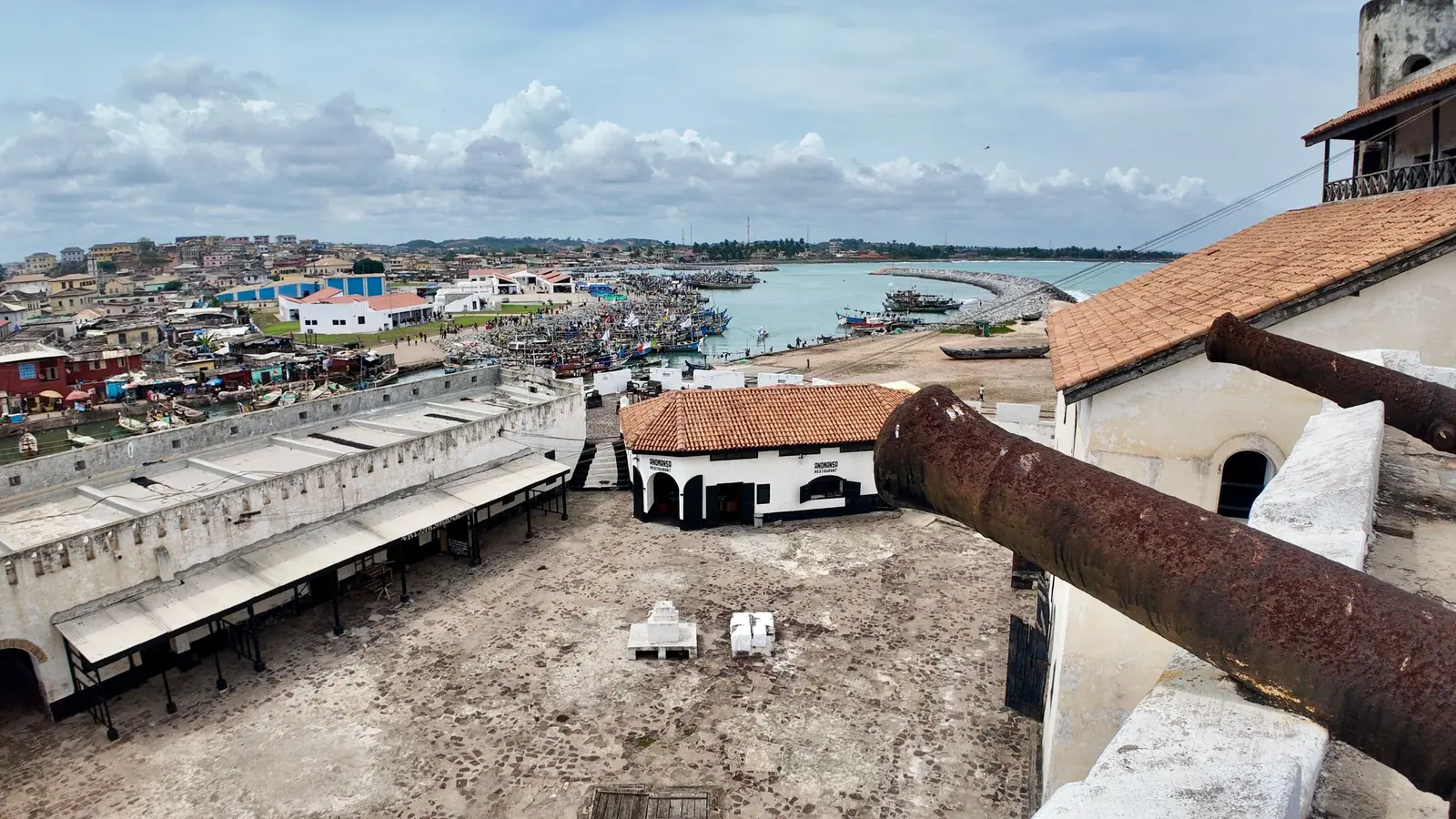
The Kakum canopy walkway is a chain of seven suspension bridges 333 m long, up to 27 m above the forest floor (Ghana Tourism Authority figures), in Kakum National Park, around 30 km north of Cape Coast. Arrive at opening time for cooler air, birds and short queues; the walk itself takes about 30–45 minutes. Allow half a day including the drive.
What is the Kakum canopy walkway?
Kakum National Park protects about 375 km² of moist tropical forest in Ghana’s Central Region. Hunting and logging were stopped when it became a protected area in the early 1990s, and the canopy walkway opened in 1995 to show visitors a world usually hidden from the ground: the crowns of trees that rise 40 m and more above the forest floor.
The walkway links platforms built around tall trees with narrow rope-and-plank bridges, protected by netting along the sides. It sways gently as people move. Most visitors walk the full circuit of seven bridges, though there is usually an exit part-way for anyone who wants to stop. It is one of the most visited attractions in Ghana and an easy pairing with Cape Coast and Elmina castles.
| Location | Kakum National Park, Central Region |
|---|---|
| From Cape Coast | ≈ 30 km · 40 minutes by road |
| From Accra | ≈ 3.5–4 hours by road |
| Walkway | 7 bridges · 333 m · up to 27 m high |
| Time needed | 30–45 min on the bridges; half a day in total |
| Best time | Opening time, dry season (Nov–Mar) |
Planning your visit
Opening hours and tickets
The park opens in the morning and the walkway runs through the day, typically until mid-afternoon. Tickets are sold at the visitor centre at the park entrance, with different prices for Ghanaian citizens, residents and foreign visitors, and for students and children. Prices change, so check on arrival or with the Ghana Wildlife Division before you go, and bring cedis in case card machines are down.
What happens on a visit
- Buy your ticket at the visitor centre, where there is a small exhibition on the forest and its wildlife.
- Join a guided group for the climb along a forest path to the first platform — about 15 minutes uphill on steps.
- Cross the bridges one group at a time, with rangers spacing people out on each span.
- Descend by a separate path back to the visitor centre, café and craft stalls.
Is it scary?
The bridges are narrow and move with every step, and the drop is real. The netting and cables make it safe, and people of most ages cross without trouble. If heights worry you, walk near the front of your group so you are not waiting mid-span, look ahead rather than down, and remember you can take the early exit. Young children must be accompanied, and the climb to the start is not suitable for wheelchairs.
Other activities in the park
- Guided forest walks on the ground trails, where guides explain medicinal plants and tree species.
- Night walks and treehouse stays, arranged in advance, for a chance to hear and see nocturnal animals.
- Birdwatching with specialist guides in the early morning.

Wildlife at Kakum
Kakum is rich in species, but the forest is dense and animals are shy, so expect to hear more than you see from the walkway. The park is home to forest elephants, several monkey species including the endangered Diana monkey, duikers, the bongo antelope and a huge variety of butterflies. Birders come for its hundreds of recorded species, including hornbills, turacos and sunbirds, which are most active in the first hours after dawn.
Your best chances of sightings come on an early-morning visit or a guided ground walk with a ranger, rather than a busy midday crossing. Bring binoculars if you have them.
Tips for the canopy walkway
- Go early. School groups and coach tours arrive mid-morning, especially in the dry season and at weekends.
- Wear proper shoes. The path to the platforms is steep and can be slippery after rain; flip-flops are a bad idea.
- Travel light. Keep both hands free and secure your phone with a strap — anything dropped is gone.
- Bring repellent and water. The forest is humid even in the dry season.
- Rainy season: the walkway may close during storms; showers usually pass quickly, so wait it out at the café.
- Combine it: pair Kakum with the crocodile pond at Hans Cottage on the way back to Cape Coast, then Elmina Castle in the afternoon.
Getting to Kakum
Most people visit from Cape Coast or Elmina, about 40 minutes away. Taxis can be hired for a half-day return trip — agree the price and waiting time first. Shared taxis and trotros run along the road to the park towards Twifo Praso, but returning can mean waiting at the roadside. From Accra, a day trip is possible with a private driver if you leave very early, but it is much more pleasant to stay at least one night on the coast.
| From | By | Time |
|---|---|---|
| Cape Coast | Taxi or car | ≈ 40 min |
| Elmina | Taxi or car | ≈ 50 min |
| Accra | Private car | ≈ 3.5–4 h |
| Kumasi | Private car | ≈ 4 h |
Where to sleep: our Cape Coast area guide compares the town centre, beach strip and lodges on the Kakum road, which are the closest beds to the walkway.
A short history of Kakum
Before it became a national park, the Kakum forest was a production reserve, logged for timber and hunted for bushmeat. Local communities and conservation groups pushed for protection, and the reserve and the neighbouring Assin Attandaso forest were brought under the Wildlife Division in the early 1990s. The canopy walkway was built with international support to give the park an income from tourism and to show Ghanaians and visitors the value of a standing forest.
Today the park is one of the largest remaining blocks of moist evergreen forest in this part of Ghana, an important refuge for forest elephants and primates surrounded by farmland and cocoa plantations. Entry fees support rangers and park management, and many guides come from the surrounding villages.
What to bring
| Item | Why |
|---|---|
| Closed shoes with grip | Steep, sometimes muddy path to the platforms |
| Water | Humid forest; the climb is short but sweaty |
| Insect repellent | Mosquitoes and other insects in the forest |
| Light rain jacket | Showers can arrive quickly, especially April–October |
| Camera or phone with a strap | Anything dropped from the bridges cannot be recovered |
| Binoculars | Birds and monkeys in the canopy |
| Cedis in small notes | Tickets, snacks, tips and taxis |
Combining Kakum with the rest of the coast
Kakum fits neatly into a two- or three-day stay on the Central Region coast. The most efficient plan is to visit the walkway first thing, return via Hans Cottage for lunch beside the crocodile pond, and spend the afternoon at Elmina Castle or Cape Coast Castle. On a second day you can see the other castle and the fishing harbours, or relax on the beach at Brenu.
If you are heading on to Kumasi, Kakum lies just off the main road north from Cape Coast towards Assin Fosu and Kumasi. Leaving the coast early lets you see the walkway before continuing inland, arriving in Kumasi by late afternoon. Our 10-day itinerary places Kakum on day four.
What the canopy reveals
A rainforest is not a single layer. From the walkway you look down on the understorey, across at trunks wrapped in vines, and up into the crowns of tall trees that rarely show themselves from the forest floor. Epiphytes, the plants that grow on other plants, sit at eye level instead of overhead. The light is the biggest change: at ground level the forest is dim, while the canopy is open and bright, which is why so much animal life, birds especially, keeps to that height. Walk slowly and look sideways, not down.
The seven bridges are linked by platforms, so the walk comes in stages rather than as one long crossing. Each span moves a little underfoot, and the sides are open, keeping the view clear. There is no need to rush: the line moves at walking pace and the platforms give room to step aside. Keep a steady rhythm and leave a gap so the person ahead is not thrown off balance. Groups usually move at a set pace, so mention any worries to staff before setting out.
Forest and castles in one day
Kakum sits in the Central Region, within reach of Cape Coast, which makes a forest morning and a coastal afternoon a natural pairing. Cape Coast Castle, captured by the British in 1664 and the British seat of government until 1877, houses the West African Historical Museum. Elmina Castle, built by the Portuguese in 1482 and taken by the Dutch in 1637, is the oldest European building in sub-Saharan Africa. Both belong to the UNESCO World Heritage listing of forts and castles inscribed in 1979. Opening days vary, so check ahead.
Heat shapes the day. The forest is humid and the castles are exposed, so a morning start suits both: cooler air on the walkway and shade before the coast turns fierce. Allow more time than you expect for the castles, where guided tours cover the courtyards and dungeons, and the Door of No Return at Elmina. Ground underfoot is uneven at both sites. Carry water, wear shoes with grip and expect a full day if you plan to see both castles as well as the canopy.
Frequently asked questions
How high is the Kakum canopy walkway?
The bridges reach up to 27 m above the forest floor, according to the Ghana Tourism Authority.
How long does the Kakum canopy walkway take?
About 30–45 minutes on the bridges, plus the walk to and from the start. Allow half a day with the drive from Cape Coast.
Is the Kakum canopy walkway safe?
Yes. The bridges are secured with cables and side netting and rangers manage the number of people on each span.
Can children do the canopy walkway?
Children who can manage the uphill path generally can, with an adult. Check age guidance at the visitor centre.
What is the best time to visit Kakum?
At opening time in the dry season, November to March, when it is cooler, quieter and best for birds.
How long is the Kakum canopy walkway and how high does it go?
The walkway is made up of seven suspension bridges with a combined length of 333 m. At its highest the route runs up to 27 m above the forest floor. The figures come from the Ghana Tourism Authority, and they measure the bridges themselves rather than the paths that lead to them.
Is the Kakum canopy walkway suitable for children?
Children walk it regularly, but the bridges sway and the sides are open, so parents need to judge each child. Keep younger ones close and let them go at their own pace. Anyone who dislikes heights can wait on the platforms. Ask park staff for current guidance before setting out.
What wildlife might you see from the Kakum canopy walkway?
Kakum records over 300 bird species, and the canopy is the place to look for them, with hornbills and other forest birds working the upper branches. Monkeys live in the park but often stay high and hidden. Sightings are never guaranteed. Carry binoculars, keep quiet and start early, when the forest is livelier.
When is the best time of year to visit the Kakum canopy walkway?
Southern Ghana has two rainy seasons, roughly April to June and September to November, when the bridges are wet and the forest steamy. The drier months between them are easier underfoot. The harmattan brings hazy, dusty air from about December to March. Check conditions before travelling, since local weather varies from year to year.
What should you wear on the Kakum canopy walkway?
Wear shoes with grip rather than sandals, because the bridge decks and forest paths turn slippery. Light long trousers and a rain jacket suit the humidity and sudden showers. Bring water, insect repellent and a safe way to carry binoculars or a camera. Leave heavy bags behind if you can, since the bridges are narrow.
Read next
Sources: Ghana Wildlife Division (Forestry Commission); Ghana Tourism Authority. Ticket prices and opening times change — confirm at the park. Photos via Pexels; we do not yet have a licensed photo of the walkway itself.
Find a stay in Ghana
Photo credits: Owoahene Photography on Pexels; Wo Nfoni Media on Pexels.