Elmina: what it is like and who it suits
A fishing town built around a Portuguese castle, Elmina holds five centuries of Atlantic history in a few quiet streets. Here is what to see, how to spend a day, and whether it fits your trip.
- Region
- Central Region, coastal Ghana
- Elmina Castle
- Built 1482 by the Portuguese
- Cape Coast Castle
- 12.3 km to the east
- Takoradi Airport
- 51.4 km to the west
A castle town west of Cape Coast
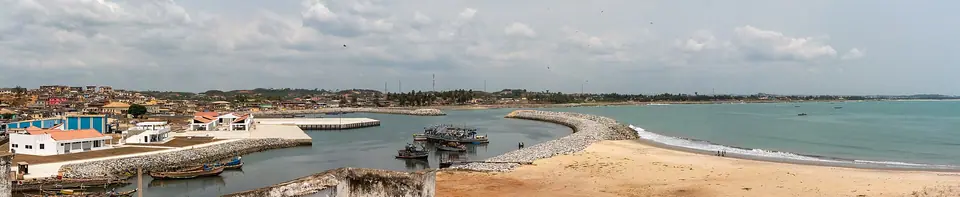
Elmina is a small town on Ghana's Central Region coast, about 12.3 km west of Cape Coast. It spreads between the Atlantic and the castle that dominates it, with a fishing harbour, a stretch of sand and streets of low houses behind. The pace is slow. Much of the day is shaped by the sea: canoes going out before light, nets being mended, fish sold along the shore. This is a place to look at rather than race through.
The town has been a port for more than five centuries. The Portuguese built the castle in 1482, the Dutch captured it in 1637, and the British took over in the nineteenth century. Much of the older town grew around that trade, including the trans-Atlantic slave trade, which the castle's dungeons document. UNESCO listed Ghana's forts and castles as a World Heritage site in 1979. Elmina today is a working town with a serious history, not a museum piece.
Elmina Castle and the old town
St George's Castle, usually called Elmina Castle, stands on a rocky point above the sea, about 0.4 km from the centre of town. The Portuguese built it in 1482 and it is the oldest European building in sub-Saharan Africa. The Dutch held it from 1637 and remodelled much of what you see. Guided tours take in the courtyards, the chapel and the dungeons, and end at the Door of No Return. Set aside a good part of the morning.
Below the castle, the old town rewards a slow walk: streets of old houses, a market, the harbour where canoes land, and the beach running east. Fishermen repair nets on the sand; traders sell fish, kenkey and provisions. Ask before photographing people at work. Entry to the castle carries a fee, and opening days can change, so check with the Ghana Tourism Authority or the castle office before you travel.
- Elmina Castle itself, where guided tours cover the courtyards, the chapel and the dungeons.
- The fishing harbour, liveliest in the early morning when the canoes come in.
- The old town lanes behind the castle, with colonial-era houses and small shops.
- The market, good for food, cloth and everyday trading rather than souvenirs.
Tip: The castle stairs and ramps are worn and can be slippery after rain. Wear shoes with grip, carry water and keep a hat with you.
Days out along the coast
Elmina makes a good base for the central coast. Cape Coast Castle is 12.3 km east; plan a separate half-day for it. The British held it from 1664 and governed the Gold Coast from there until 1877, and it now houses the West African Historical Museum. Kakum National Park is roughly 30 km north, with seven suspension bridges forming a 333 m canopy walkway up to 27 m above the forest floor and more than 300 recorded bird species.
Further west, Nzulezu is a stilt village built over Lake Tadane near the Côte d'Ivoire border, described as about 400 years old, and Busua is one of the Western Region's beaches. Both make long half-days rather than quick stops. Takoradi Airport, the nearest, is 51.4 km away. Roads and driving times change with the season, so ask locally before setting out and start early in the day.
- Cape Coast Castle, 12.3 km east, with the West African Historical Museum inside.
- Kakum National Park, roughly 30 km north, for the canopy walkway and forest birds.
- Nzulezu stilt village, reached by canoe over Lake Tadane near the Ivorian border.
- Busua Beach in the Western Region, a longer run west of town.
Eating and evenings
Food follows the southern coast: banku and kenkey made from fermented maize, fufu with soup, jollof rice, and fish landed the same day, grilled or fried and served with pepper. Small chop bars and roadside kitchens serve this food plainly and well. A few places near the castle and along the beach cook for visitors and take bookings for the evening. Vegetarian choices exist but are limited, so ask what is cooking instead of expecting a full menu.
Evenings are quiet. Elmina is not a nightlife town: there is no bar strip and no club scene, and most visitors eat early and sit outside afterwards. A few beach places stay open later at weekends and during festival season. Bring a torch for unlit paths after dark, and plan to be back at your base before it gets late. The UK's travel advice warns against road travel outside towns after dark.
A walk through Elmina
Start early at the harbour, when the canoes come in and the fish is sorted and sold. Walk west along the shore to the castle and join the first tour of the day, before the heat and the traffic from Cape Coast arrive. From the castle, wander back through the old town: the market, the small shops, the churches and the lanes of low houses behind the sea wall. Nothing is far, and the circuit fits into a morning.
Midday is hot and shade is scarce, so eat and rest through the worst of it. In the afternoon, follow the beach east or sit on a wall and watch the surf. Fishermen work the late afternoon, and football and conversation fill the open spaces towards evening. Carry water, wear a hat, and keep to the main paths after dark; a small torch helps, since street lighting is patchy.
Tip: Walk the town rather than touring it by car. Distances are short, and the lanes between the harbour and the castle are where Elmina makes most sense.
Getting there and who it suits
Elmina sits on the coastal road west of Cape Coast, 12.3 km from the castle town and 51.4 km from Takoradi Airport. Shared minibuses and coaches run along the coast from Accra via Cape Coast, and taxis cover the last stretch; agree the fare before you set off. Driving times depend on traffic through Cape Coast, so allow more than the map suggests, and check current timetables locally.
Elmina suits travellers who want history close at hand, a slow coastal town and an easy base for Cape Coast and Kakum. It works for couples, for families with older children, and for anyone who would rather wake to fishermen than to traffic. It suits people who like walking, early starts and plain food. Two nights covers the castle; three or four let you add Cape Coast, Kakum and a beach day.
If you want nightlife, a wide choice of restaurants or a resort-and-pool holiday, look at Accra or the beaches further west instead. If time is short and you fly out of Accra, the capital may be simpler. For a base, weigh three things: walking distance to the castle and harbour, a room facing the sea, and quick access east to Cape Coast. Book ahead around festival time.
Frequently asked questions
Is Elmina Castle worth visiting?
Yes, for anyone interested in Atlantic history. Elmina Castle was built by the Portuguese in 1482, captured by the Dutch in 1637, and is the oldest European building in sub-Saharan Africa. Guided tours cover the courtyards, the chapel and the dungeons. Set aside a good part of the morning and take the first tour if you can.
How far is Elmina from Cape Coast?
Elmina is about 12.3 km west of Cape Coast Castle, a short drive or minibus ride on the coastal road. Traffic through Cape Coast can add time, so allow more than the distance suggests, especially in the morning and late afternoon. Many visitors see both castles on consecutive days, starting with Elmina.
Can you swim at Elmina?
The town beach is broad, but the Atlantic surf can be strong and conditions vary through the year. Ask locally before going in, and stay cautious with children. For a proper beach day, many travellers drive further west to Busua in the Western Region, where the sand runs long and the water is easier.
How do you get to Elmina from Accra?
Coaches and shared minibuses run from Accra to Cape Coast, and you change there for the short run west to Elmina. Taxis cover the final stretch and the fare should be agreed before you set off. By road the journey takes most of a day. Schedules change, so check locally before travelling.
How long should you spend in Elmina?
Two nights is a sensible minimum: one afternoon in the old town, one morning at the castle, and time to eat by the sea. Three or four nights let you add Cape Coast Castle, the Kakum canopy walkway and a beach day. A longer stay also suits anyone using Elmina as a base for the central coast.
Is Elmina good for families?
It can be, especially with older children who can manage castle stairs and a few hours of walking. The harbour, the canoes and the beach keep younger children interested. There is little evening entertainment and the midday heat is fierce, so plan mornings out and afternoons resting in the shade.
What is there to eat in Elmina?
Expect southern Ghanaian food: banku, kenkey, fufu with soup, jollof rice and fish landed locally, grilled or fried and served with pepper. Chop bars and small kitchens serve it plainly and generously. Vegetarian options are limited, so ask what is cooking. Most visitors eat early, since evenings are quiet.
When is the best time to visit Elmina?
The southern coast has two rainy seasons, roughly April to June and September to November, and the harmattan haze blows from about December to March. Which you prefer depends on whether you want green country or drier roads. Check the forecast and local advice before booking, since the seasons shift from year to year.
Read next
IMPT Ghana editorial team · Reviewed 13 November 2026. Facts checked against the Ghana Tourism Authority (visitghana.com), the Ghana Immigration Service and other official sources listed in our editorial policy. Prices are never shown: live rates open in the IMPT app.
Find a stay in Elmina and KEEA
Photo credits: Matti Blume, CC BY-SA 4.0, via Wikimedia Commons.