 ★★★★ 4-star
Hotels · Ashanti Region
Hotels in Obuasi, Ashanti Region
Obuasi Municipal is a district of Ashanti Region, with most of its hotels around Bidiem. This guide covers what the area is like, who it suits, the run to Kumasi airport and where to eat.
IMPT Ghana editorial team · Reviewed 13 November 2026
At a glance
- Region
- Ashanti Region, Ghana
- District
- Obuasi Municipal
- Main hotel area
- Around Bidiem
- Kumasi airport
- About 59 km straight-line
What this district is like
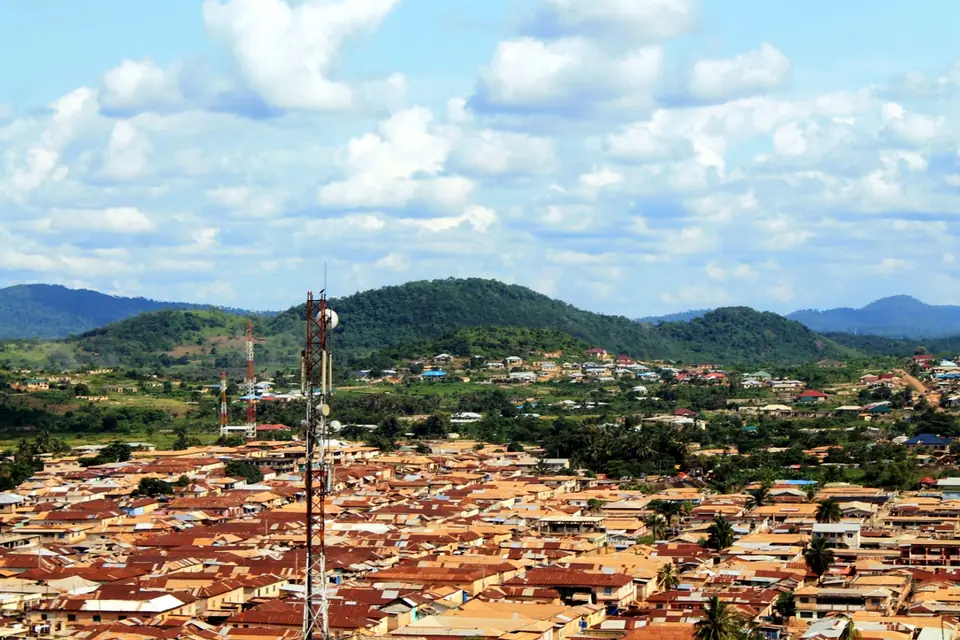
Obuasi Municipal is a district of Ashanti Region, sitting south of Kumasi in the forested hills of southern Ghana. It is a working district rather than a holiday one, long associated with gold mining, and much of the accommodation serves people who come for business, contractors and family visits. The landscape is green and rolling, with a busy town centre and quieter roads leading out to smaller settlements. Roads out of town soon reach farmland and forest. Do not expect a resort strip: expect a functional Ghanaian town with the everyday services a visitor needs.
Distances are short on the map but longer on the road. Kumasi city centre, around Kejetia, lies about 56 km away in a straight line, and Prempeh I International Airport, Kumasi, about 59 km. Road journeys take longer than those figures suggest, so treat them as a rough guide and check conditions locally. Most visitors arrive by road, from Kumasi or from Accra, and a stop in Obuasi fits naturally into a longer Ashanti Region itinerary.
Neighbourhoods and who it suits
Most of the district's hotels are found around Bidiem, where the main cluster of places to stay sits close to the working town. Central Obuasi has the commercial streets, transport and everyday shops, which makes it convenient if you want to be within walking distance of errands. Elsewhere, smaller guesthouses are scattered along the approach roads. Choose by what you need: a short commute, a quiet night, or easy access to the road north towards Kumasi.
Obuasi suits people with a reason to be there: contractors and consultants working in the district, staff visiting the mines and their suppliers, Ghanaians returning to see family, and drivers breaking a long journey. It suits a first Ghana holiday far less. With no beach or castle in the district, a trip built around museums, markets and craft villages belongs in Kumasi, where the sights are. If you are in Obuasi for work or family, the hotels around Bidiem are set up for exactly that.
- Bidiem: the main cluster of places to stay, close to the working town.
- Central Obuasi: handy for transport, errands and everyday shopping.
- Approach roads: quieter nights, but you will need a car or a lift.
- Ask about generators, water tanks and Wi-Fi before you book a room.
Tip: Book ahead around public holidays and festival weekends, when rooms in Ashanti Region fill up. Check the year's gazetted holiday dates, since some move to a Friday or Monday.
Getting around and to the airport
Within Obuasi, shared minibuses and taxis cover the main roads, and you can walk parts of the centre, though pavements are patchy and traffic is busy at peak times. Agree the fare before you set off, and carry small notes and coins so change is not a problem. For a working stay, a car with a driver is the simplest arrangement: it handles site visits, evening meals and the run to Kumasi without depending on what passes on the street.
Prempeh I International Airport, Kumasi, known by its code KMS, is about 59 km away in a straight line; the road distance is longer, so allow generous time, especially in the rain. Flights from Kumasi are mostly domestic, and international arrivals usually come through Accra International Airport, which was called Kotoka International Airport until the name was restored in 2026. Schedules change, so confirm timings with your carrier and leave a buffer on both ends of the journey.
- Agree the fare before the taxi moves, and keep small notes for change.
- Allow extra time for the airport run in the wet season, roughly March to mid-November.
- Confirm domestic flight timings before you plan the road transfer to Kumasi.
- The UK's Foreign, Commonwealth and Development Office advises against road travel outside towns after dark.
What is nearby
Kumasi is the obvious day out. Kejetia, the city centre market area, is about 56 km away in a straight line, and the Manhyia Palace Museum there displays Asante royal regalia and gold work, with effigies of past kings and of Yaa Asantewaa. Kejetia Market is a large open-air market, described by the Ghana Tourism Authority as the largest in West Africa. Museum opening days and market hours change, so check before you travel, and allow a full day for the round trip rather than an afternoon.
Further out, the Ashanti Region has craft villages and lake country. Bonwire is a leading centre of kente weaving, with Adanwomase as the other royal weaving village, and Lake Bosomtwe, Ghana's only true natural inland lake, sits in a meteorite crater and is a UNESCO biosphere reserve. Cape Coast Castle and Elmina Castle, both part of a UNESCO World Heritage site, are a longer journey south. Travel times vary with traffic and roadworks, so check locally before setting out.
Eating out and practical tips
Food in Obuasi follows the southern Ghanaian pattern, with cassava and plantain as staples alongside yam, maize and beans. You will find fufu, banku and kenkey, jollof rice, and tomato and pepper soups and stews, often with fish, chicken or goat. Portions are generous and the cooking is usually hearty rather than delicate. If you are unsure what to order, ask what is fresh that day, and say clearly how much pepper you want, because kitchens take the request seriously.
Eating places are mostly small and local: chop bars, simple restaurants, roadside grills in the evening and the kitchens of the larger hotels. Chop bars are informal, serve generous plates and are where many people eat lunch. Hotel restaurants are the easiest choice if you want a quieter table, a set menu or a cold drink after work. Street food is popular and generally good, but choose busy stalls where food is cooked to order and served hot, and be careful with salads and uncooked items.
Practical points are simple. The harmattan, a dry and dusty wind, blows roughly December to March and is strongest in the north, though its dust reaches the south. Rains in southern Ghana run roughly March to mid-November, so keep a light rain jacket. Ghana uses the cedi, plug type G sockets at 230 V, and GMT all year. A yellow fever certificate is required on entry, and visa or ETA rules depend on your nationality, so check the Ghana Immigration Service portal before booking.
Tip: Most places in Obuasi take cash, so keep small notes and coins for taxis, chop bars and stalls. Card readers work in some hotels and larger shops, but do not rely on them.
Where to stay
Hotels in Obuasi
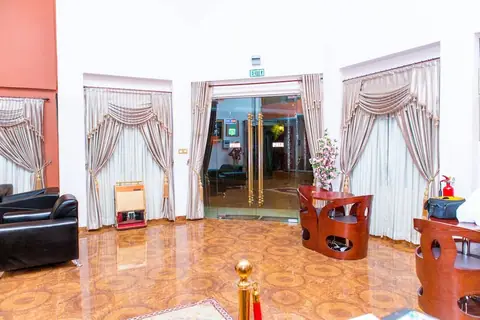
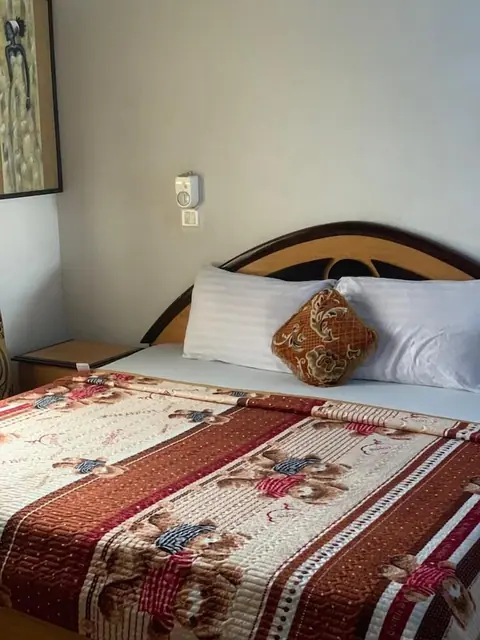
4 stays with a guest score or a four- or five-star rating in the IMPT database, five-star first, then four-star, then the rest by the booking supplier's guest score. Prices and availability are live in the IMPT app.
★★★★ 4-star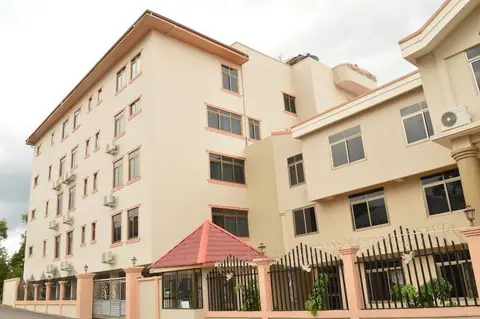 ★★★ 3-star
 ★★★ 3-star
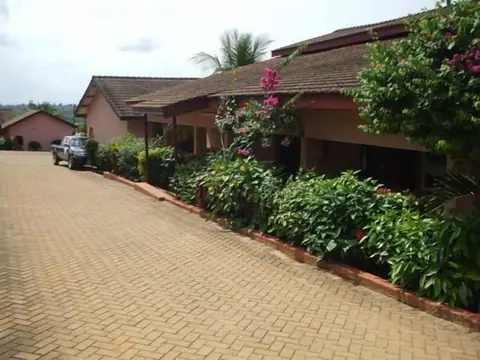 ★★ 2-star
Obuasi, Ashanti Region: questions
Where are the hotels in Obuasi Municipal?
Most of the hotels in Obuasi Municipal are clustered around Bidiem, close to the working town and within easy reach of the centre. A smaller number sit on the approach roads and in central Obuasi. Because the district is compact, almost anywhere you book is a short drive from the main commercial streets.
How far is Obuasi from Kumasi and the airport?
Kumasi city centre, around Kejetia, is about 56 km from Obuasi in a straight line, and Prempeh I International Airport, Kumasi, about 59 km. Road distances are longer than those figures, so allow generous time. Ask locally about conditions before setting out, particularly in the rainy season.
Is Obuasi a good base for sightseeing in Ashanti Region?
Obuasi is a working district rather than a sightseeing base, and the main sights of Ashanti Region, including the Manhyia Palace Museum and Kejetia Market, are in and around Kumasi. Base yourself in Kumasi for museums, markets and craft villages, and stay in Obuasi when work, family or a journey break brings you there.
How do you get around Obuasi without a car?
Shared minibuses and taxis cover the main roads in Obuasi, and parts of the centre are walkable, though pavements are patchy. Agree the fare before you set off and carry small notes. For a working stay, a car with a driver is simpler than relying on what passes on the street.
What food can you eat in Obuasi?
Expect southern Ghanaian cooking: fufu, banku and kenkey, jollof rice, and tomato and pepper soups with fish, chicken or goat. Chop bars, simple restaurants and hotel kitchens do most of the cooking in Obuasi, with roadside grills in the evening. Decide how much pepper you want, say so clearly, and choose busy stalls where food is cooked to order.
When is the best time to visit Obuasi?
Rains in southern Ghana run roughly March to mid-November, and the harmattan, a dry dusty wind, blows roughly December to March. Obuasi sits in the forest belt, where the wet season brings heavy downpours and slower roads. Many visitors prefer the drier months, but the town works all year. Check the forecast before travelling.
Do you need a yellow fever certificate to visit Obuasi?
Yes. A yellow fever vaccination certificate is required on entry to Ghana, from nine months of age according to UK travel health guidance. Visa and ETA rules depend on your nationality, so use the eligibility checker on the Ghana Immigration Service portal before booking. Rules change, so recheck shortly before you travel.
Who should stay in Obuasi rather than Kumasi?
Stay in Obuasi if you have business in the district, family to visit or a long road journey to break. Contractors, consultants, mining staff and suppliers are the core of the local hotel trade. For a holiday built around museums, markets, castles and beaches, Kumasi and the coast are better bases.
Read next
Hotels in Bosomtwe, Ashanti RegionBosomtwe is a district of Ashanti Region wrapped around Lake Bosomtwe, and most of its hotels sit near Abono. This guide covers the towns, the transport, the food and the sights within easy reach of Kumasi.Hotels in Kwadaso, Ashanti RegionKwadaso Municipal is a district of Ashanti Region on the edge of Kumasi, with most of its hotels around Ahodwo. Here is how the area works as a base, and what lies within easy reach.Hotels in Kumasi, Ashanti RegionKumasi Metropolitan is the Ashanti Region district at the heart of Ghana's second city. Most of its hotels cluster around Dakodwom, a short ride from Kejetia Market and the Manhyia Palace Museum.
IMPT Ghana editorial team · Reviewed 13 November 2026. Hotels are placed by their own map pin inside Ghana's official district boundaries (Ghana Statistical Service). Facts checked against the Ghana Tourism Authority (visitghana.com), the Ghana Immigration Service and other official sources listed in our editorial policy. Prices are never shown: live rates open in the IMPT app.
Find a stay in Obuasi
Photo credits: Kobebigs, CC BY-SA 3.0, via Wikimedia Commons.