Elmina Castle: São Jorge da Mina
Elmina Castle has stood above the harbour since 1482, when the Portuguese built it as São Jorge da Mina. The oldest European building in sub-Saharan Africa, it is now a place of memory on Ghana's Central Region coast.
- Built
- 1482, by the Portuguese
- Portuguese name
- São Jorge da Mina
- Region
- Central Region, Ghana
- Nearest castle
- Cape Coast Castle, 12.1 km
What Elmina Castle is
Elmina Castle stands above the harbour in Elmina, a fishing town in the Central Region. The Portuguese built it in 1482 and named it São Jorge da Mina. It is the oldest European building in sub-Saharan Africa, and UNESCO inscribed it in 1979 as part of the Forts and Castles of the Volta, Greater Accra, Central and Western Regions World Heritage site. The castle remains the anchor of the old town, and the lanes below its walls lead down to the harbour.
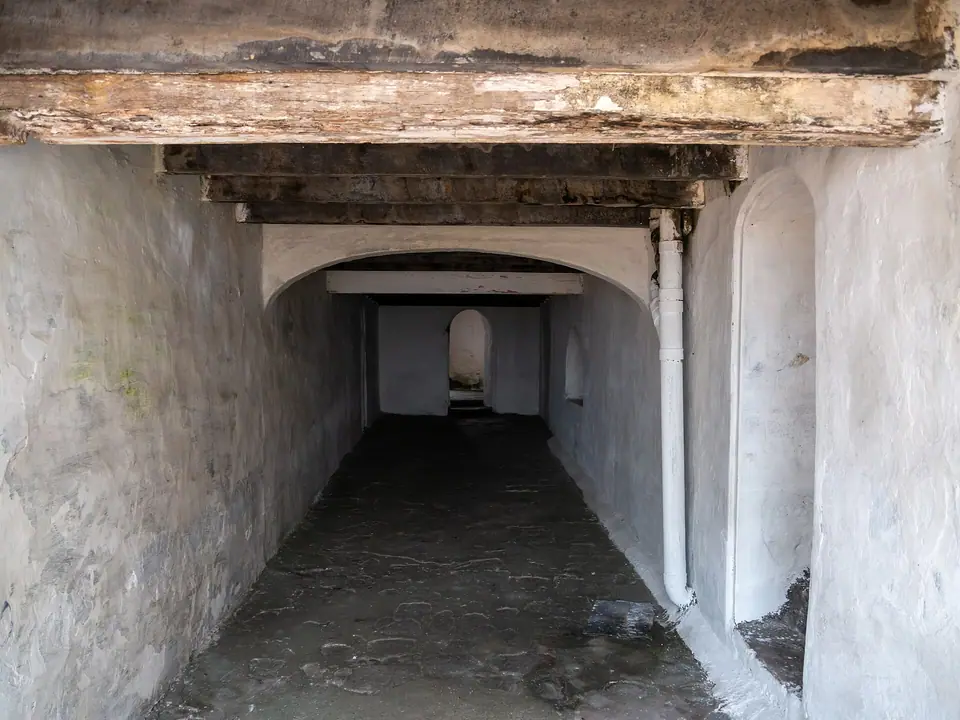
The castle is a standing historic site rather than a ruin. Whitewashed walls, a wide courtyard and heavy ramparts look out over fishing canoes and the Atlantic. Below the bright upper levels are the dungeons where enslaved people were held before they were forced onto ships. Visitors come for the architecture and the view, and the guides who show them round explain how the building was used. It is a place of memory as much as a monument.
A short history
The Portuguese built Elmina Castle in 1482 as a fortified trading post and made it the centre of their gold trade on the coast. The Dutch captured it in 1637 and held it for more than two centuries, adding to the building and to the town around it. It passed to the British in the 1870s. Across those centuries its purpose changed with each European power that controlled this stretch of coast, while the dungeons were used to hold captives.
The castle's hardest history belongs to the trans-Atlantic slave trade, when captives were held in the dungeons below the courtyard before embarkation. The Door of No Return opens towards the sea. Cape Coast Castle, 12.1 km east, played a similar role and forms part of the same World Heritage listing. The two are often visited together, and seeing both gives a fuller picture than either does alone. Allow time at each, and leave space between them.
What to see inside
Start in the courtyard, where the main rooms are arranged around a square open to the sky. The dungeons are low, dark and bare, and they sit directly beneath the quarters of the officers who ran the castle. Walk the ramparts for the view over the harbour, the canoes and the town. The Door of No Return is at the seaward side. Guides lead visitors through in a set order, and the sequence matters: the building makes more sense when the history is explained room by room.
Much of the stonework is original, and the castle has been repaired rather than rebuilt. Look for the join between Portuguese and later Dutch work, and for the small openings set into the walls. The upper levels are bright and airy; the lower ones are not, and the contrast is the point. Photography is generally permitted, though a guide can tell you where it is not, and the dungeons are kept quiet out of respect for other visitors.
- The inner courtyard, where the main rooms are arranged around a square.
- The dungeons, low and bare, beneath the quarters of the officers who ran the castle.
- The Door of No Return, which opens directly towards the sea.
- The ramparts, with views over the harbour, the canoes and the town below.
- The Portuguese and Dutch stonework, which survives across much of the building.
Getting to Elmina
Elmina sits on the coast road west of Cape Coast, and the castle is in the middle of the old town, a short walk from the main street. From Accra the drive is long, and many visitors break the journey at Cape Coast rather than push on in one go. From Takoradi the town is a shorter run along the coast. Whichever direction you come from, allow for the state of the road and for traffic through Cape Coast.
Shared minibuses, known as trotros, run between Cape Coast and Elmina and stop in the town; a taxi from Cape Coast is the easier option if you are carrying bags. Ask where the trotros leave from, since the stops move. Takoradi Airport, 51.5 km away in a straight line, is the nearest airport, and Cape Coast is the nearest large town. Once in Elmina, everything in the old town is walkable.
Tip: Park or be dropped at the edge of the old town and walk to the gate; the lanes around the castle are narrow and busy with fishing traffic.
When to go and how long
The south of Ghana has two rainy seasons, about April to June and September to November, and this stretch of coast is hot and humid for much of the year. The harmattan, a dry and dusty wind, blows roughly from December to March and can haze the view along the coast. Early morning is the kindest time: the light is softer, the courtyard is quieter and the heat has not yet built. Midday visits are possible but tiring, and shade inside the castle is limited.
Allow about two hours for the castle itself, including a guided tour and time on the ramparts. Add an hour or two for the town, the harbour and something to eat. Visitors staying in Cape Coast often come for the morning and go back in the afternoon; those coming from Accra usually make a night of it. Check opening days and entry fees with the Ghana Tourism Authority before travelling, since both can change.
- Two hours for the castle itself, including a guided tour.
- An extra hour for the old town and the harbour.
- A full day if you add Cape Coast Castle, 12.1 km east.
- A morning start, before the heat builds and the courtyard fills.
Practical tips and where to stay
Dress for heat and for the subject: this is a site of memory, so covering shoulders and knees and keeping voices low in the dungeons goes a long way. Carry water, a hat and sun protection, because shade is limited and the courtyard reflects heat. Photography is generally permitted; ask before including people in a shot. Guides are usually available at the entrance, and a guide turns a set of empty rooms into a coherent story. A tip is discretionary.
Elmina town has guesthouses and small places to stay within walking distance of the castle, which suits anyone who wants the site early or late in the day. Cape Coast, 12.1 km east, has the wider choice of accommodation and places to eat, and makes a good base for both castles. Sekondi-Takoradi, further west, is another option if you are travelling along the coast. Book ahead around festivals and public holidays, when rooms along this coast fill quickly.
Tip: Keep noise low in the dungeons and give other visitors room; many people come here with family connections to the trade.
Frequently asked questions
Who built Elmina Castle, and when?
The Portuguese built Elmina Castle in 1482 and named it São Jorge da Mina. The Dutch captured it in 1637 and held it for more than two centuries before it passed to the British in the 1870s. UNESCO listed it in 1979 as part of the Forts and Castles World Heritage site.
Is Elmina Castle the oldest European building in sub-Saharan Africa?
Yes. The Portuguese built Elmina Castle in 1482, which makes it the oldest surviving European building in sub-Saharan Africa. Cape Coast Castle, 12.1 km east, was captured by the British in 1664 and has been altered many times since. Elmina's greater age shows in the Portuguese lines beneath the later Dutch work.
How long should you allow for a visit to Elmina Castle?
About two hours covers a guided tour of Elmina Castle, the dungeons and the ramparts. Add an hour for the old town and the harbour. Visitors combining the castle with Cape Coast Castle should set aside most of a day, since the two are 12.1 km apart and each rewards unhurried time.
Can you see Elmina Castle and Cape Coast Castle in one day?
Yes, they are 12.1 km apart on the coast road and are usually visited together. Start at Elmina Castle in the morning, when it is cooler and quieter, then drive east to Cape Coast. Check opening days first, and allow for Cape Coast town traffic, which can be slow in the afternoon.
How do you get to Elmina Castle from Accra?
Elmina Castle sits in the old town at Elmina, west of Cape Coast. From Accra the drive is long, and many visitors break the journey at Cape Coast. Shared minibuses and taxis cover the last stretch from Cape Coast. Takoradi Airport, 51.5 km away in a straight line, is the nearest airport.
Are there guides at Elmina Castle?
Guides are usually available at the entrance and lead visitors through the courtyard, the dungeons and the ramparts in a set order. A guide explains how Elmina Castle was used and answers questions. Agree the length of the tour at the start, and note that a tip is discretionary rather than a set charge.
What should you wear to Elmina Castle?
Light clothing for heat and humidity, with shoulders and knees covered, since Elmina Castle is a site of memory. Flat shoes help on uneven stone floors and steps. Bring a hat, water and sun protection, because shade in the courtyard is limited. Keep voices low inside the dungeons.
When should you visit Elmina Castle?
The drier months, roughly November to March, are the easiest for walking the ramparts of Elmina Castle, though the harmattan can haze the view from December. The southern rainy seasons fall about April to June and September to November. Early morning works in any season: the light is better and the castle is quieter.
Read next
IMPT Ghana editorial team · Reviewed 13 November 2026. Facts checked against the Ghana Tourism Authority (visitghana.com), the Ghana Immigration Service and other official sources listed in our editorial policy. Prices are never shown: live rates open in the IMPT app.
Find a stay in Elmina and KEEA
Photo credits: Matti Blume, CC BY-SA 4.0, via Wikimedia Commons.