Surf Lessons in Busua, Ghana
A two-hour beginner's session on one of Ghana's most forgiving beach breaks, in a village where the sand, the canoes and the surf sit side by side.
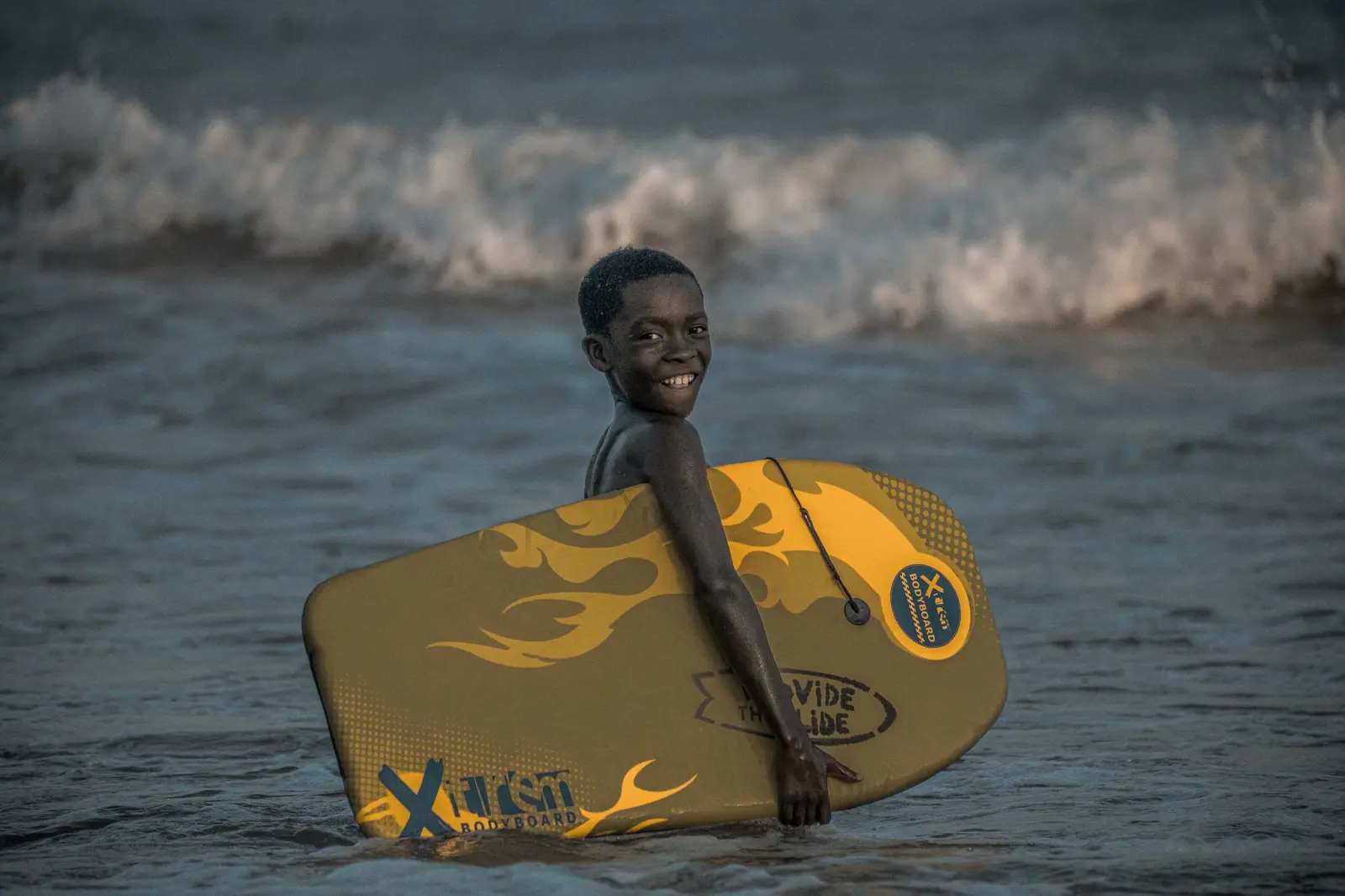
- Region
- Western Region, Ghana
- Lesson length
- About two hours
- Nearest city
- Takoradi, about 25 km
- Airport
- Takoradi, 20.8 km straight line
What the lesson covers
A surf lesson in Busua is a two-hour introduction to riding a board on a gentle beach break. Sessions usually begin on the sand, where the instructor explains how to lie on the board, where to place your feet and how to stand in one movement. You then move into shallow water for white-water rides, with the instructor steadying the board or calling the timing. Falling in is expected, and part of the learning. No previous experience is needed, and most of the group will be standing for the first time.
Boards and leashes are normally supplied as part of the session, and a rash vest or long-sleeved top helps against the sun and against the board itself. Groups are kept small so the instructor can watch each person paddle and stand. Mention any injury, ear problem or unease in deep water before the session starts, and ask what happens if the sea is too rough on the day you have chosen. Bring your own board only if you are confident in the water with it.
Tip: Ask about conditions before booking: tide, wind and swell decide whether a lesson runs as planned. Sea state can change within hours, so confirm on the morning of the session.
Why Busua suits beginners
Busua's break is forgiving by the standards of the Ghanaian coast: the waves arrive over sand rather than rock, and the beach shelves gently enough for a beginner to stand in the shallows. The curve of the bay takes some of the power out of the swell, so white water rolls in at a manageable pace. It is widely regarded as the easiest place in Ghana to learn to surf, which is why many first-timers start here.
That does not make the sea harmless. Surf changes with the tide, the wind and the direction of the swell, and a calm morning can turn choppy by afternoon. Currents can run along the shore even when the surface looks flat. The instructor picks the spot on the day, sometimes at one end of the beach rather than in front of the village. Stay within the area you have been shown, keep clear of other beach users and never paddle out alone.
Getting to Busua
Busua sits on the Western Region coast, about 25 km from Takoradi by road and 20.8 km in a straight line from Takoradi Airport. Most visitors reach it from Takoradi by taxi or shared minibus, a run that mixes highway with a final stretch of minor road. The airport handles domestic flights, and Takoradi is among the busier domestic destinations in the country, though schedules change and should be checked before booking. Allow more time in the rainy season, when the last section can be slow.
Shared minibuses, known locally as trotros, run along the coast road and carry boards if you are prepared to hold them. Long-distance air-conditioned coaches link Takoradi with Accra and other regional capitals. Taxis from Takoradi can be hired for the day. Once in Busua, the beach, the village and most places to stay are within walking distance of one another. Agree the destination and the fare before setting off.
- Allow extra time on the final stretch of minor road, which slows after heavy rain.
- Agree the fare and the destination before a taxi leaves Takoradi.
- The UK Foreign, Commonwealth and Development Office advises against road travel outside towns after dark.
- Carry your own board only if you can manage it on public transport.
When to go and how long
Southern Ghana has two rainy seasons, roughly April to June and September to November, and the coast is comparatively dry for much of the year. Rain rarely wipes out a whole day on the beach, but it can flatten the surf and cloud the water. The harmattan, a dry and dusty wind, blows from about December to March and is milder on the coast than in the north. Sea breezes often build through the afternoon, so earlier sessions tend to be calmer.
Set aside half a day even though the session runs about two hours: changing, the briefing, the walk to the water and rinsing off all take longer than expected. Add a morning or afternoon if you are travelling from Takoradi. Staying a night or two in Busua means a second attempt is possible if the sea is unsuitable on the first day. Weekends and public holidays are busier, and the gazetted holiday dates move from year to year, so check them as you plan.
Tip: Look at the tide table and the forecast the evening before, and keep the next morning free as a backup. No instructor can control the swell.
Nearby sights along the coast
The Western Region coast around Busua holds several historic forts, part of the UNESCO World Heritage site inscribed in 1979 as the Forts and Castles of the Volta, Greater Accra, Central and Western Regions. Some stand within a short drive of the beach and can be visited in an afternoon. Further west, Nzulezu, a stilt village built over Lake Tadane near the Côte d'Ivoire border, is a long day trip rather than a half-day outing.
The beach itself is the main sight: a wide curve of sand backed by trees and the village, with fishing canoes pulled up at one end. Busua is listed by the Ghana Tourism Authority among the Western Region's beaches. Walking the shoreline at low tide, watching canoes come in and eating grilled fish in the village fill an afternoon. The sea stays warm throughout the year, so a swim after the lesson is easy.
- Walk the length of the beach at low tide, when the sand is firm and widest.
- Ask before photographing fishermen, canoe owners or anyone working on the shore.
- Visit one of the coastal forts with a guide who can set it in context.
- Agree what a boat trip includes before setting out on the water.
Practical tips and where to stay
Wear swimwear you can move in, plus a rash vest or quick-drying shirt for the sun. Sunscreen, a hat and drinking water matter more here than a wetsuit, because the sea is warm and the sun is strong even under cloud. Sandals help on hot sand and on the walk back through the village. Keep valuables to a minimum and leave what you do not need at your accommodation. Ultraviolet light is strongest in the middle of the day, so a morning lesson is kinder to skin.
Most visitors stay in Busua itself, where rooms sit within walking distance of the beach, or in Takoradi, about 25 km away, which has a wider choice of accommodation and places to eat. Book ahead at weekends and around public holidays. Confirm that the board, the leash and instruction are included, and agree the meeting point before the day. Ask the instructor about local guides for the rest of your stay.
Frequently asked questions
Do you need experience to take a surf lesson in Busua?
No. The lesson is pitched at complete beginners, and the first part happens on the sand before anyone enters the water. The instructor explains the board, the stance and the timing, then supervises white-water rides in the shallows. Tell the instructor about injuries, ear problems or a dislike of deep water so the session can be adjusted.
How long does a surf lesson in Busua take?
The session itself runs about two hours, including a briefing on the sand and time in the water. Allow half a day in total once changing, walking to the chosen spot and rinsing off are counted. If you are travelling from Takoradi, add the road journey at each end and keep the rest of the day free.
What should you bring to a surf lesson in Busua?
Swimwear, a rash vest or quick-drying shirt, sunscreen, a hat, drinking water and sandals cover most needs. The board and leash are normally part of the session, so there is no need to bring equipment unless you own it and can manage it on public transport. Leave valuables at your accommodation and carry a dry bag for the rest.
Which months suit a surf lesson in Busua?
The southern coast is comparatively dry for much of the year, with rainy spells roughly from April to June and September to November. The harmattan blows from about December to March and is milder here than in the north. Sea conditions change daily, so check the forecast and the tide rather than relying on the month alone.
How do you reach a surf lesson in Busua from Takoradi?
Busua is about 25 km from Takoradi by road and 20.8 km in a straight line from Takoradi Airport. Taxis and shared minibuses make the run, and long-distance coaches connect Takoradi with Accra and other regional capitals. Agree the destination and the fare before leaving, and allow extra time after heavy rain.
Is the water at Busua safe for a first surf lesson?
The break is forgiving by Ghanaian standards, with waves over sand and a gently shelving beach, which is why it suits beginners. That said, the sea changes with tide and wind, and currents can run along the shore. Stay inside the area the instructor marks, follow the briefing and never paddle out alone or after dark.
Where can you stay near Busua for a surf lesson?
Most people stay in Busua itself, within walking distance of the sand, which makes an early session easy. Takoradi, about 25 km away, has a wider choice of rooms and restaurants and works well as a base for the wider region. Book ahead at weekends and around public holidays, when the coast fills up.
What happens if the sea is too rough for a surf lesson in Busua?
Instructors judge the conditions on the day and may move the session along the beach, change the timing or call it off. Keep the following morning free where you can, and confirm with the instructor before travelling if the swell looks heavy. Ask what the arrangement is for a rescheduled session when you book.
Read next
IMPT Ghana editorial team · Reviewed 13 November 2026. Facts checked against the Ghana Tourism Authority (visitghana.com), the Ghana Immigration Service and other official sources listed in our editorial policy. Prices are never shown: live rates open in the IMPT app.
Find a stay in Ahanta West
Photo credits: Vincent Eshun / Pexels.