Kejetia Market in Kumasi
Kumasi's central market is a working trading floor rather than a display. Food halls, cloth lines and hardware lanes spread across the middle of the city, and the crowds are part of the visit.
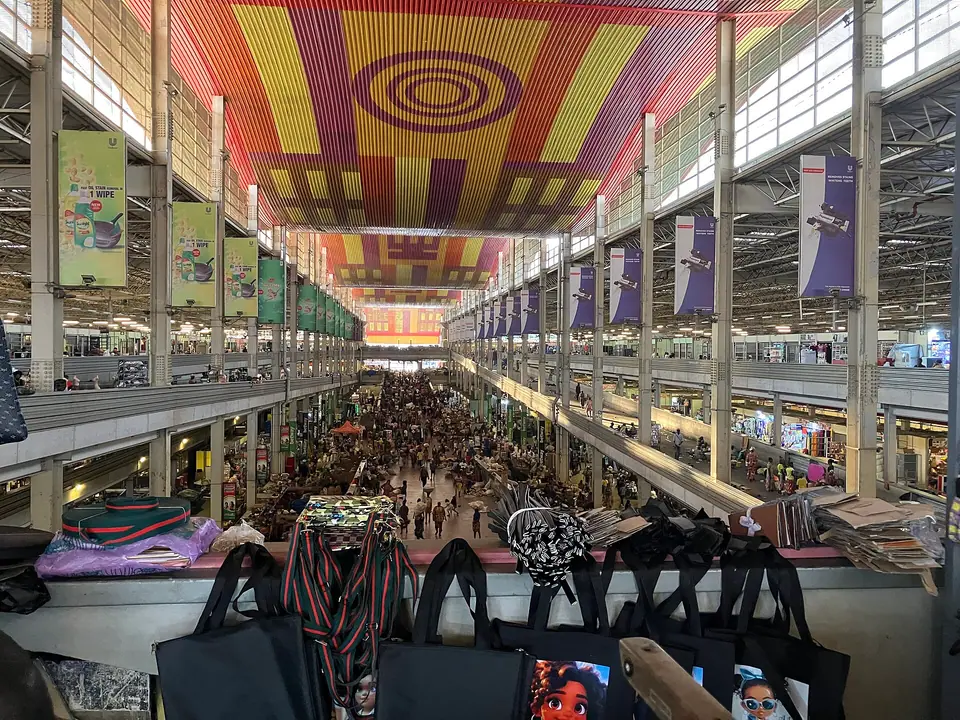
- Region
- Ashanti Region, Ghana
- Location
- Central Kumasi
- Market type
- Open-air trading market
- Nearest museum
- Manhyia Palace Museum, 1.1 km
What Kejetia Market is
Kejetia Market is the biggest of Kumasi's trading places and the one most visitors mean when they say they are going to the market. Wholesale and retail run together here. Produce arrives before dawn, is sorted and sold on through the morning, and household goods, cloth and hardware fill the rest of the site. The Ghana Tourism Authority describes it as the largest open-air market in West Africa, a claim that is widely repeated and hard to measure.
Kumasi has been an Asante capital for centuries and a market town for as long as that, so trade at Kejetia has deep roots even though much of the present structure is recent. Parts of the site are covered and built up; other sections still run as open stalls along lanes. The layout changes as sections are rebuilt or reassigned, so treat any map as a rough guide and follow the flow of the crowd.
What to see and buy
The food side of the market is the place to start. Cassava, plantain, yam, maize and beans are sold by the heap or the bowl, with pepper, tomato and onions alongside. Millet and sorghum come in from the north. Much of this is wholesale, so expect sacks being weighed, split and carried out rather than neat displays. Cooked food is sold too, and a plate of kenkey or banku with soup or stew makes an easy lunch.
Cloth is the other reason to come. Kente is sold by the piece and by the set, alongside printed cloth, adinkra cloth and ready-made garments. The weaving villages lie outside the city, but the selling happens here. Beads, leather work, brass and carved pieces turn up in the craft lanes. Beyond that the market is practical: tools, pots, plastic ware, building fittings, shoes and second-hand clothing by the bundle.
- Food halls: cassava, plantain, yam, maize, beans, pepper and tomato, mostly sold in bulk.
- Cloth lines: kente, printed cloth, adinkra cloth and ready-made garments.
- Craft stalls: beads, leather work, brass and carved pieces from Ashanti workshops.
- Hardware and household lanes: tools, pots, plastic ware and building fittings.
- Second-hand clothing, sold by the bundle or by the piece.
Getting there
Kejetia sits in the centre of Kumasi, so almost every road into the city can bring you to it. Trotros and shared taxis run from the neighbourhoods and from the lorry stations, and the market area doubles as a transport interchange, which is why the approaches are crowded for much of the day. From Prempeh I International Airport, about 4 km away, a taxi is the straightforward option.
Long-distance coaches from Accra and other regional capitals arrive in Kumasi through the day. Services and timetables change, so confirm the departure point and time before you travel. The UK Foreign, Commonwealth and Development Office notes that trotro drivers are not centrally licensed and advises against road travel outside towns after dark. Traffic in the centre is heavy in the morning and again in the late afternoon, so allow more time than the distance suggests.
Tip: Arrive by mid-morning, when the food halls are still working and the heat has not yet built. Keep the return leg flexible.
When to go and how long
Mornings are the best hours. Produce moves early, the lanes are passable, and the heat is manageable. Ghana's climate is tropical, with rains running roughly March to mid-November in the south; Kumasi's forest belt has two wet spells, about April to June and September to November. The harmattan, a dry and dusty desert wind, blows roughly December to March and leaves a haze over the city. None of this stops trade.
Allow half a day for the market itself: a morning for the food halls, an hour or two for cloth and craft, and time to sit and eat. Add a separate half day for Manhyia Palace Museum, 1.1 km away. If your visit coincides with Akwasidae, the Asante gathering held at Manhyia on a Sunday every six weeks, the city is busier, so check the date with the Ghana Tourism Authority before you book.
Nearby sights and where to stay
Manhyia Palace Museum is 1.1 km from the market and shows Asante royal regalia, gold work and effigies of past kings including Prempeh I, along with Yaa Asantewaa. Bonwire, 19.6 km away, is the tourism authority's leading centre of kente weaving, with Adanwomase the other royal weaving village. Lake Bosomtwe, described as Ghana's only true natural inland lake, formed in a meteorite crater and is a UNESCO biosphere reserve, though it needs a longer trip.
For a bed, the choice is really about which part of Kumasi you want under you. Adum and the streets around Kejetia put you within walking distance of the market but in the thick of the traffic. Nhyiaeso, Ahodwo and Asokwa are quieter and leafier, a short taxi ride out. Bantama and Suame suit travellers heading north. Rooms near the airport make sense for an early flight.
- Manhyia Palace Museum, 1.1 km away, covers Asante royal history and gold work.
- Bonwire, 19.6 km from the city, is the leading centre of kente weaving.
- Adanwomase, the other royal kente village, sits in the same part of Ashanti.
- Lake Bosomtwe, a crater lake and UNESCO biosphere reserve, needs a longer trip.
Practical tips
Wear light, loose clothing and closed shoes that can take dust and puddles. Dress modestly, with shoulders and knees covered, which draws less attention in a conservative city. Carry water, a hat and a cloth for the dust. The harmattan months are hazy and dry, the wet months humid, so pack for the season you are travelling in. Leave valuables and large bags at your room.
Ask before photographing people or stalls. A greeting and a gesture at the camera is usually enough, and a refusal should be accepted at once. Bargaining is normal in the market and works best kept friendly and unhurried; fixed prices are the exception rather than the rule. If you want a guide, arrange one through the Ghana Tourism Authority or your accommodation rather than accepting a stranger who approaches at the entrance.
Tip: Greet stallholders before you start looking. A few words in Twi are appreciated, and a smile does most of the work.
Frequently asked questions
Where is Kejetia Market?
Kejetia Market stands in the centre of Kumasi, capital of the Ashanti Region, about 4 km from Prempeh I International Airport. The city lies in the forest belt of southern Ghana and is reached by coach, car or scheduled domestic flight from Accra. The market anchors the central commercial district, so most routes into the city pass close by.
Is Kejetia Market really the largest in West Africa?
The Ghana Tourism Authority calls Kejetia the largest open-air market in West Africa, and the claim is widely repeated. Size is hard to measure, since markets spread across lanes, halls and adjoining streets, and no agreed boundary exists. Treat it as a large and important trading centre rather than a record to verify.
How do you get to Kejetia Market from Kumasi airport?
Prempeh I International Airport is about 4 km from the market, a short taxi ride in light traffic and a slow one at peak times. Trotros and shared taxis connect the centre with the rest of the city. Coaches from Accra and other cities arrive at Kumasi's lorry stations, from where you continue by taxi or trotro.
What can you buy at Kejetia Market?
Food is the main business: cassava, plantain, yam, maize, beans, pepper and tomato, with millet and sorghum from the north. Cloth is the other draw, including kente, printed cloth, adinkra cloth and garments. Around those you find beads, leather work, brass, tools, pots, plastic ware, shoes and second-hand clothing.
When is the best time to visit Kejetia Market?
Early morning on a weekday is the most comfortable and the most interesting. Produce moves then, before the heat builds. The harmattan brings dust from about December to March, and the forest belt's two wet seasons fall roughly April to June and September to November. Check conditions and any festival dates before you set out.
How long should you allow for Kejetia Market?
Half a day is a sensible allowance: a morning for the food halls, an hour or two in the cloth and craft lanes, and time for a meal. Add a separate half day for Manhyia Palace Museum, 1.1 km away, and more again if you plan to reach Bonwire, the kente weaving village 19.6 km out.
Can you take photographs at Kejetia Market?
Yes, but ask first. Traders are photographed constantly and some prefer not to be, so a greeting, a gesture towards the camera and a clear answer are the way to go. Wide shots of the lanes are easier than portraits. Put the camera down when someone says no.
What else is near Kejetia Market?
Manhyia Palace Museum is 1.1 km away and covers Asante royal history, regalia and gold work. Bonwire, 19.6 km from the city, is the leading centre of kente weaving, with Adanwomase the other royal weaving village. Lake Bosomtwe, a crater lake and UNESCO biosphere reserve, sits beyond the city and needs a longer trip.
Read next
IMPT Ghana editorial team · Reviewed 13 November 2026. Facts checked against the Ghana Tourism Authority (visitghana.com), the Ghana Immigration Service and other official sources listed in our editorial policy. Prices are never shown: live rates open in the IMPT app.
Find a stay in Kumasi
Photo credits: Afus199620, CC0, via Wikimedia Commons.