 ★★★ 3-star
Region · capital Wa
Hotels in Upper West Region
Upper West is one of Ghana's quieter corners: dry savannah, small towns and Wa as its capital. This guide covers how to reach the region, when to travel and how to choose a hotel.
IMPT Ghana editorial team · Reviewed 13 November 2026
At a glance
- Regional capital
- Wa, in the north-west
- Airport distance
- Tamale, 186 km straight-line
- Rainy season
- About April to mid-October
- Landscape
- Guinea savannah and farmland
The character of Upper West
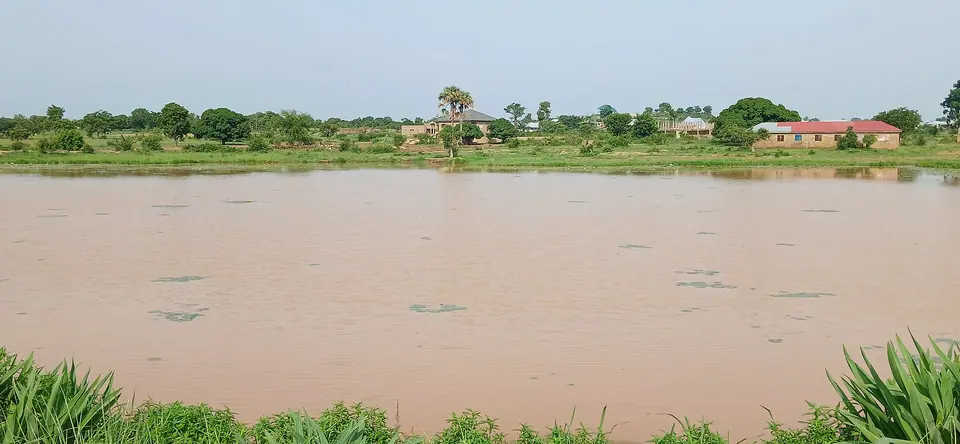
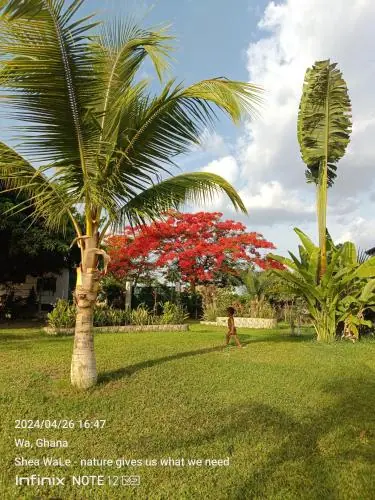
Upper West is Ghana's north-western corner, a broad sweep of Guinea savannah that runs up to the border with Burkina Faso. The land is gently undulating, dotted with shea, baobab and dawadawa trees, and given over largely to smallholder farming of millet, sorghum, groundnuts and maize. Outside Wa the settlements are small and widely spaced, and travel between them takes longer than the map suggests. The region feels quieter and drier than the coast, with a single rainy season and a long, dusty dry season that shapes the year.
Most visitors pass through on the way to somewhere else, but the region rewards a slower stay: its markets, its building styles and the rhythm of the farming year. English is the official language and Dagaare is widely spoken; in and around Wa you also hear Waali. Hospitality is modest rather than polished, and the accommodation reflects that: small town hotels, guesthouses and a few larger properties built for government and business travellers. Outside Wa, rooms are few and simple, and a night in a district capital is a basic affair.
Wa, the regional capital
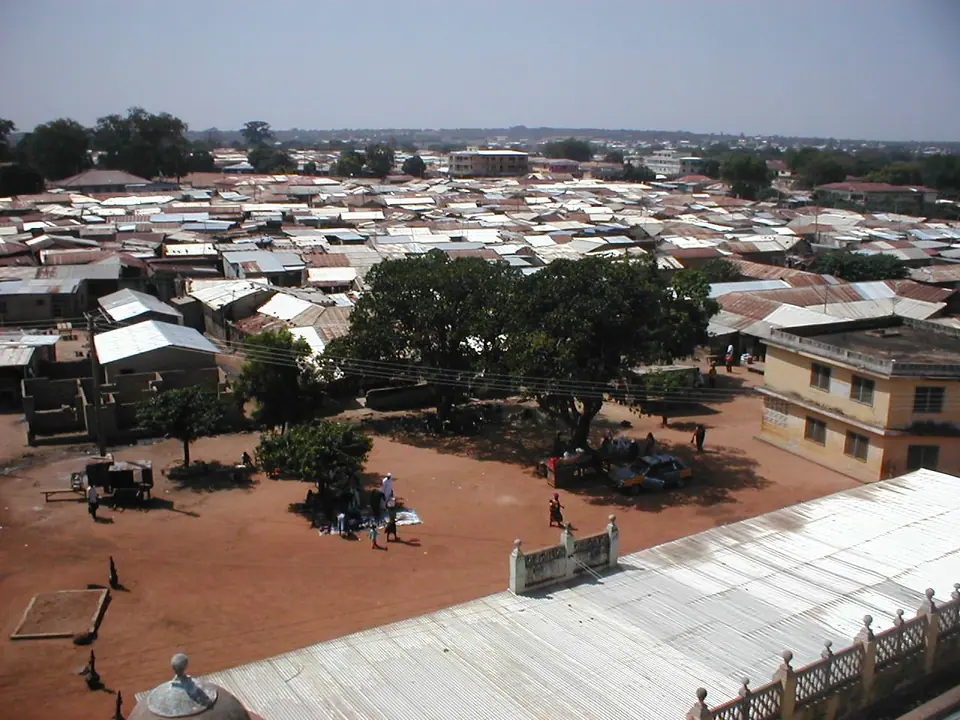
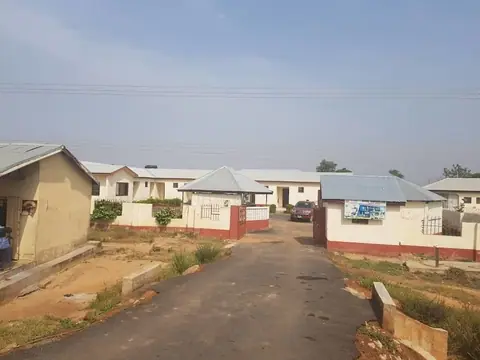
Wa is the capital of Upper West Region and by far its largest town, though it still feels low-rise and spread out. The centre holds a market, a lorry station, banks, government offices and a hospital, with most accommodation along the roads leading in from Tamale, Bolgatanga and the border. Buildings mix concrete blocks with older round compounds of mud and thatch. Traffic is light by southern standards, and you can cross the town quickly outside the early morning and late afternoon. The centre is easy to walk, though the sun makes midday slow.
For a visitor, Wa works as a base rather than a destination in itself. Days fill with the market, a walk through the older quarters and the everyday business of a regional capital. Evenings are early and quiet. Because the region's notable places lie well beyond the town, most people use Wa for a night or two, restock, and continue north towards the border or east towards Bolgatanga and Upper East. Staying longer pays off if you want to understand the farming calendar or follow the weekly market cycle.
Tip: Market mornings are the busiest part of the week in Wa. Walk the centre early, carry water and keep to the shade in the early afternoon.
Getting there and around
Wa has no major airport, and for most travellers the gateway is Tamale, about 186 km away in a straight line, or roughly 193 km from Tamale town centre. From there the usual approach is by road, on a route whose condition varies with the season, so ask before setting out. Coaches and shared minibuses connect the two towns, and long-distance coaches link Wa with Kumasi and Accra. Wa has had limited scheduled air traffic; schedules change, so check with the airports operator, GACL, before planning around a flight.
Inside Wa, shared taxis and minibuses cover the main roads, and most journeys across town are short. For trips outside town, a car with a driver is the simplest arrangement, booked through your accommodation or asked for in the centre. Fuel is available in Wa but sparse elsewhere, so fill up before heading north or west. Ride-hailing apps have patchy coverage, so plan on street taxis. The UK Foreign, Commonwealth and Development Office advises against road travel outside towns after dark, and that advice is worth following on unlit roads.
- Bring the name and area of your accommodation written down; not every driver knows smaller guesthouses.
- Check the return leg before you set off, since shared vehicles thin out in the late afternoon.
- Carry water, a hat and a torch; power can be intermittent and street lighting is patchy.
- If you plan to cross into Burkina Faso, confirm current border rules with Ghana Immigration Service first.
When to visit
The north has one rainy season, running roughly from April to mid-October and peaking around August and September. The rains turn the savannah green and clear the air, but tracks off the main roads can become difficult. The dry season that follows runs from about November to March, and the harmattan, a dusty desert wind, blows roughly from December to March, strongest in the north. The region is drier than the coast, and the wet months are short. Days stay hot all year, with March and April often the most uncomfortable.
For a comfortable stay, late October and November are a good compromise: green country, easier roads and less dust. December to February is cooler but hazy, and fine dust settles on everything. If your plans depend on a particular event, check the year's gazetted public holiday dates, since Ghana now moves many holidays to the nearest Friday or Monday. Rain can arrive early or late, so treat any month range as a guide. Public holiday weekends and regional festivals fill rooms in Wa, so book ahead for those nights.
Tip: Dust defines a harmattan visit. Pack a light scarf, eye drops and a cloth bag for camera gear, and expect haze rather than long views at midday.
Choosing where to stay
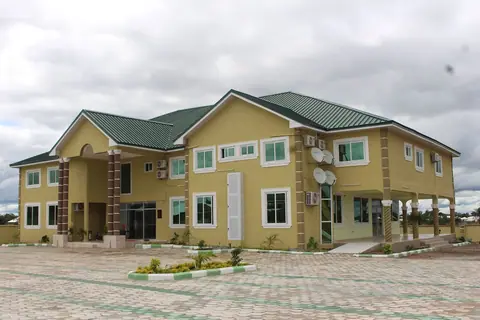
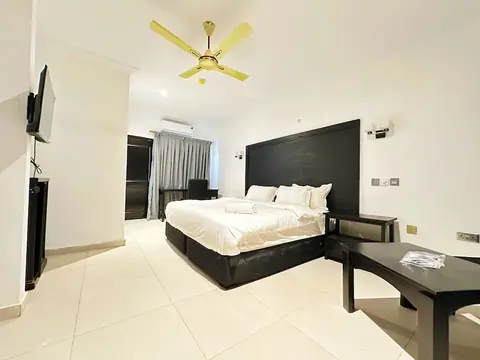
Almost all accommodation in Upper West sits in and around Wa, and the choice is between small town hotels, guesthouses and a handful of larger properties used by business and government travellers. Rooms are generally simple: a bed, a fan or air conditioning, an en-suite bathroom and, in newer places, a generator and Wi-Fi. Standards vary more than the labels suggest, so read recent reviews and ask specific questions before booking. A room that looks fine in a photograph can be noisy, dark or short of hot water. Ask for a room away from the road.
Location matters as much as facilities. Staying within walking distance of the centre puts the market, banks and lorry station on your doorstep; a room on the edge of town buys quiet and space, at the cost of needing a taxi for everything. Ask whether the water tank is filled daily, whether the generator covers the whole night, and whether breakfast is included. Confirm how payment is taken before arrival, since card machines fail and cash is often expected. If you stay several nights, ask about laundry.
- Ask about water pressure and the backup tank, since mains supply can be intermittent.
- Confirm whether the generator runs through the night and what it powers.
- Check for a mosquito net or screened windows, especially near standing water.
- Ask how far the property is from the lorry station and whether taxis pass after dark.
- Get written confirmation of your booking and of how payment is taken before you travel.
Tip: Book ahead for public holiday weekends and around regional festivals, when rooms in Wa can fill with visitors from elsewhere in Ghana. At other times, a few days' notice is usually enough.
Upper West Region by district
Top-rated stays
★★★ 3-star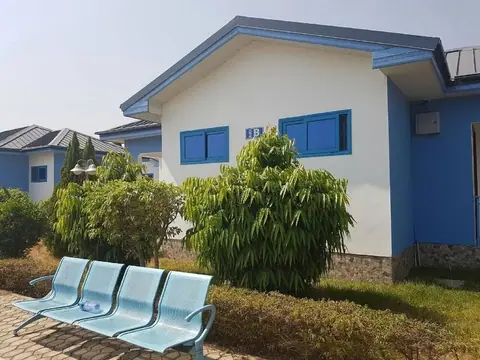 ★★★ 3-star
 ★★★ 3-star
 ★★ 2-star
Upper West Region: questions
Where are hotels in Upper West Region concentrated?
Almost all hotels in Upper West Region are in and around Wa, the regional capital, where government offices, banks and the main lorry station create steady demand for rooms. Elsewhere in the region, rooms are scarce and simple, and facilities are basic. Planning to sleep in Wa is the most straightforward approach for most trips.
How do you reach hotels in Upper West Region from Accra?
Most travellers fly or drive to Tamale, about 186 km from Wa in a straight line, then continue by road in a coach or shared minibus. Long-distance coaches also run from Accra and Kumasi. Wa has had limited scheduled flights, and schedules change, so check with the airports operator, GACL, before relying on air travel.
When should you book hotels in Upper West Region?
Book ahead for public holiday weekends and around regional festivals, when rooms in Wa can fill quickly. At other times, a few days' notice is usually enough, and same-day requests often work in the quieter months. If you are arriving late in the day, confirm the booking by phone, since some smaller places close their reception early.
What should you check before booking hotels in Upper West Region?
Ask about water storage, generator hours, mosquito nets and whether breakfast is served. Confirm how payment is taken, since card machines can fail and cash is often expected. Check the location relative to the market and lorry station, and request a room away from the road if you sleep lightly.
When is the best time to stay in hotels in Upper West Region?
Late October and November suit most visitors: the rains have ended, the savannah is still green and the harmattan has not yet arrived. December to February is cooler but hazy. March and April are hot, while the rainy months from about April to October bring greener country and occasional travel delays.
Do hotels in Upper West Region have reliable power and water?
Supply can be intermittent, and most established hotels in Upper West Region keep a tank and a generator for that reason. Ask whether the tank is filled daily and what the generator powers, since some run lights and fans but not air conditioning. A torch is useful even in a good room.
Can hotels in Upper West Region arrange transport?
Many places in Wa can call a car with a driver for a day trip or a transfer, and some will collect guests from the lorry station. Ask at reception the evening before you travel. Ride-hailing apps have patchy coverage in the region, so arranging a vehicle through your accommodation is usually simpler.
Are hotels in Upper West Region suitable for business travellers?
Wa has a few larger properties used by government and business visitors, with air conditioning, a desk and Wi-Fi, though connections can be slow. Standards vary, so read recent reviews and ask what is included. For meetings, confirm the room has a quiet corner and reliable power before you book.
Read next
Hotels in the Northern Region of GhanaTamale is the transport hub and the natural base for hotels in the Northern Region of Ghana. The rest of the region is savannah, farming towns and Dagbon royal history, best seen on day trips.Hotels in the Upper East RegionThe Upper East is Ghana's dry, far-northern corner, centred on Bolgatanga and the road to the Burkina Faso border. This guide covers the region's towns, how to reach them and how to choose a place to stay.Hotels in Bono East RegionBono East sits in the middle of Ghana, a farming region of yam markets, river crossings and quiet roads. Techiman is the capital and the practical base for most stays.
IMPT Ghana editorial team · Reviewed 13 November 2026. Hotels are placed by their own map pin inside Ghana's official district boundaries (Ghana Statistical Service). Facts checked against the Ghana Tourism Authority (visitghana.com), the Ghana Immigration Service and other official sources listed in our editorial policy. Prices are never shown: live rates open in the IMPT app.
Find a stay in Upper West Region
Photo credits: Francis Irving Francis Irving, CC BY-SA 3.0, via Wikimedia Commons; Biliwa Solomon, CC BY-SA 4.0, via Wikimedia Commons.